

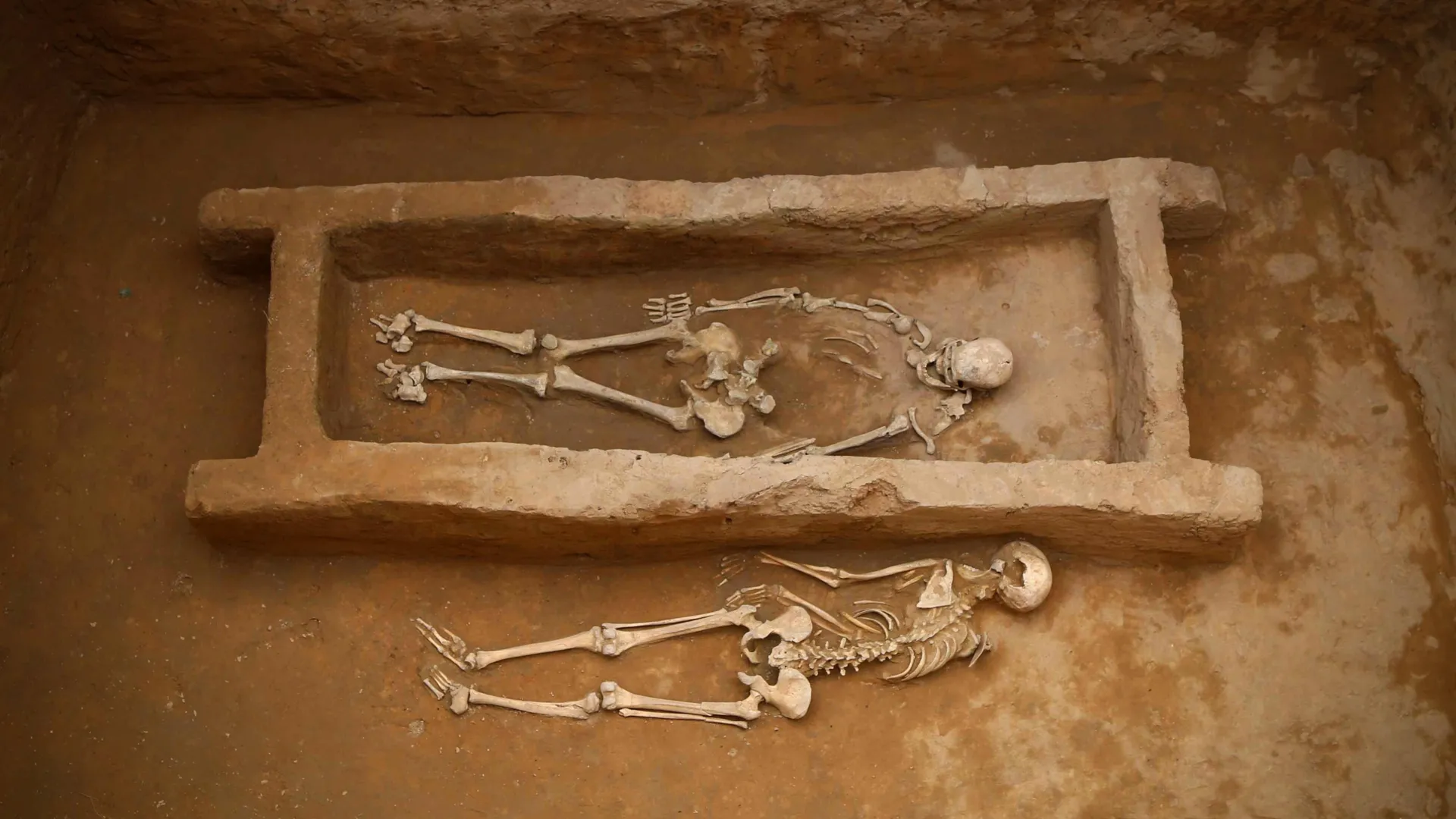
Researchers have completed an extensive genetic analysis of ancient remains from Shimao, a major late Neolithic settlement in northern Shaanxi Province, China. The study, led by Prof. Qiaomei Fu of the Institute of Vertebrate Paleontology and Paleoanthropology and published in Nature, examined nuclear DNA from 169 ancient human samples across 144 unrelated individuals collected over 13 years. The findings provide new insights into the population’s origins, social organization, family relationships, and ritual practices at the approximately 4,200 to 3,700-year-old site.
Genetic comparisons with other ancient populations across China indicate that most Shimao inhabitants descended from local people who had lived in the region roughly 1,000 years prior. The analysis identified both genetic and cultural links to Yangshao Culture, a major Neolithic civilization of the Loess Plateau, as well as connections to Taosi Culture in southern Shanxi, steppe groups, and southern rice-farming communities. These findings suggest extensive contact and exchange networks among prehistoric farming and pastoral societies across a wide geographic area, indicating that Shimao was not isolated but rather participated in broad inter-regional connections.
Genetic analysis allowed researchers to reconstruct family pedigrees spanning up to four generations, revealing that Shimao’s social hierarchy was organized through patrilineal descent and patrilocal residence patterns. These family structures appear to have shaped authority, inheritance, and social rank within the settlement. The study also overturned previous interpretations regarding human sacrifice at the site. Earlier analyses suggested most victims near the East Gate were female, but genetic evidence shows that nine of ten burials examined there were male, with male sacrificial remains concentrated near the East Gate and female remains found in elite cemeteries.
The research provides the first direct genetic evidence for investigating how power was inherited at Shimao and how social classes were formed. These insights may help researchers understand the family systems and political structures that contributed to the emergence of early states in East Asia.
Article Attribution | Read More at Article Source
Article summary produced by Claude AI