

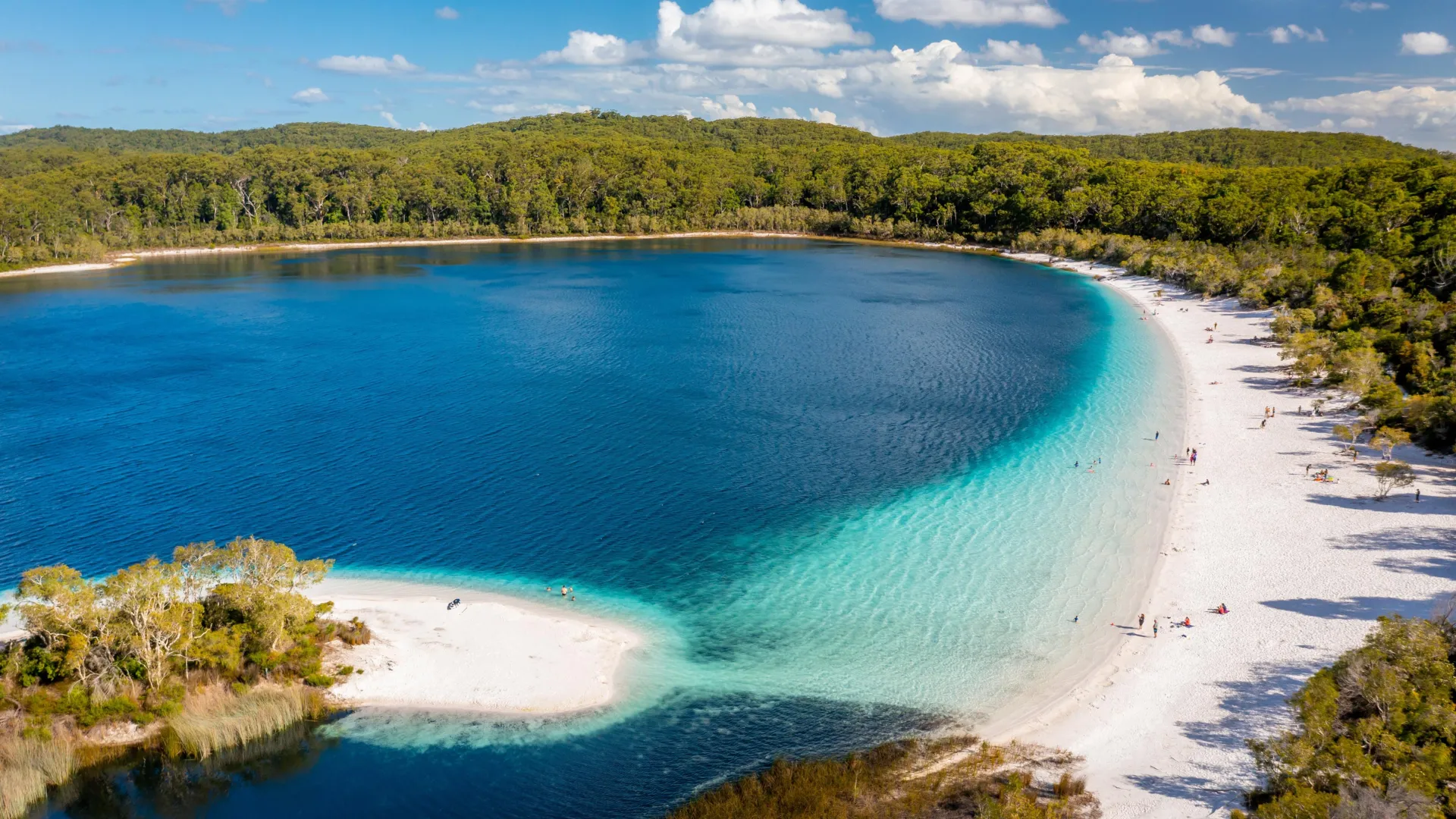
Scientists at the University of Adelaide have discovered evidence of ancient lake drying on K’gari, the world’s largest sand island, during a period that contradicts conventional understanding of water availability. The research team examined sediment cores from the island’s oldest lakes and identified a significant drying event that occurred roughly 7,500 years ago. This timing is notable because it coincided with a relatively wet period in Earth’s history, thousands of years after the last Ice Age ended.
The findings reveal an unexpected vulnerability in the island’s lake systems. While Australian lakes commonly dry during periods of drought, such as the Millennium Drought, the K’gari lakes appear to have emptied despite abundant rainfall during the middle Holocene epoch. The lakes studied have existed for between 35,000 and 55,000 years, making this drying event particularly significant. Sediment analysis shows gaps in the layers between approximately 7,500 and 5,500 years ago, indicating the absence of standing water across those portions of the lake basins during that 2,000-year span.
Researchers propose that wind patterns may have played a crucial role in the drying event. Co-author Harald Hofmann from the Commonwealth Scientific and Industrial Research Organisation suggests that south-east trade winds may have redirected rainfall toward the nearby island of Minjerribah rather than K’gari, preventing the lakes from receiving adequate water replenishment. This explanation suggests that water availability depends not solely on total rainfall but also on geographical distribution patterns influenced by atmospheric circulation.
The research raises concerns about future lake sustainability as climate patterns shift. With projections indicating that rainfall may become more intense yet sporadic, the island’s lakes may face renewed risk of drying. More powerful rainstorms do not necessarily translate to increased water availability if the precipitation falls in wrong locations, runs off too rapidly, or fails to recharge the hydrological systems supporting the lakes. For the Butchulla people, the Traditional Owners of K’gari, these lakes hold profound cultural and spiritual significance and are known as The Eyes of K’gari, making their preservation essential for maintaining ancestral connections to the land.
Article Attribution | Read More at Article Source
Article summary produced by Claude AI