

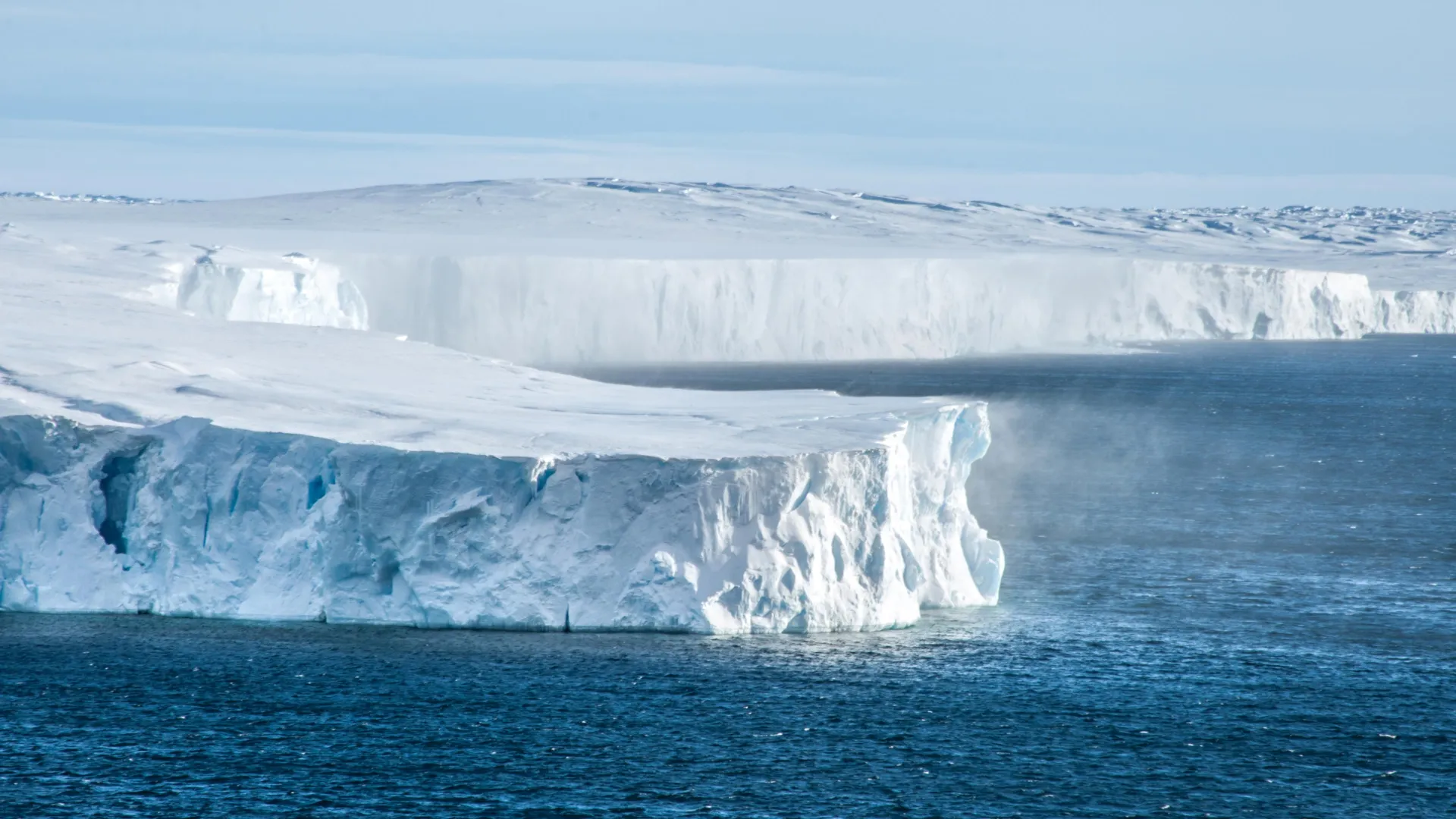
Researchers from Monash University have published findings suggesting that the coming decades offer a critical period for forecasting Antarctic ice sheet collapse and its effects on global sea levels. The study, led by Dr. Felicity McCormack and published in Nature, examines the predictability of ice loss from Antarctica and how such forecasts could inform coastal planning and adaptation strategies.
According to the Intergovernmental Panel on Climate Change, global sea levels could rise by more than two meters by 2100 under high emission scenarios if significant portions of the Antarctic Ice Sheet collapse. Such an increase would threaten residential properties in Australia, render large areas of Pacific territories uninhabitable, and potentially displace hundreds of millions of people worldwide, ranking among the most severe humanitarian and economic crises possible. However, the precise trajectory of sea level rise remains highly uncertain, largely due to difficulties in determining the rate of Antarctic ice loss.
The research focused on assessing how accurately scientists can predict Antarctic ice loss over 30 to 50 years and whether such predictions offer sufficient reliability for policy and planning purposes. The team evaluated multiple ice sheet model projections to determine predictability during this near-term period. The findings indicate that Antarctic ice loss remains strongly predictable through approximately the middle of the century, provided that ice sheet models accurately reflect currently observed ice loss rates. This suggests models could deliver dependable estimates of Antarctica’s contribution to sea level rise during the decades most critical for adaptation planning.
Confidence in these predictions weakens toward the end of the 21st century, when physical processes capable of producing rapid ice loss become increasingly probable. Certain Antarctic ice sits on bedrock below sea level, and if this ice begins retreating rapidly, the process could become self-sustaining and produce significantly greater ice loss than near-term projections suggest. The researchers argue that presenting Antarctic forecasts across two distinct timeframes—short-term ice loss with higher confidence and longer-term change with greater uncertainty—would provide policymakers with a clearer foundation for preparation while acknowledging deepening uncertainty later in the century.
Research leaders emphasize that this period of greater predictability represents a meaningful opportunity for climate action and adaptation investment. They recommend strengthening monitoring systems for Antarctica and developing improved ice sheet models that better represent critical physical processes. The findings suggest that Pacific Island nations and other vulnerable regions could use near-term projections to make informed decisions regarding infrastructure development, community planning, and land use strategies.
Article Attribution | Read More at Article Source
Article summary produced by Claude AI