

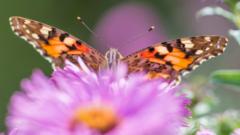
Great Comp Garden, located in St Mary’s Platt near Sevenoaks in Kent, has established itself as an effective habitat for multiple butterfly species through deliberate planting and wildlife-friendly management practices.
The garden is home to 16 butterfly species, representing approximately one-quarter of all butterfly species found across the United Kingdom. This figure is significantly higher than what is typically observed in standard residential gardens, which usually support between five and 10 different species. The site has become a notable success story in butterfly conservation efforts.
National butterfly populations have faced considerable challenges in recent decades. Since the UK Butterfly Monitoring Scheme commenced in 1976, overall butterfly abundance has declined by nearly 20%. Specialist butterfly species have been particularly affected, experiencing population crashes driven by habitat destruction and widespread pesticide application across the countryside.
Great Comp’s approach focuses on creating suitable conditions for butterfly survival and reproduction. Kristyna Kay-Clough, a senior gardener at the site, emphasized that the garden’s diverse planting strategy has proven effective in supporting butterfly populations. A key aspect of this conservation approach involves maintaining nettles around the woodland perimeter, which serve as food sources for butterfly caterpillars during their development stage.
The garden hosts a healthy population of both generalist species, which can adapt to various environments, and mobile species capable of traveling across landscapes. Both categories are reported to be flourishing at the site with regular sightings, demonstrating that carefully managed gardens can serve as important refuges for wildlife facing broader environmental pressures.
Article Attribution | Read More at Article Source
Article summary produced by Claude AI