

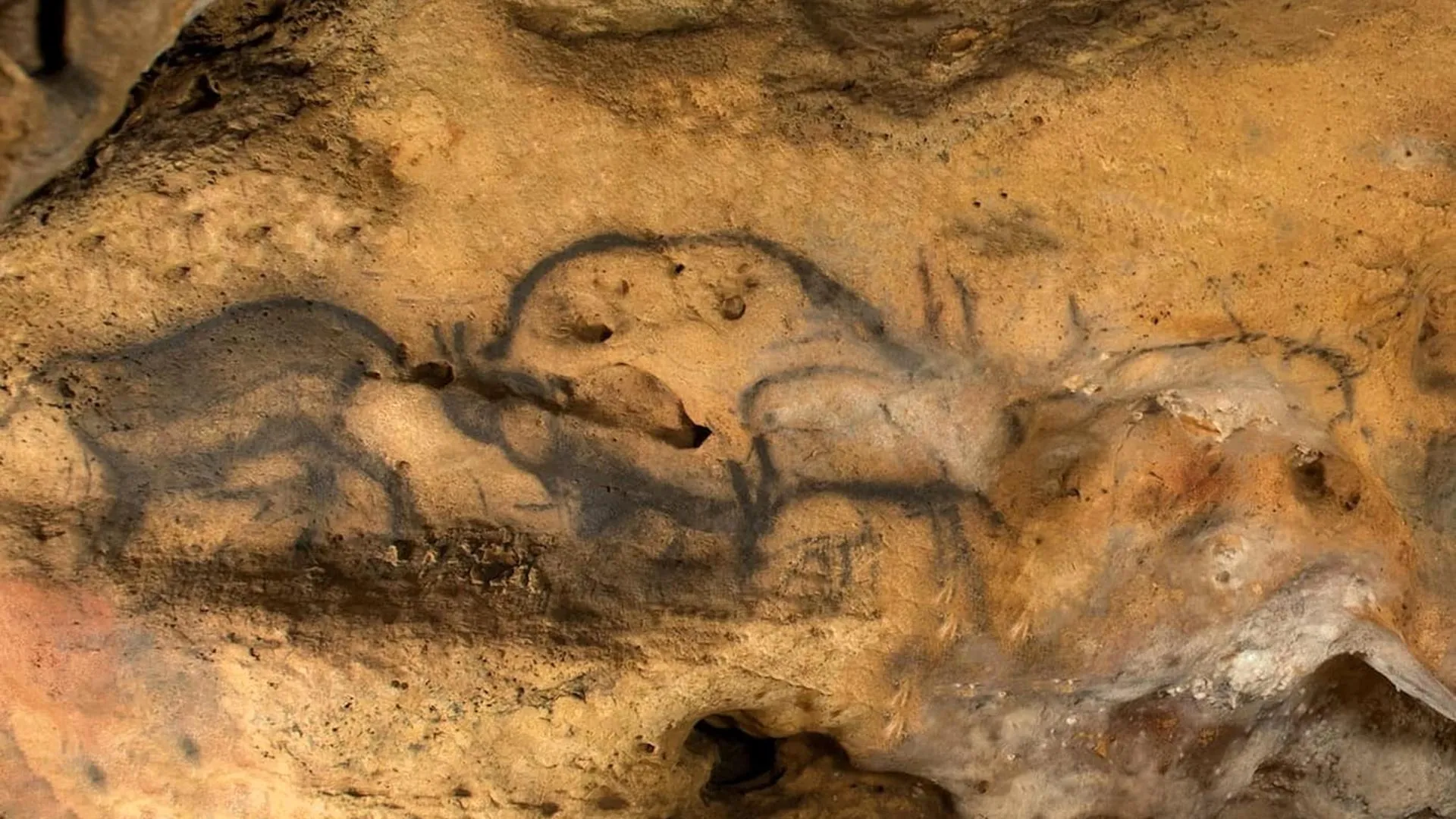
Researchers have successfully determined the age of prehistoric paintings at Font-de-Gaume, a decorated cave in southwestern France, marking the first time scientists have accurately dated black images at this site. The study focused on two figures: a bison and a masklike form. The findings reveal that portions of the artwork were produced during distinct time periods, offering new insights into how prehistoric caves may have been revisited and modified by different communities over millennia.
Dating Ice Age cave paintings has historically presented significant challenges. While radiocarbon dating works effectively by measuring carbon-14 levels in organic materials, many black paintings in the region were thought to be made exclusively from mineral pigments such as iron and manganese oxides. These naturally occurring compounds do not contain the organic carbon necessary for radiocarbon analysis, making direct dating of the artwork seemingly impossible.
To address this problem, researchers used Raman microspectrometry and hyperspectral imaging to analyze the chemical composition of the two black figures. These non-invasive techniques revealed previously undetected traces of charcoal distributed consistently throughout the black pigment lines, indicating the carbon was part of the original artwork rather than later contamination. Scientists then obtained exceptional authorization to extract minimal samples for carbon-14 dating.
The bison was determined to date between 13,461 and 13,162 calBP, placing it in the Upper Paleolithic period. The mask produced more complex results, with samples from different sections yielding three distinct age ranges, suggesting the figure may have been created or modified across multiple episodes separated by thousands of years. This pattern indicates that decorated caves may not have been completed in single visits but rather served as meaningful spaces that communities revisited and reinterpreted over extended periods.
The research, published in PNAS and involving specialists from multiple French scientific and cultural institutions, demonstrates that combining chemical imaging with sensitive radiocarbon measurement creates a powerful new method for dating previously undatable prehistoric figures. Applying this technique more broadly could enable archaeologists to establish more precise chronologies of artistic styles, identify paintings created during the same period, and better understand the cultural significance these underground spaces held for ancient communities.
Article Attribution | Read More at Article Source
Article summary produced by Claude AI