

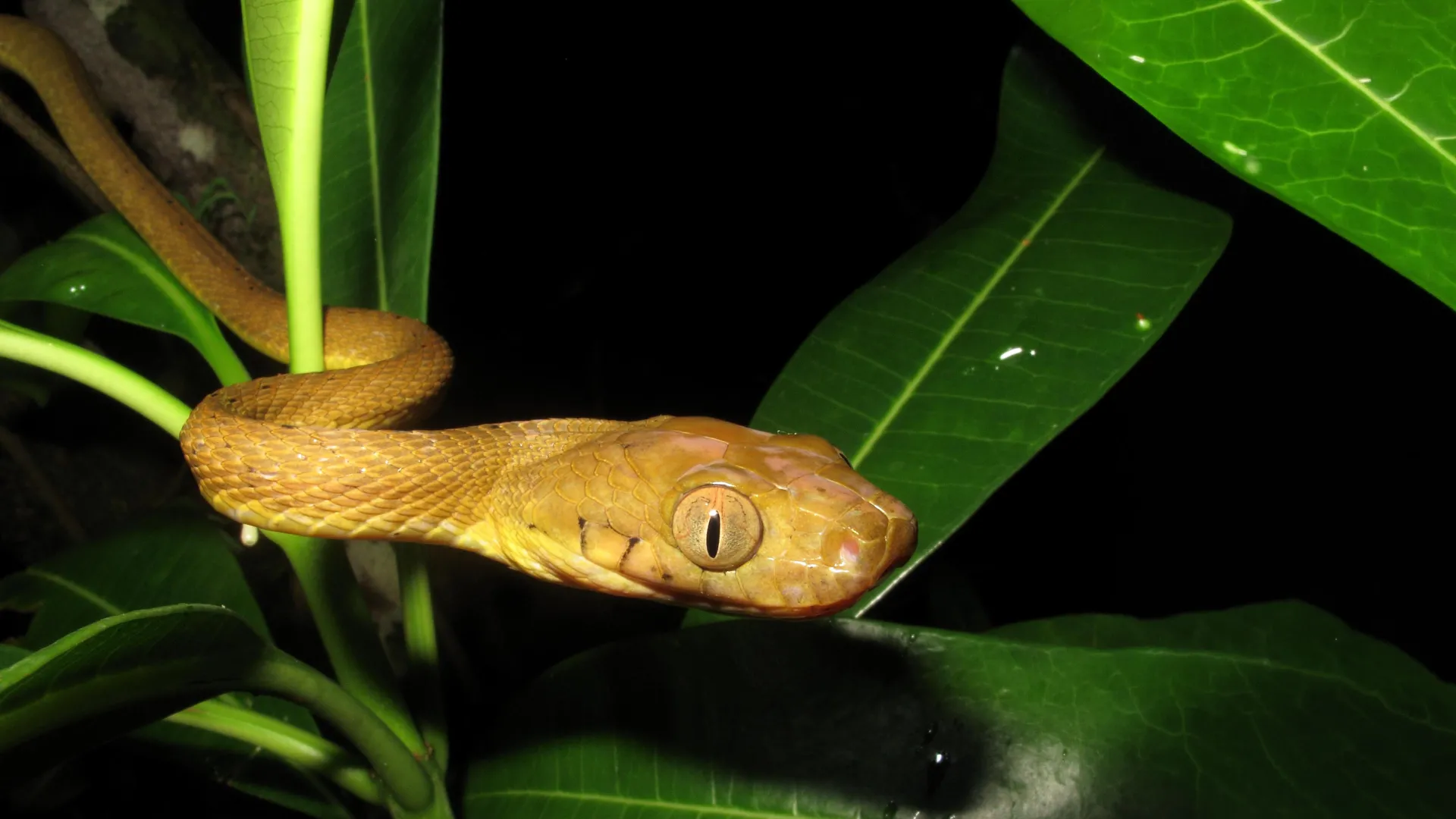
Brown tree snakes have become one of the world’s most prominent invasive species after arriving on Guam, likely following World War II through military cargo transport. The species has devastated the island’s native forest birds and causes hundreds of power outages annually by damaging electrical infrastructure. Population densities in some regions have reached approximately 30,000 snakes per square mile.
The rapid expansion of the snake population has long confounded scientists, as it was believed to have originated from only a small number of individuals. Under normal circumstances, such a limited founding population would create significant genetic constraints through inbreeding, reducing adaptation capacity and limiting population growth potential. However, research published in Science Advances on July 24 demonstrated that brown tree snakes contain substantially more genetic variation than previously understood.
Scientists from the University at Buffalo and the U.S. Geological Survey employed advanced long-read sequencing technology to examine extensive sections of the snake genome. The analysis identified more than 19,000 structural variants—sections of DNA that had been duplicated, deleted, or rearranged. These variations concentrated notably in genes associated with immune function and smell, suggesting enhanced adaptability in critical survival areas.
The discovery indicates that brown tree snakes possess greater genetic flexibility than anticipated, which may have enabled the population to overcome severe inbreeding constraints and adapt successfully to Guam’s environment. Simultaneously, the findings carry implications for endangered species management, suggesting that highly inbred populations may retain more genetic adaptability than assumed possible. Researchers acknowledged that determining whether these structural variants existed before arrival on Guam or developed subsequently would require genetic comparison with snakes from their native range.
Article Attribution | Read More at Article Source
Article summary produced by Claude AI