

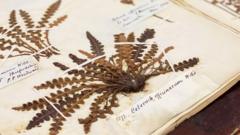
A collection of preserved plant specimens held at the Royal Agricultural University in Cirencester is undergoing a digitization project to catalog and photograph more than 10,000 dried flowers and botanical samples. The herbarium contains materials spanning from 1797 to the present, with many specimens gathered from the Gloucestershire region. Notable among the collection are plants and flowers assembled by Samuel Pickworth Woodward, a 19th-century professor at the institution who corresponded with Charles Darwin.
The digitization effort is part of a larger national initiative representing an investment of £155 million designed to connect approximately one million specimens held across UK museums and herbaria. Over the next two years, the project aims to add more than 1.2 million specimen records from 23 institutions to a central England hub. The process involves photographing each item and compiling associated metadata such as collection dates and locations.
Researchers emphasize that herbarium sheets, which preserve plants pressed on paper, represent valuable historical records when properly maintained and can remain intact for centuries. The detailed information recorded on these specimens provides crucial data for understanding how plant species and flowering patterns have changed across generations. This information has applications across multiple research domains, including climate change studies, habitat management, and genetic research.
University officials note that digitizing the collection will enable scientists to compare contemporary plants with historical specimens to track shifts in flowering times potentially caused by climate change. Additionally, the project ensures the fragile collection receives proper preservation for future researchers. The digitization process also makes the previously difficult-to-access information available to international scholars and supports both academic research and broader public understanding of environmental change.