

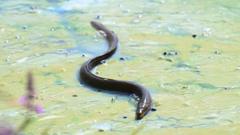
The Lough Neagh eel, which holds Protected Geographical Indication status as the first Northern Ireland product to receive this EU designation, faces significant population challenges that have led authorities to implement a fishing closure. Commercial fishermen are now restricted to catching only 25 tonnes of fully mature silver eels, with no yellow eels permitted to be harvested for the next two years. Licensed operators who have traditionally derived substantial portions of their income from eel fishing are awaiting support announcements from regional government.
The European eel represents a remarkable species with an extraordinary lifecycle. These creatures originate in the Sargasso Sea off the eastern United States coast and drift across the Atlantic as juveniles over a period of up to three years. Upon reaching European freshwater systems like Lough Neagh, they transform through several developmental stages, eventually spending 16-20 years feeding and growing in freshwater before undergoing dramatic physical metamorphosis. When reaching maturity, eels undergo remarkable changes including color shifts, enlarged eyes, and physiological alterations that researchers describe as comparable to a biological submarine design, enabling their return journey across the Atlantic to spawn.
Scientific evidence indicates that eel populations experienced a dramatic collapse beginning in 1983, when recruitment rates fell from 14-16 million juveniles annually to approximately 200,000. This decline has persisted continuously to the present day. Researchers attribute the population crisis to multiple human-related factors including climate impacts, hydropower infrastructure that impedes migration, pollution, parasitic species introduction, and overfishing. Illegal smuggling of eels outside Europe has compounded these pressures.
European authorities implemented eel management plans from 2009 onward, followed by export restrictions, while some nations have established complete recreational and commercial fishing bans. In Northern Ireland, fishing operations halted when catch quality deteriorated below market standards. The Agriculture Minister has announced recovery measures informed by scientific guidance, with plans to develop temporary financial assistance for affected permit holders. The Department for Agriculture, Environment and Rural Affairs confirmed that a financial assistance scheme has been developed, though necessary approvals across multiple government departments remain pending without a specified timeline.
Article Attribution | Read More at Article Source
Article summary produced by Claude AI