

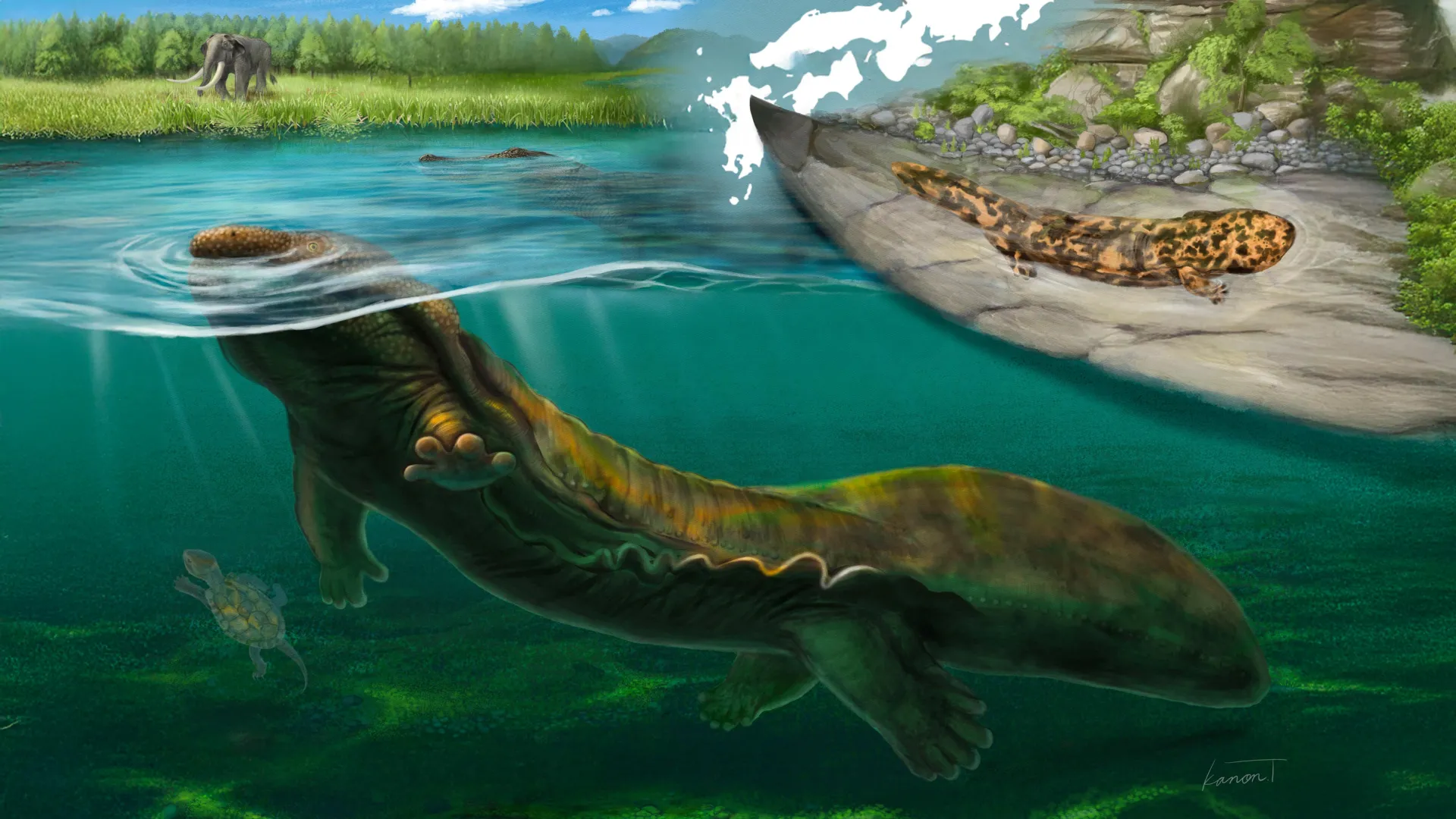
Researchers working in the Ajimu area of Oita prefecture, Japan, discovered fossilized remains of a giant salamander belonging to the Cryptobranchidae family during excavations in the late 1990s. The three vertebrae were found in sedimentary deposits from the Pliocene epoch, approximately 3.5 million years ago, alongside other fossils including elephants and crocodiles, indicating a warmer and more humid climate than exists in the region today.
Initially, scientists classified the bones within the genus Andrias, which includes the largest living amphibians. However, insufficient comparative materials and anatomical research prevented a definitive identification at that time. More than two decades later, a research team from Kyoto University undertook a comprehensive analysis of the specimens, comparing them with skeletal structures from modern Cryptobranchidae species.
The investigation revealed that the mid trunk vertebra contained anatomical characteristics absent from all known members of the giant salamander family. These distinctive features led researchers to conclude the fossils represented both a previously undescribed species and an entirely new genus. The team designated the organism Limnospondylus ajimuensis, a name derived from Greek terms for lake and vertebra combined with the geographic location of discovery. This ancient salamander inhabited freshwater lake and marsh environments and likely reached approximately 1.1 meters in length as an adult.
The identification of a sixth genus within Cryptobranchidae expands scientific understanding of amphibian diversity. Fossils from this family have been recovered across the Northern Hemisphere, though many specimens have been assigned to the living genus Andrias due to limited anatomical knowledge. The new findings suggest that previously classified fossils may represent multiple unrecognized species. Cooling temperatures during the transition from the Pliocene to the early Pleistocene period, coupled with substantial habitat changes, likely contributed to the extinction of Limnospondylus ajimuensis. Its modern relative, Andrias japonicus, continues to inhabit rivers throughout Japan.
Article Attribution | Read More at Article Source
Article summary produced by Claude AI