

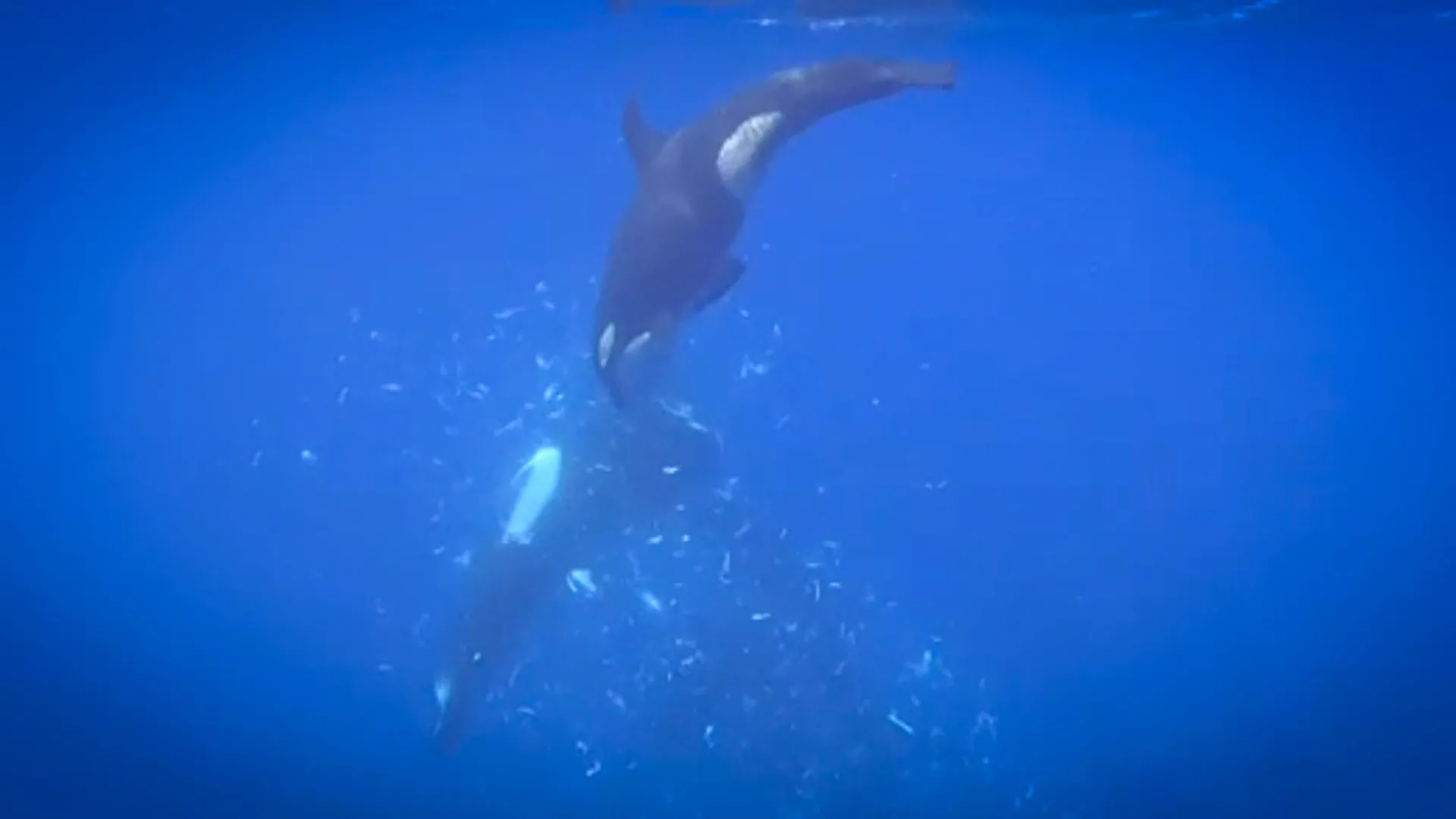
Scientists have documented a previously unreported hunting behavior among orcas in the Gulf of California involving the coordinated destruction of sunfish. According to Dr. Kathryn Ayres, lead researcher at Beneath The Waves, the technique involves one orca holding a sunfish carcass steady while another charges toward it at high speed, causing the fish’s tissue to fragment into numerous pieces.
Two separate incidents of this behavior were recorded, one in July 2024 and another in September 2025. In both cases, the sequence followed a consistent pattern: one orca gripped the sunfish by its tail fin to provide a secure hold while a second orca accelerated and struck the stationary target. The force of the collision caused extensive tissue disintegration, after which juvenile orcas consumed the smaller fragments while adults ate the remaining portions. Researchers emphasize that ramming has not previously been documented as an orca predation strategy, though the animals appeared to work in coordinated groups.
Scientists propose multiple explanations for the behavior. The fragmentation may facilitate feeding for younger or smaller members of the pod, representing a form of parental investment consistent with known orca behaviors of tearing prey and sharing it among group members. Alternatively, the interactions may have served social functions or recreational purposes, as orcas are recognized for playing with their food. Additionally, the tissue breakdown could provide nutritional advantages by exposing the sunfish’s gelatinous outer layer and its associated microbiome to the surrounding water.
Sunfish, which can exceed three meters in length and weigh up to 2,000 kilograms, are frequently targeted by orcas in the Gulf of California. The newly documented technique appears specific to sharp-tail sunfish, suggesting this species’ tissue may respond to powerful impacts in distinctive ways compared to larger sunfish varieties. Researchers note that more high-quality footage with clear identification markers, such as dorsal fins and eye patches, would be necessary to determine whether the same individuals participated in both observed events.
Article Attribution | Read More at Article Source
Article summary produced by Claude AI