

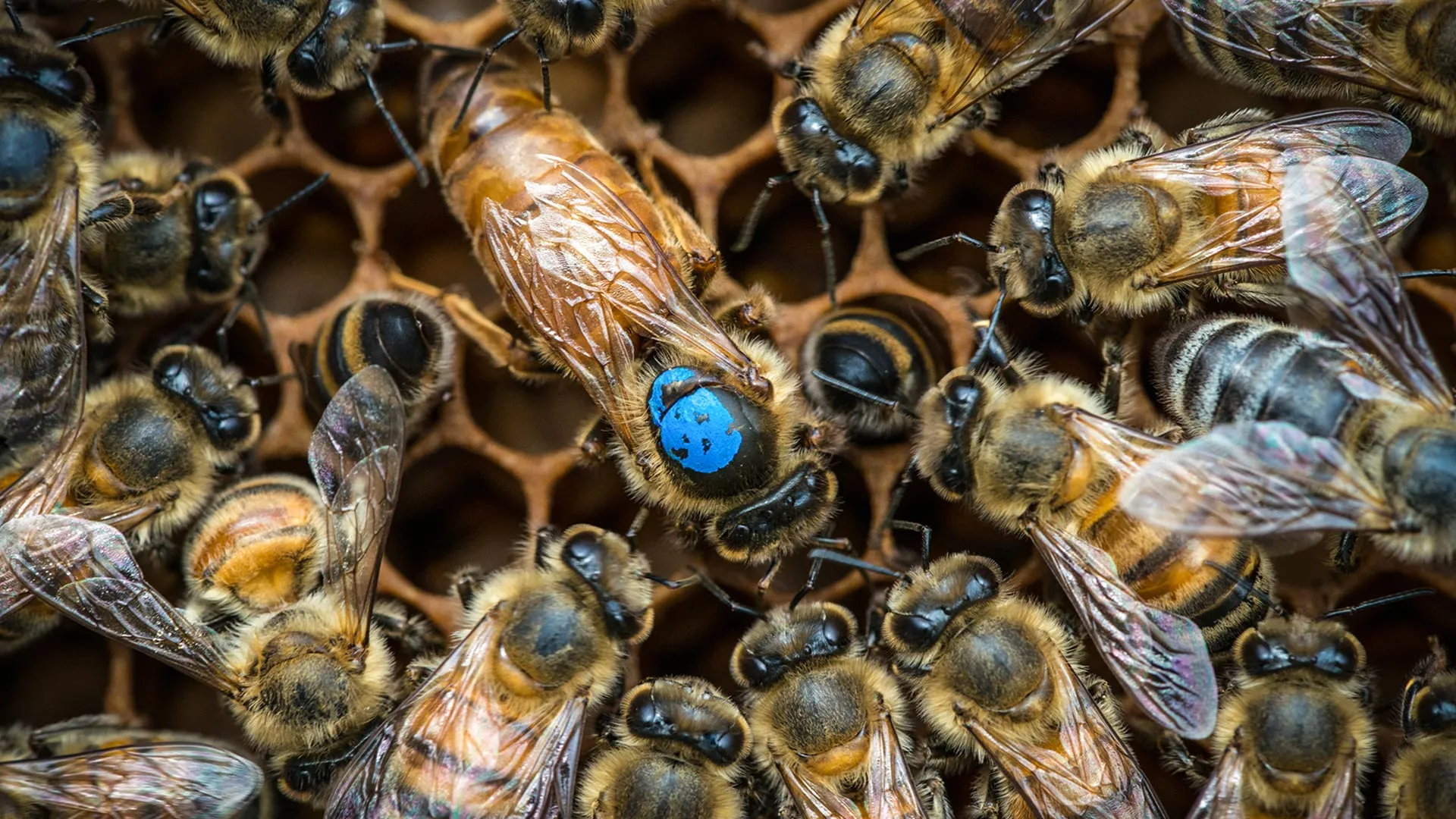
Researchers from Heinrich Heine University Düsseldorf and universities in Cologne and Frankfurt/Main have identified neural mechanisms that determine the roles individual worker bees assume within their colonies. The discovery, published in the Proceedings of the National Academy of Sciences, reveals how bee colonies achieve coordinated task distribution without centralized direction or leadership.
Worker bees progress through distinct life stages, with responsibilities shifting as they age. Young bees typically care for the queen and developing larvae, while middle-aged bees focus on hive construction, maintenance, and defense. Only older bees venture outside the colony to forage for food. This age-dependent behavioral progression involves roughly one million neurons in the bee brain, yet scientists previously lacked understanding of the neural mechanisms driving these transitions.
The research built upon earlier work led by Professor Martin Beye examining a gene called doublesex. When researchers deactivated this gene in older worker bees, the insects reverted to caring for the queen—a task normally performed only by younger bees. This observation suggested doublesex played a critical role in regulating age-related work behavior. Since the gene operates within specific neural circuits, this finding provided a pathway to investigate how distinct brain regions influence social organization.
To test their hypothesis, the research team selectively suppressed neural circuits associated with doublesex. They engineered the gene to produce a protein that inhibits neural activity, which could be activated by feeding bees a particular substance. When these targeted circuits were inhibited, older workers resumed queen care instead of performing their age-appropriate duties. Dr. Jana Seiler, the study’s lead author, noted that normal age-dependent behavior resumed once the inhibition was removed.
The findings suggest that task organization in bee colonies has a neural basis, with communication between different brain circuits determining whether a worker bee performs nursing, construction, defense, or foraging duties. Professor Beye indicated the research opens new avenues for understanding how animals and insects achieve cooperation without predetermined work assignments, with solutions likely residing within neural circuit organization.
Article Attribution | Read More at Article Source
Article summary produced by Claude AI