

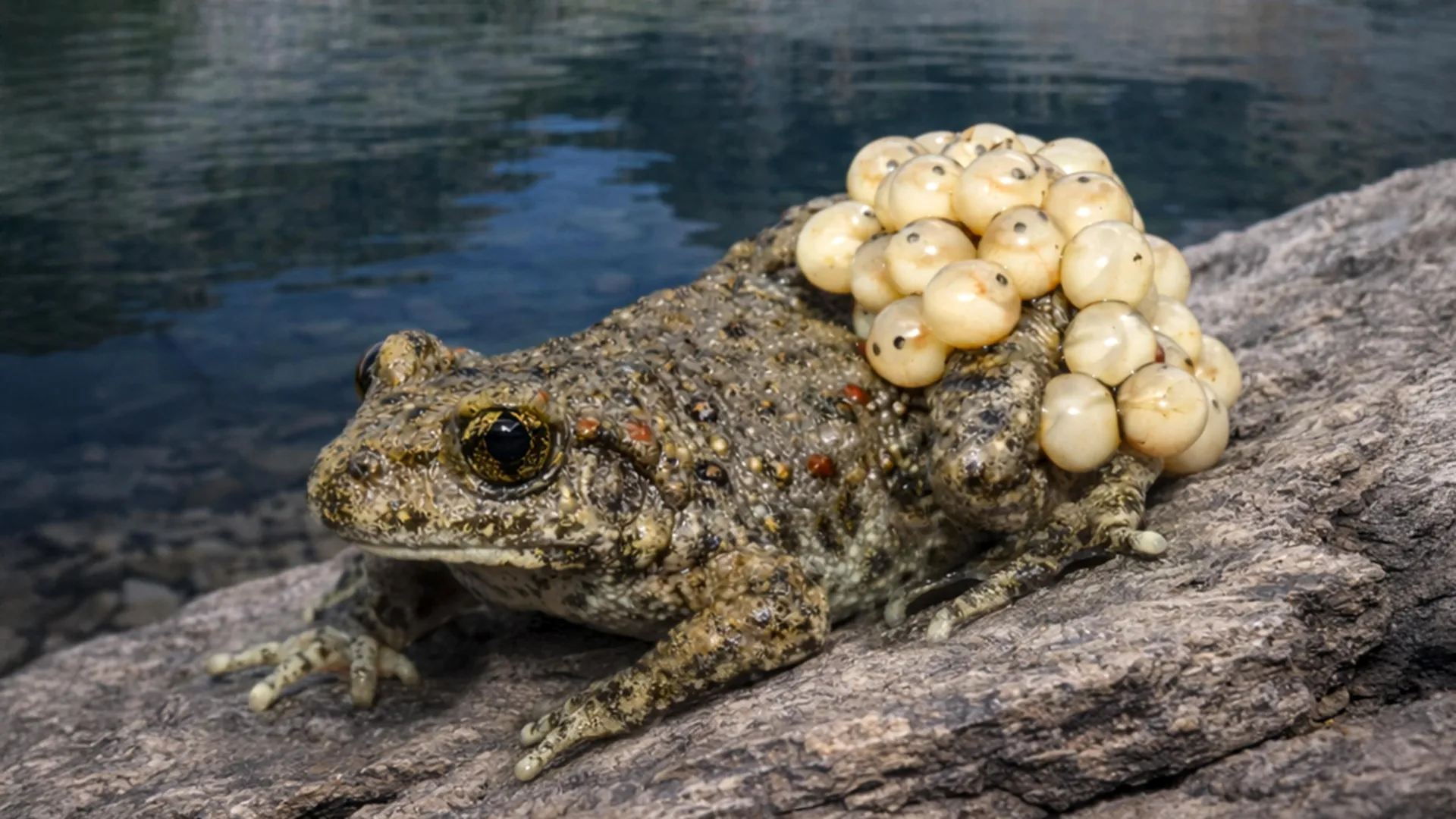
Researchers from University College London, ZSL, and Imperial College London have identified why some amphibian populations recover from chytridiomycosis while others continue to decline. The findings, published in Nature Chemical Biology, focus on the chytrid fungus Batrachochytrium dendrobatidis, which has caused widespread devastation in frog and toad populations worldwide. The disease damages the keratinized skin of adult amphibians, disrupting their ability to regulate water, salts, and minerals, though tadpoles remain largely protected due to their non-keratinized skin.
The research team studied common midwife toads at four lakes in the French and Spanish Pyrenees that had all experienced severe fungal outbreaks. While one population continued declining, the other three rebounded despite the fungus remaining present. The key difference lay in the timing of immune system development. Toads in recovering populations produced antimicrobial peptides—natural chemicals that form part of their skin-based immune system—while still in the tadpole stage. By the time they matured into vulnerable adults, their immune defenses were already well established. In contrast, the struggling population produced far fewer of these protective peptides during development.
Using mass spectrometry analysis, researchers identified 1,152 distinct peptides in toad skin, of which only seven had been previously documented. Tadpoles that developed a wider variety of peptides prior to metamorphosis showed significantly higher survival rates despite ongoing fungal exposure. Researchers suggest that genetic or environmental factors, such as temperature or the presence of predatory trout, may influence the timing of immune maturation.
Beyond amphibian conservation, the discovery has potential implications for human medicine. The identified peptides represent new leads for developing treatments amid rising antimicrobial resistance in human pathogens. The research was funded by the UK’s Natural Environment Research Council and the Leverhulme Trust.