

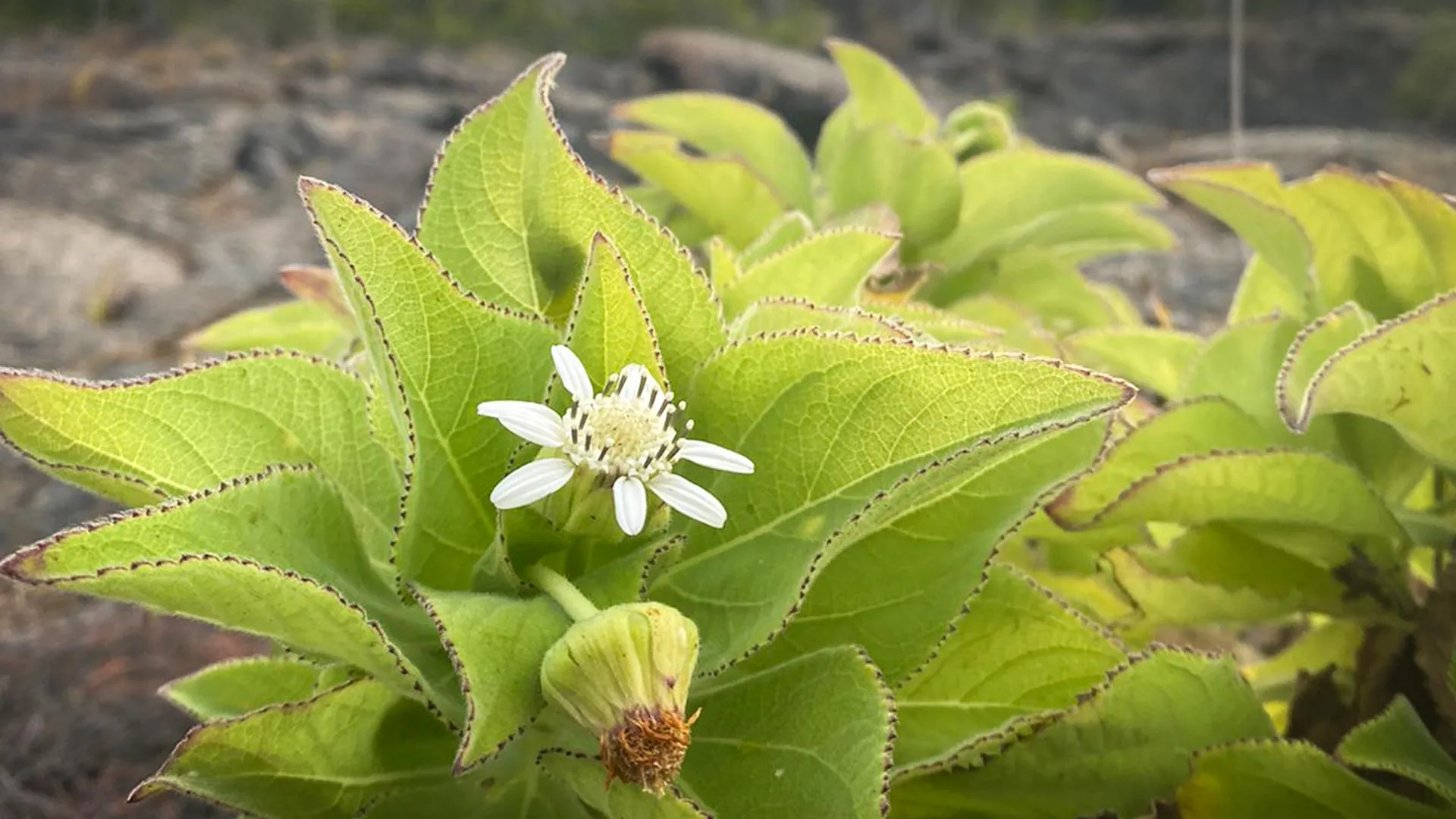
Researchers from an international team led by institutions including the Norwegian University of Science and Technology and the Royal Botanic Gardens, Kew, have documented parallel evolution occurring in Scalesia plants, commonly known as Galápagos giant daisies. The findings, published in Nature Communications, demonstrate how organisms can independently develop similar solutions to environmental pressures, echoing patterns observed in Darwin’s iconic finch studies from 1835.
Scalesia represents a relatively young plant genus, with all existing species having emerged within the past one million years. Despite this brief evolutionary timeframe, the plants have diversified dramatically across the archipelago, occupying habitats ranging from humid highland forests to hot, dry lowlands. The most visually striking adaptation involves leaf morphology, which varies from large, smooth structures to small, deeply lobed leaves with intricate serrated edges. Researchers theorize that lobed leaves provide survival advantages in arid conditions by minimizing water loss and facilitating heat dissipation.
Through comprehensive genomic analysis of all known Scalesia species, the research team made a remarkable discovery: deeply lobed leaves evolved independently multiple times across different branches of the plant family. Notably, each evolutionary event involved distinct genetic pathways rather than relying on a single controlling gene. This pattern exemplifies parallel evolution, wherein different genetic modifications within the same developmental system produce nearly identical physical outcomes. The findings suggest evolution operates through flexible networks of interacting genes rather than isolated master genes.
The genetic evidence indicates that Scalesia’s evolutionary story remains ongoing. Several isolated populations display substantial genetic differences and extended geographic separation, suggesting new species may currently be forming. Researchers argue these genetically distinct populations should be managed separately as individual conservation units, potentially reshaping Galápagos conservation strategies. The study provides detailed insights into adaptive radiation, the process through which ancestral species rapidly diversify into multiple forms suited to different ecological niches.
Article Attribution | Read More at Article Source
Article summary produced by Claude AI