

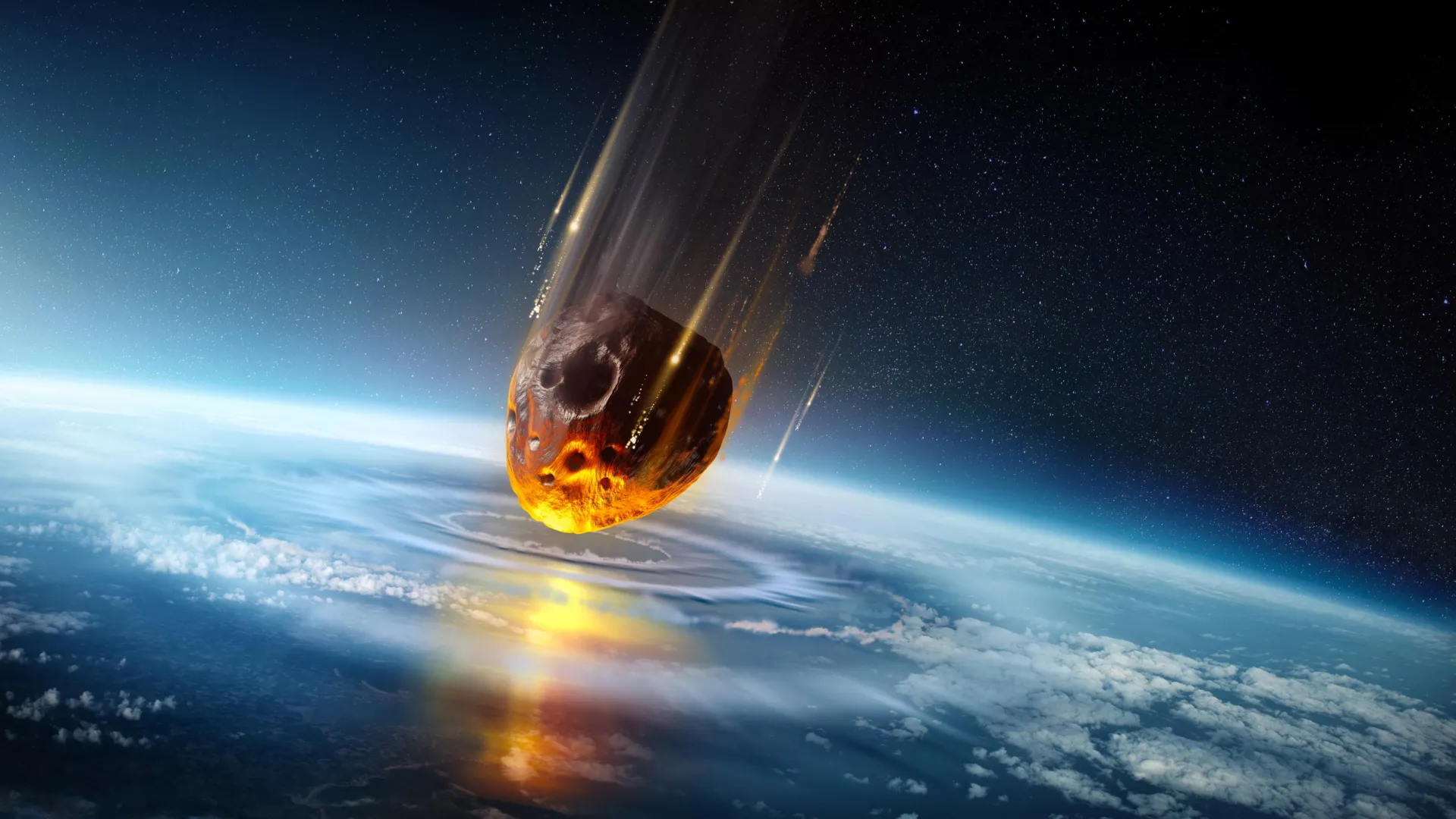
An international team of scientists has determined that a carbonaceous chondrite of the Ornans class, a particularly rare type of meteorite, was likely responsible for the impact event that occurred 66 million years ago. The research, conducted by teams from the University of British Columbia, Paris, Brussels, and Vienna, analyzed nickel isotope signatures preserved in clay layers deposited globally following the collision. Their findings were published in Science Advances.
CO chondrites are notably distinct from typical meteorites found in museum collections, containing significantly lower concentrations of volatile elements including carbon, zinc, water, and particularly sulfur compared to other meteorite classifications. This compositional difference has important implications for understanding the extinction mechanism. Previous theories emphasized the role of sulfur from the impactor in triggering the catastrophe, but the new evidence suggests that the meteorite’s limited sulfur content makes this scenario less probable. Instead, the research indicates that massive quantities of fine particulate matter ejected into the atmosphere likely served as the primary mechanism of destruction.
The identification required highly precise nickel isotope measurements conducted on samples extracted from the thin global clay layer deposited after impact. This analysis proved challenging, as the entire meteorite vaporized upon collision, leaving only minute traces of the original projectile embedded in the planetary clay record. Despite these limitations, the isotopic signature proved distinctive enough to narrow the impactor down to this specific rare class of carbonaceous meteorite.
CO chondrites represent only a small fraction of the carbonaceous chondrite group, which itself comprises approximately five percent of meteorites recovered on Earth. These materials are among the most primitive and unaltered substances remaining from the solar system’s formation. The meteorite’s exact origin remains uncertain, though it may have originated from a distant region of the outer solar system or from the outer asteroid belt near Jupiter. The impactor, estimated at 10 to 15 kilometers wide, struck Earth at approximately 64,000 kilometers per hour, creating the Chicxulub crater now buried beneath Mexico’s Yucatán Peninsula.
Article Attribution | Read More at Article Source
Article summary produced by Claude AI