

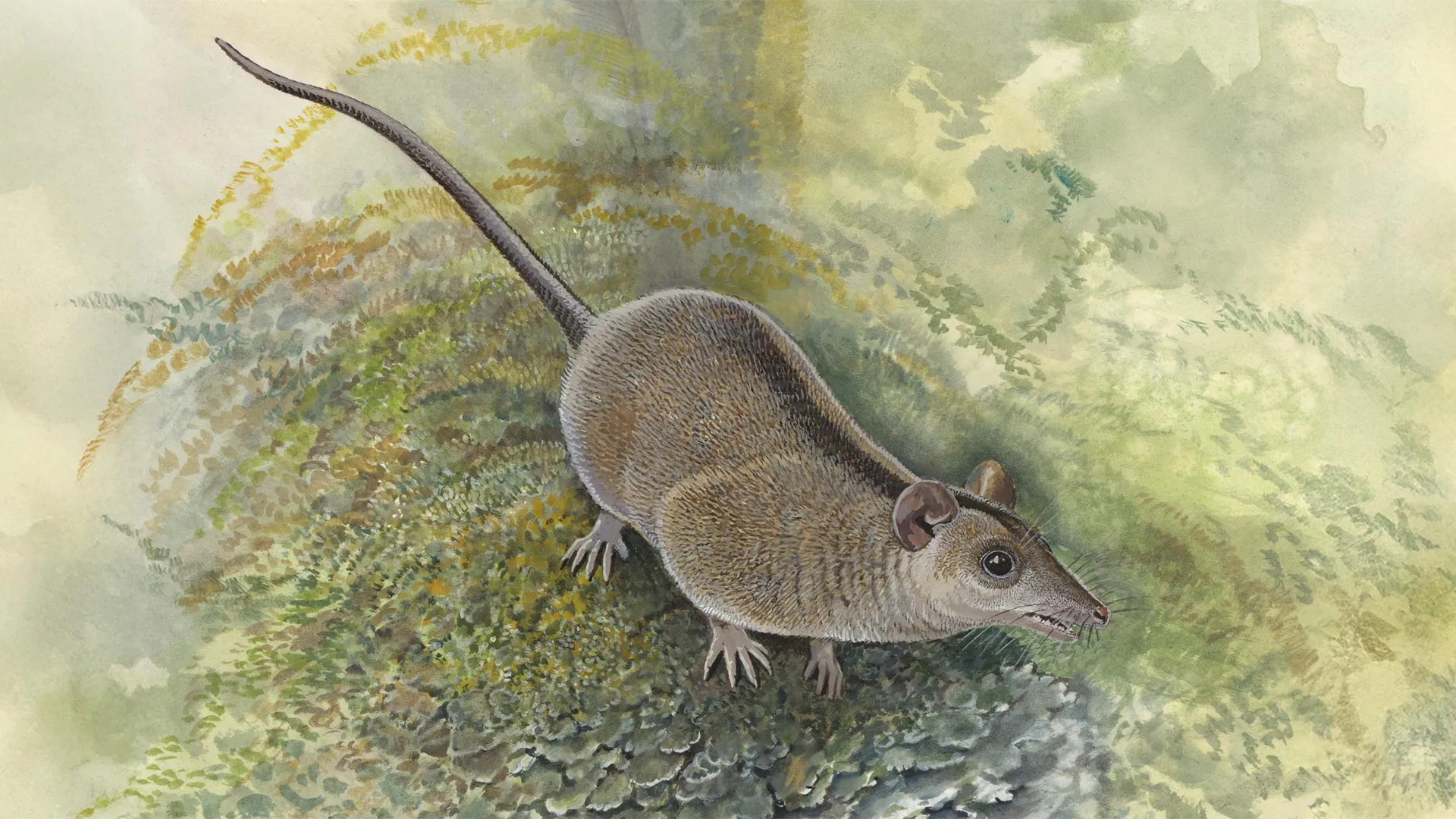
Scientists have discovered three newly identified marsupial species that may belong to an ancient and previously unknown order, according to a paper published in the Journal of Paleontology by researchers from UNSW. The discovery provides rare insight into early stages of marsupial evolution on the Australian continent and suggests that the evolutionary history of these animals was substantially more complicated than current scientific understanding indicates.
The newly proposed order, termed Keeunamorphia, may represent one of the earliest branches of Australian marsupials to diverge from the main evolutionary lineage. Members of this group were likely small insect eaters weighing between 25 to 200 grams that inhabited the rainforests of northern Queensland around 18 million years ago before disappearing approximately 15 million years ago. The three species described in the research lived during a period when the landscape resembled wet, dense rainforest rather than the dry, open terrain visible in the region today.
The fossils, discovered at the Riversleigh World Heritage Area, consisted primarily of teeth and jaw fragments rather than complete skeletons. Researchers combined fossil evidence with genetic information from living species to construct a phylogenetic tree mapping relationships between species and estimating when different branches diverged. The analysis revealed that these animals’ teeth were unusual and resembled those of Djarthia murgonensis, an extinct marsupial that lived approximately 35 million years earlier, suggesting a distinct lineage that had not been previously recognized.
The findings challenge the prevailing explanation of marsupial evolution, which posits that a single early group gave rise to the full diversity of modern Australian marsupials after the continent separated from the ancient supercontinent Gondwana. Instead, the evidence suggests that early Australia may have harbored numerous primitive marsupial-like groups, with several surviving to establish distinct modern lineages. Substantial gaps in the fossil record spanning nearly 20 million years mean that considerable ancient diversity remains undiscovered, leaving ample room for additional lineages to be identified through future paleontological work.
Article Attribution | Read More at Article Source
Article summary produced by Claude AI