

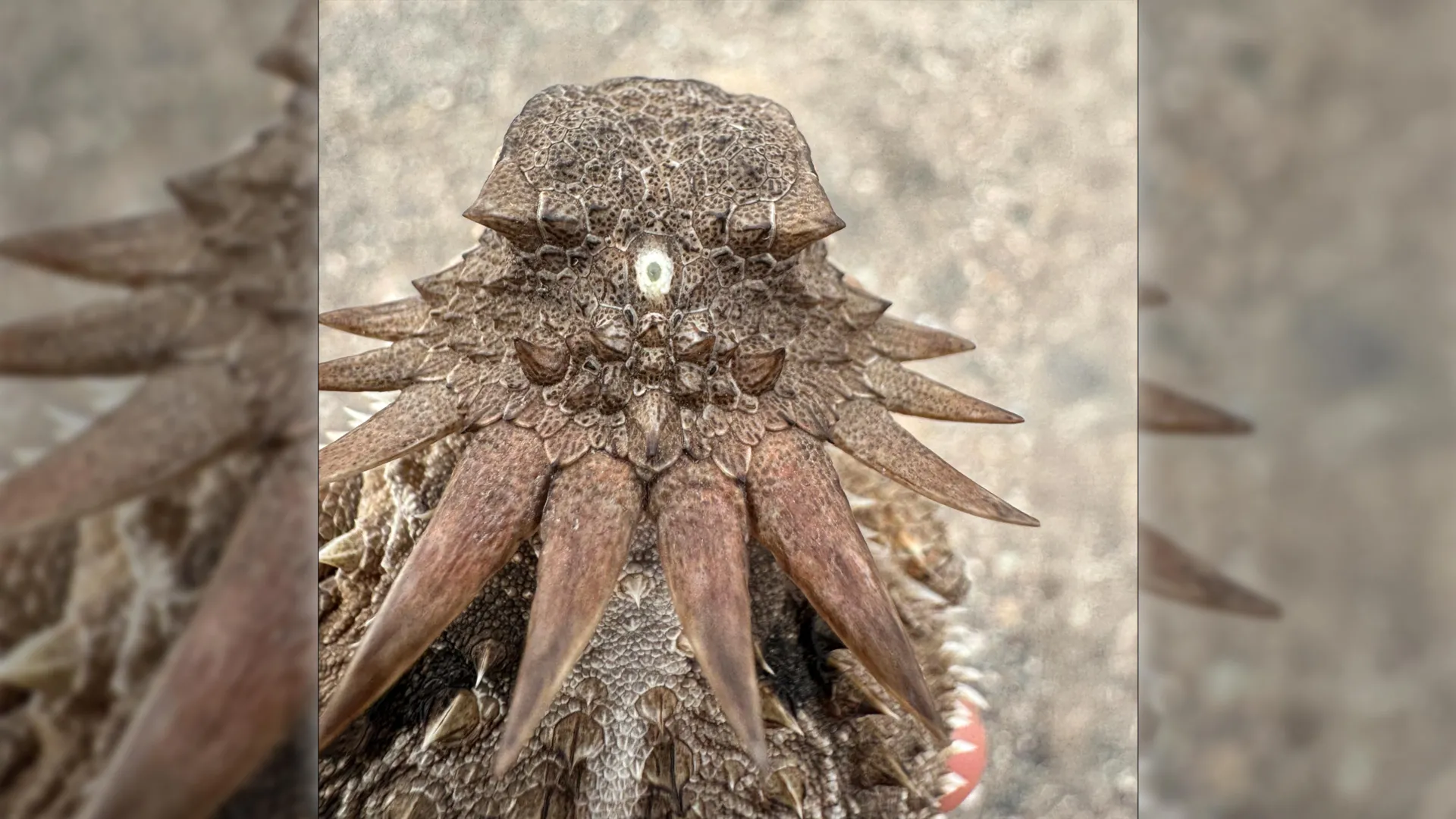
Researchers from Lund University and the University of Sussex have proposed a novel theory about the evolutionary origins of human vision. According to their findings, the earliest vertebrate ancestor possessed a single eye located at the center of its head approximately 600 million years ago. This cyclops-like creature eventually gave rise to the paired eyes found in modern vertebrates through an unusual evolutionary process.
The ancestral organism was a small, worm-like creature inhabiting ancient oceans that adopted a sedentary lifestyle, filtering plankton for sustenance. Originally, this animal possessed paired eyes or light-detecting cells, which are common among mobile animals as they aid in navigation and spatial awareness. However, as the creature became increasingly stationary, its paired eyes offered diminishing survival advantages and gradually disappeared over many generations. In their place, a cluster of light-sensitive cells in the center of the head developed into a simple median eye, or central eye, which likely helped the animal distinguish day from night and determine directional orientation.
Millions of years later, the descendants of this creature resumed an active swimming lifestyle. This return to mobility created renewed evolutionary pressure for advanced vision to detect food, obstacles, predators, and movement direction. The researchers conclude that portions of the ancient median eye were repurposed during evolution to develop a new pair of image-forming eyes. This unusual developmental pathway explains a fundamental difference between vertebrate eyes and those of other animal groups like insects and squid: the vertebrate retina evolved from brain tissue, while insect and squid eyes originated from skin cells.
Perhaps most remarkably, evidence suggests the ancient median eye never fully disappeared. The researchers argue that evolutionary remnants of this structure persist in modern vertebrates as the pineal gland, a small organ deep within the brain. Although humans do not use the pineal gland for vision, it remains functionally connected to the body’s response to light and darkness. The gland produces melatonin, a hormone regulating circadian rhythms and sleep-wake cycles. This discovery suggests that the mechanism controlling human sleep cycles originated from the light-detecting eye of a single-eyed ancestor from millions of years ago.
Article Attribution | Read More at Article Source
Article summary produced by Claude AI