

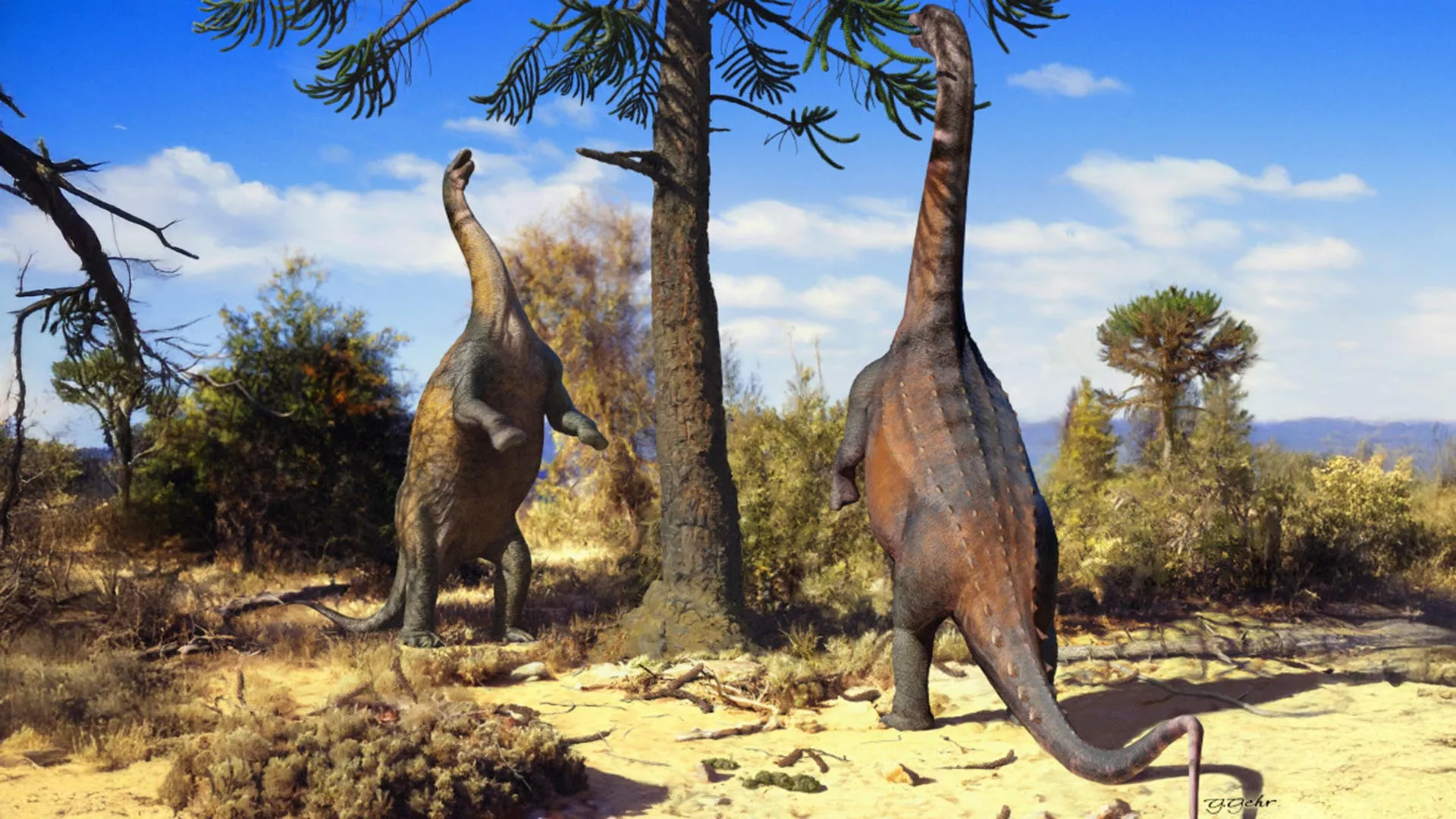
A new study examining long-necked dinosaurs from South America indicates that certain sauropod species possessed the physical capability to rear up on their hind legs, with this ability varying significantly based on age and size. The research focused on Uberabatitan from Brazil and Neuquensaurus from Argentina, both creatures comparable in scale to modern elephants despite being modest among sauropods. The animals lived during the Late Cretaceous period, approximately 66 million years ago.
Scientists from Brazil, Germany, and Argentina employed finite element analysis, an engineering technique typically used to test structural integrity of buildings and machinery, to investigate the stresses placed on dinosaur thigh bones during upright standing. By creating digital models of femurs from seven sauropod species using fossils housed in natural history museums, researchers simulated both external forces from gravity and body weight alongside internal forces from muscle contraction. The analysis revealed that the two South American species exhibited particularly robust femur structures capable of distributing stress more effectively than larger sauropods.
The findings indicate that younger individuals possessed superior ability to maintain an upright posture compared to their adult counterparts. As sauropods grew larger and heavier, the biomechanical strain on their leg bones increased substantially, making prolonged upright positioning increasingly uncomfortable and impractical. Adult Uberabatitans, which reached approximately 26 meters in length, would have faced stress levels similar to those of much larger sauropod species when attempting to stand on hind legs.
Researchers identified several potential advantages that upright positioning may have provided these animals. The elevated stance could have enabled access to high tree foliage unavailable to shorter herbivores, facilitated reproductive displays and mating behaviors, or served defensive purposes by making animals appear larger to predators. When supported by hind legs and tail together, sauropods would have achieved a tripodal stance offering enhanced stability.
The researchers acknowledged methodological limitations, noting that their models did not account for cartilage or tail support effects. They emphasized that the analytical approach proved most valuable for comparative analysis across species rather than providing precise measurements for individual animals, offering insights into sauropod behavior from millions of years ago.