

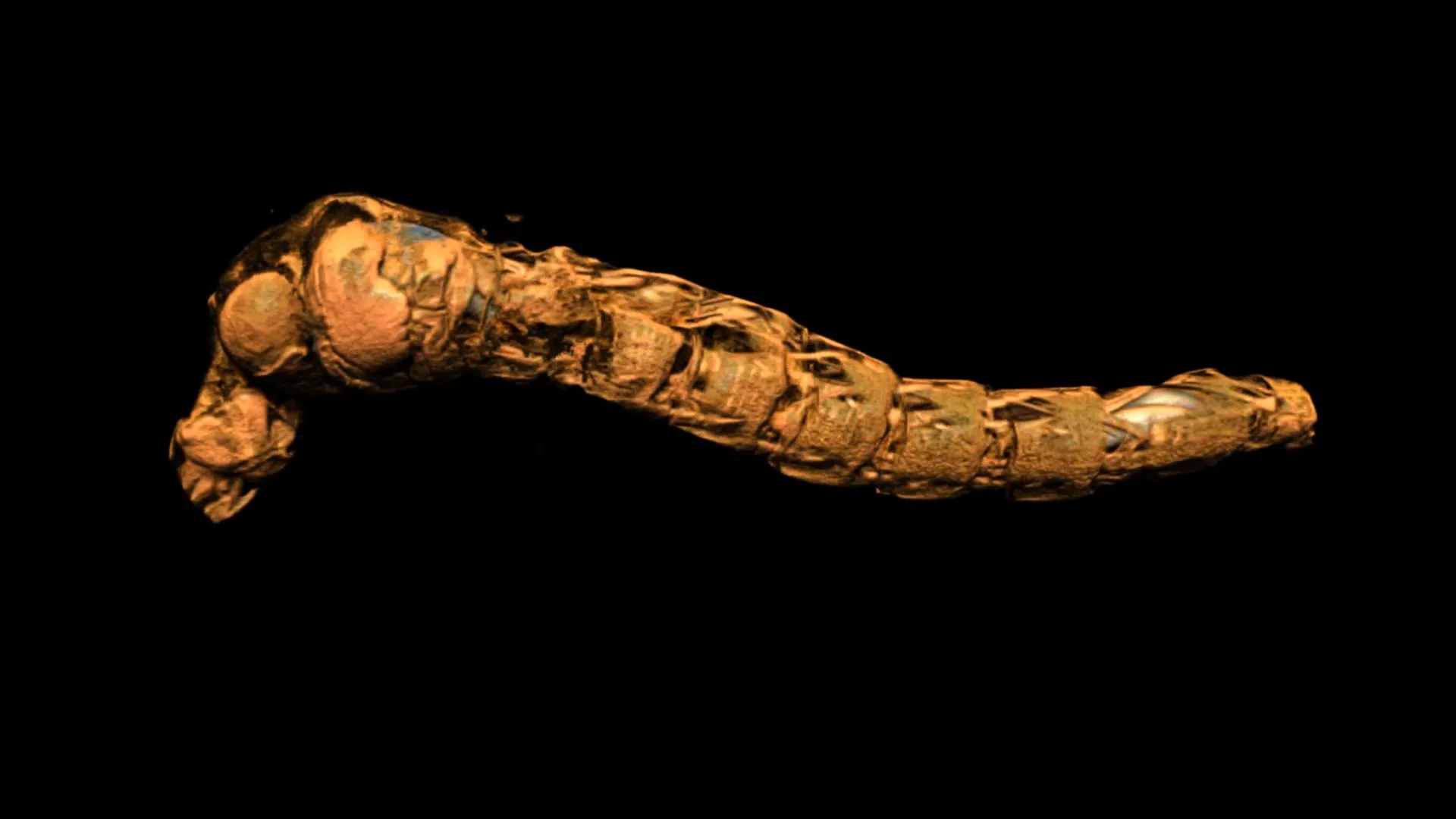
Researchers studying Lake Malawi in East Africa have discovered that billions of lake fly larvae undertake a remarkable daily migration, descending more than 200 meters into oxygen-poor depths during daylight hours before rising toward the surface after dark. This movement allows the organisms to escape predators in deeper water while accessing food sources at shallower depths, though they must navigate past fish during their ascent.
Scientists from UBC, including Drs. Philip Matthews and Evan McKenzie, employed sonar equipment positioned on the lake floor to track these massive population movements. Upon examination, the researchers identified an adaptation in which the larvae’s respiratory system includes two pairs of small air sacs that function similarly to submarine ballast tanks. The sacs contain resilin, a highly elastic biological material common in insects, and the larvae regulate the pH of the sac walls to cause the resilin to expand or contract, thereby adjusting buoyancy and controlling their vertical position in the water.
To assess the structural limits of this system, researchers placed larvae in miniature pressure chambers and found the air sacs could withstand pressures equivalent to those at depths exceeding 400 meters, considerably deeper than the larvae’s normal migration range. This discovery has significant implications for understanding insect distribution in Earth’s ecosystems. The open ocean contains virtually no insects despite their success in terrestrial and freshwater environments, with water pressure at greater depths traditionally cited as a likely barrier. The durability of these larvae’s air sacs suggests that pressure alone may not fully account for insects’ absence from oceanic environments.
The findings also hold potential applications in materials science. Resilin has long interested scientists for its near-perfect rubber-like properties, which enable structures like wing hinges and tendons to withstand repeated stress. Researchers may develop smart materials based on similar mechanisms that respond to pH changes, potentially leading to artificial muscles and other responsive materials. The project received partial support from Natural Sciences and Engineering Research Council of Canada Discovery and Accelerator grants.
Article Attribution | Read More at Article Source
Article summary produced by Claude AI