

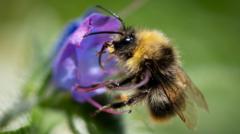
New analysis of bumblebee monitoring data indicates that United Kingdom bumblebee populations could experience significant reductions as heat events grow more common and severe. The assessment, derived from the Bumblebee Conservation Trust’s long-term national tracking program, documents population declines following the exceptional heat experienced in 2022. Britain recently experienced a third heatwave within three months, with temperatures reaching levels where native bumblebee species encounter difficulties maintaining flight without excessive heat buildup.
Bumblebees play a crucial ecological role as pollinators supporting wildflowers and agricultural crops. The challenge posed by extreme heat operates through two mechanisms. British bumblebee species evolved in a historically cooler climate and feature thick fur and round bodies designed to retain warmth, along with powerful flight muscles that generate heat during activity. However, during heatwaves, these same muscular systems produce excess heat, while their insulation and body shape impede cooling. Research indicates that once air temperatures reach approximately 28 to 32 degrees Celsius, UK bumblebees experience difficulty flying without overheating. At internal body temperatures exceeding 40 degrees Celsius, the insects begin to die. The 2022 heatwaves, which included three official summer events and peak temperatures of 40.3 degrees Celsius, corresponded with notable population drops among common species, with declines ranging from 20 to 35 percent. Population impacts persisted into the following year.
Extreme heat combines with secondary stressors to harm bumblebee survival. Drought conditions reduce nectar and pollen availability as flowering plants produce less food. Bumblebees must calculate whether foraging energy expenditure yields sufficient nutritional return. Inadequate food supplies result in slower larval development, reduced colony growth, and fewer new queens produced for subsequent seasons. Scientists emphasize that moderate warm weather is not inherently harmful and can benefit certain species with southern ranges.
Conservationists recommend expanding flower-rich habitats to support bumblebees as climate conditions intensify. Interventions range from large-scale meadow creation to small-scale measures such as potted wildflowers on windowsills. Additional strategies include creating small ponds to provide moisture-rich nectar sources and planting dense shrubs offering shade and cooler microclimates for movement between flowers. Experts stress that substantial land area is not required to provide meaningful assistance.