

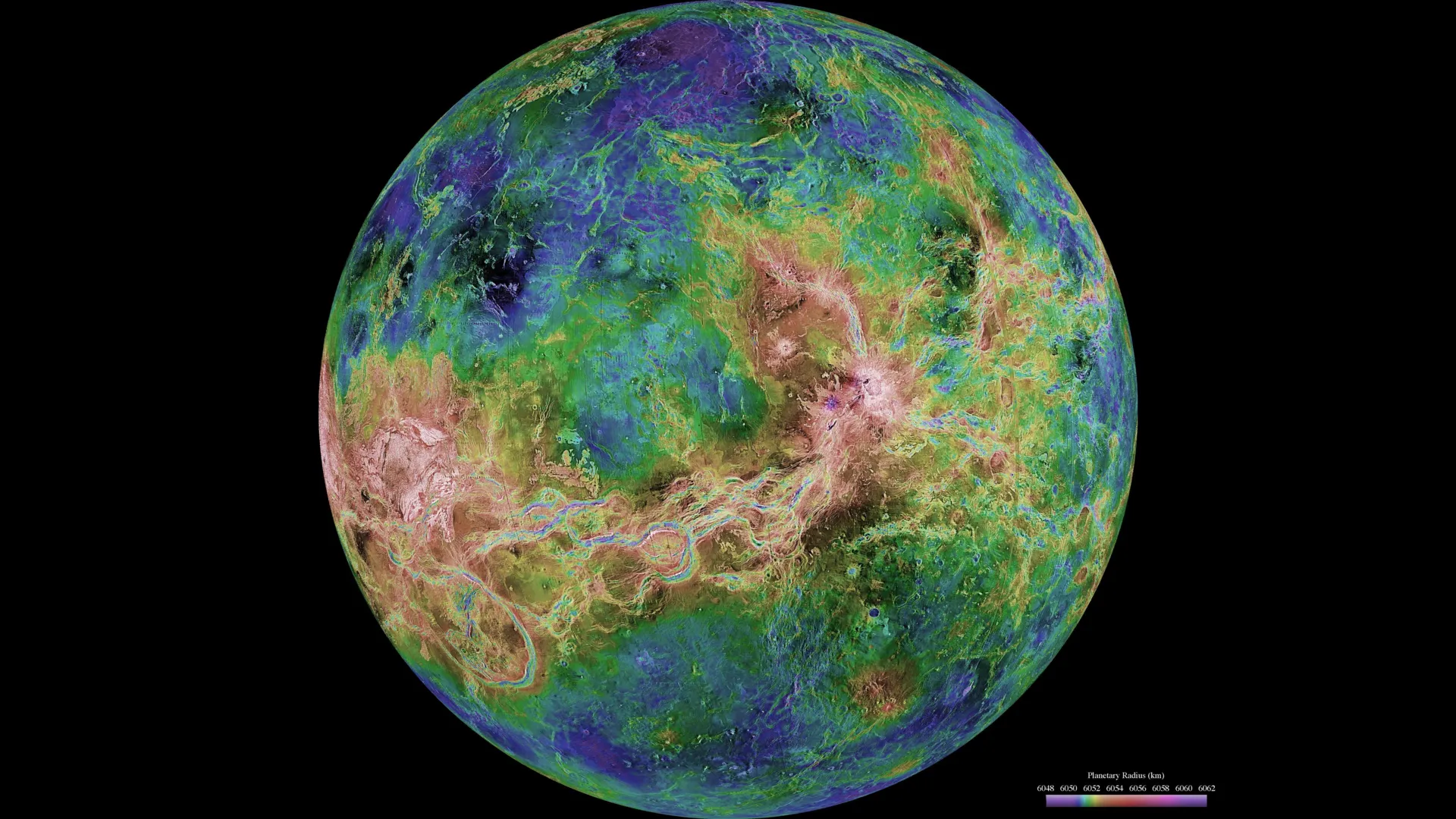
Venus, long considered geologically inactive despite its extreme surface conditions, may be far more tectonically dynamic than scientists previously believed, according to research from ETH Zurich. The planet’s most compelling evidence of ongoing geological activity comes from its vast rift valleys, which dwarf similar formations on Earth and can extend up to 10,000 kilometers in length.
Researchers led by Professor Taras Gerya developed the first high-resolution, three-dimensional computer simulations of Venusian rifts, moving beyond the two-dimensional models that had dominated previous research. The advanced modeling revealed that some of these rift valleys likely formed much more recently than the 100 million years or longer previously assumed by many geoscientists. The simulations showed how Venusian rifts develop elevated ridges along their sides, called rift flanks, while still young and actively spreading. These features appear to widen at rates between 3 and 10 centimeters annually, according to the model’s calculations.
A key finding involves how these rift flanks change over time. Unlike Earth, where erosion gradually wears down elevated landforms, Venus’s rift flanks sink as the planet’s crust slowly relaxes after being stretched by tectonic movement. The researchers observed that these raised features flatten relatively quickly once the geological activity slows or stops. Images from the Magellan spacecraft, which explored Venus during the 1990s, show landscape features that closely match the elevated rift flanks predicted by the new simulations, providing observational support for the modeling results.
The research, published in Nature Geoscience, suggests Venus possesses a more active interior than previously understood. The findings may assist scientists in identifying regions where geological activity could still be occurring, potentially guiding future exploration missions. As NASA and the European Space Agency prepare upcoming Venus missions, including ESA’s EnVision orbiter scheduled for the early 2030s, the improved understanding of Venusian tectonics could help investigators locate priority targets for studying active volcanism and tectonic processes on the planet.
Article Attribution | Read More at Article Source
Article summary produced by Claude AI