

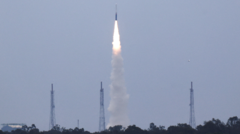
Skyroot Aerospace successfully launched Vikram-1, marking India’s first private sector orbital rocket flight. The seven-story vehicle lifted off from the Indian Space Research Organisation’s facility in Sriharikota and reached Low Earth Orbit during a 16-minute flight, carrying multiple payloads to their designated positions.
The achievement positions Skyroot as India’s first space technology unicorn, having recently reached a $1.1 billion valuation. With this launch, India joins the United States and China as the only nations where private companies have achieved orbital capability. The rocket is designed to carry payloads of up to 350 kilograms and was named after Vikram Sarabhai, a foundational figure in India’s space program.
Skyroot’s business model centers on providing dedicated launch services for smaller satellites, which the company describes as a “cab service to space.” Rather than requiring operators to wait months or years for shared rides on large rockets with fixed schedules, the service allows customers to book launches tailored to their specific payload and orbital requirements. Co-founder and CEO Pawan Kumar Chandana noted that current launch bottlenecks create significant delays in the satellite industry.
The test mission, called Aagman, deployed six payloads including scientific instruments such as a robotic arm for space debris removal and Earth observation equipment. The flight also carried symbolic payloads developed to honor India’s space heritage: a lotus sculpture made from lab-grown diamonds and a miniature gold rocket containing micro-sculptures of three prominent Indian scientists. These tributes commemorate physicist CV Raman, aerospace engineer APJ Abdul Kalam, and Vikram Sarabhai.
Skyroot was founded in 2018 by former Indian space agency employees and plans two additional test flights this year before beginning commercial operations. The company anticipates monthly rocket production capacity at its Hyderabad facility. India’s government aims to increase the nation’s share of the global space market from its current 2 percent to 10 percent by 2030, with over 400 space startups now operating in the country since the sector opened to private enterprises in 2020.