

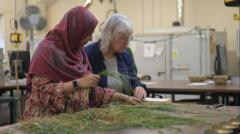
Rothamsted Research in Hertfordshire has operated the Park Grass Experiment continuously for 170 years, making it the world’s longest-running study of permanent grassland. The research began during Queen Victoria’s reign when founders Sir John Bennet Lawes and Joseph Henry Gilbert established the study to examine how fertilizers and manure influence hay yields. The experiment covers just under three hectares and is subdivided into multiple plots, each treated differently to allow scientists to compare how various nutrients affect grass growth, soil composition, and botanical diversity.
The experiment’s longevity provides researchers with an exceptionally rare resource: comprehensive historical records spanning more than a century and a half. The original founders preserved crop and soil samples, creating an archive that scientists continue to consult. These materials, combined with weather records maintained on site, enable researchers to track environmental changes across timescales that are virtually unavailable elsewhere globally. Modern scientific techniques now enhance this work, including DNA analysis to investigate historical soil organisms and digitization of species records dating to 1856.
Recent research has already yielded insights into atmospheric changes. Scientists have documented how reductions in nitrogen and sulphur deposition—once widespread across the UK due to industrial activities and vehicle emissions—have altered the botanical composition of certain plots. The detailed records clearly show these shifts in plant diversity corresponding to changing pollution patterns. Dr. Sarah Perryman, curator of the Park Grass data, characterizes the site as a “living record of ecological change” rather than merely a historical artifact.
As climate change becomes an increasingly pressing concern, the experiment’s focus has shifted toward understanding how shifting weather patterns may affect grassland productivity and composition. Researchers have already identified specific climate-related patterns, such as correlations between drier springs and reduced yields. Scientists anticipate that elevated carbon dioxide levels may boost productivity, though potential drought stress could offset these gains. Current samples being collected may ultimately prove valuable for addressing scientific questions that have not yet been formulated, adding another dimension to this continuously evolving legacy of environmental observation.
Article Attribution | Read More at Article Source
Article summary produced by Claude AI