

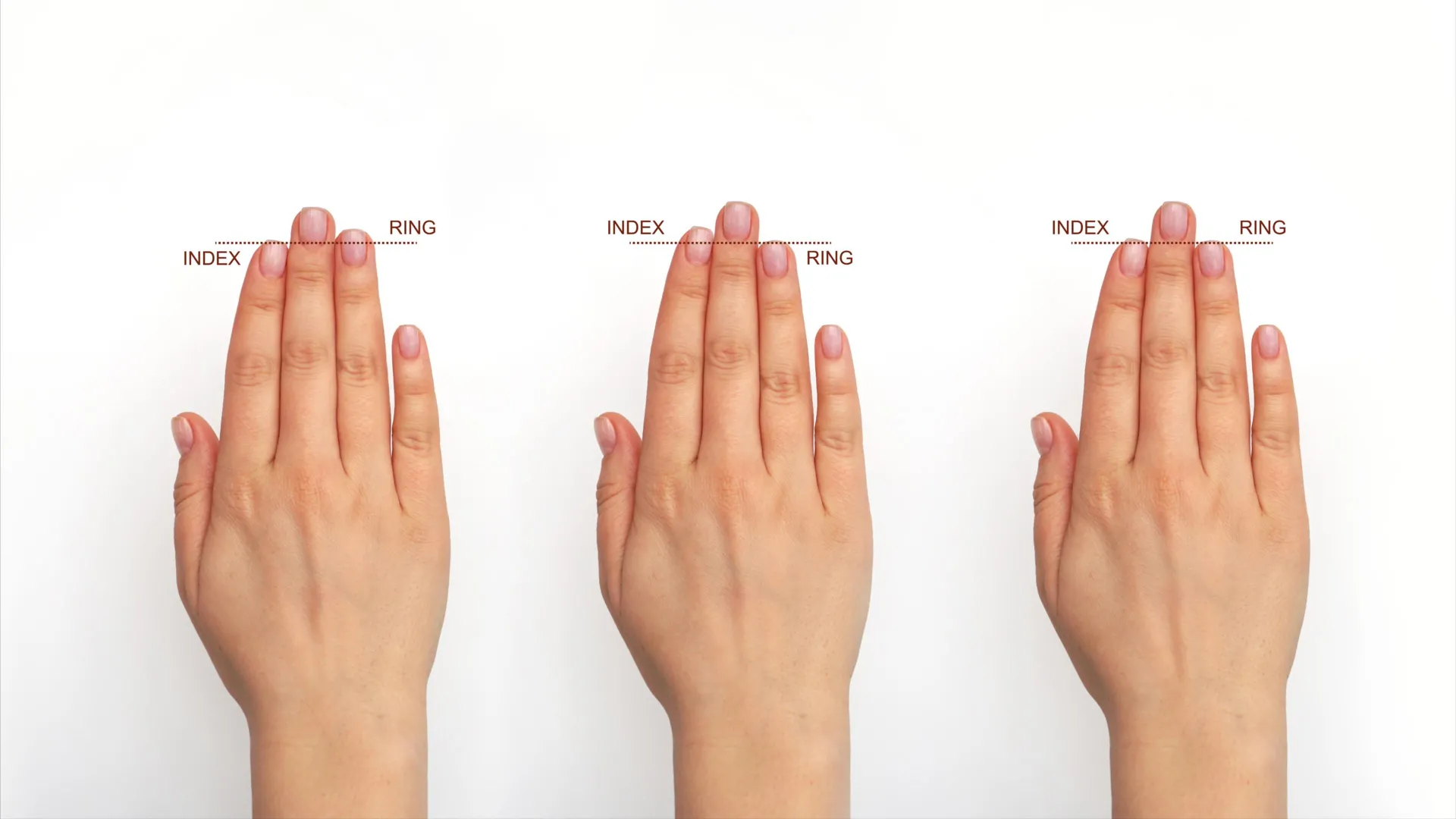
A research team from Swansea University and Istanbul University examined whether prenatal hormone exposure correlates with brain size in newborns. The study measured the 2D:4D digit ratio—comparing index finger to ring finger length—as an indirect marker of fetal estrogen and testosterone exposure during the first trimester of pregnancy. This metric is based on the observation that higher prenatal estrogen exposure typically results in a longer index finger relative to the ring finger.
The researchers analyzed 225 newborns, consisting of 100 boys and 125 girls, measuring their digit ratios and head circumference. Head circumference serves as a general indicator of brain size in infants and has been linked to later cognitive development measures, though numerous factors influence intelligence outcomes. The findings, published in Early Human Development, revealed that boys with higher digit ratios—suggesting elevated prenatal estrogen—tended to have larger head circumferences. This relationship was not found in girls.
The results may support the estrogenized ape hypothesis, which proposes that human brain enlargement occurred alongside skeletal changes that made humans less robust and more physically feminine compared to earlier ancestors. According to the research team, the association between digit ratio and head size offers potential insights into how prenatal hormones shaped human brain evolution. However, the researchers emphasized that the study demonstrates correlation rather than direct causation between finger length and brain development.
Professor John Manning noted that while higher prenatal estrogen exposure is linked to larger brains, it also correlates with increased cardiovascular problems, reduced fertility, and predisposition to schizophrenia in males. The team suggests that evolutionary pressures favoring larger brains may have outweighed these biological costs, indicating that human brain expansion involved significant trade-offs in other aspects of male viability.
Originally reported by ScienceDaily. Read the full story →