

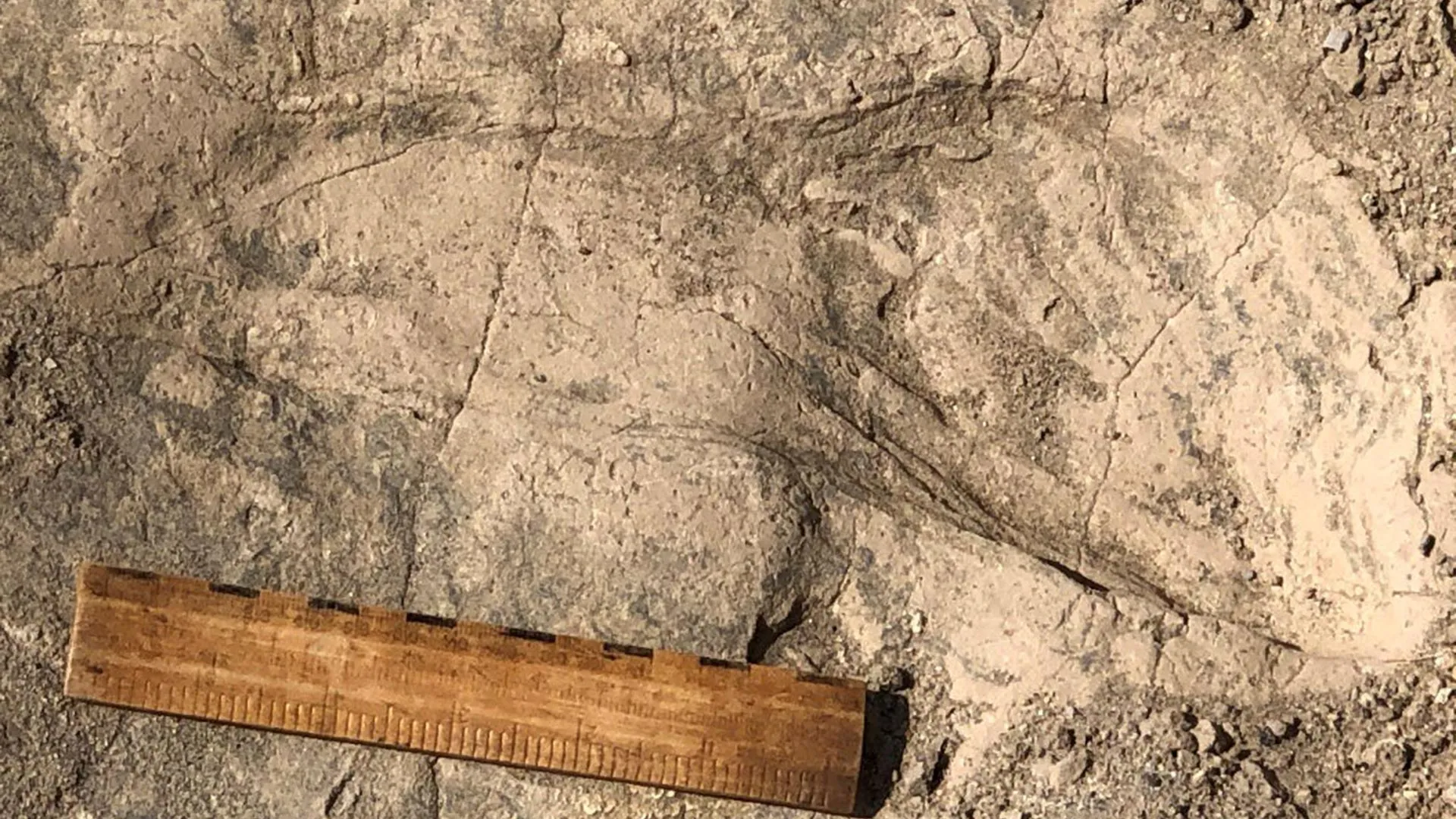
A collection of fossil footprints discovered in northern Kenya is providing researchers with direct evidence of how Paranthropus boisei, an extinct human relative, lived approximately 1.4 million years ago. The tracks were preserved near an ancient lakeshore and appear to show eight individuals from this species occupying the same location at roughly the same time. This discovery is significant because footprints can capture a specific moment in time, unlike skeletal remains that may accumulate over extended periods.
Using analytical techniques developed by the research team, scientists determined that all eight trackmakers were likely adults, and several appear to have been considerably larger than previous estimates suggested. The footprint sizes indicate body heights reaching up to 1.8 meters and weights around 75 kilograms. This finding challenges earlier research that characterized Paranthropus boisei as substantially smaller than Homo erectus, another hominin species that inhabited the same period. Previous knowledge of Paranthropus boisei body structure had been limited, as the majority of known fossils consisted primarily of skulls with large jaws and teeth, while remains from other skeletal regions were rare.
The tracks provide insight into potential social behaviors of the species. The eight individuals appear to have traveled together as a group, and evidence suggests most were adult males with no obvious signs of females or children. This pattern indicates Paranthropus boisei may have possessed complex social structures, with males possibly competing for mates while also cooperating for safety in hazardous environments.
The footprint site is part of a larger collection of hominin tracks discovered in ancient lakeshore environments around Lake Turkana, suggesting these areas provided valuable resources that attracted extinct human relatives repeatedly over time. Researchers have now documented hundreds of hominin footprints across more than a half-dozen sites in the region. The international team plans to continue investigating these sites, with the goal of understanding the geological conditions that allowed tracks to be preserved and why hominins returned to lakeshores repeatedly over extended periods. These discoveries reinforce Lake Turkana’s importance as one of the world’s most significant regions for studying human evolution.
Article Attribution | Read More at Article Source
Article summary produced by Claude AI