

A Spanish research team conducted a detailed analysis of chamber three in tomb TT 209, located in the Theban Necropolis across the Nile from Luxor, to document how this burial space was repeatedly modified and reused across multiple historical periods. The tomb was initially constructed during the Twenty-fifth Dynasty and continued to be used through the Ptolemaic period before eventually being abandoned.
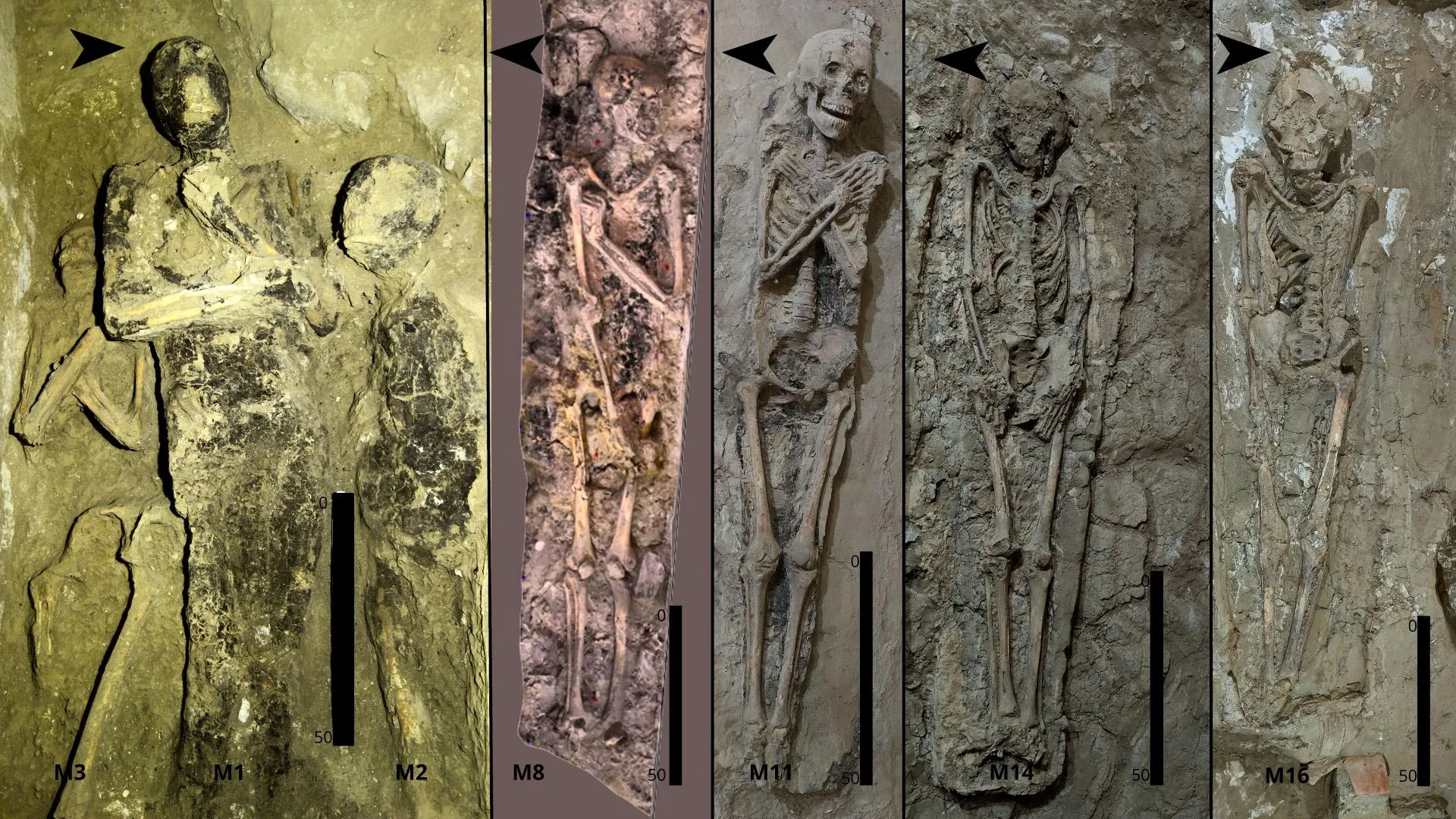
The excavation revealed a total of 16 mummified individuals, one mummified dog, and additional human remains in a disturbed deposit. Rather than representing a chaotic accumulation of bodies over time, the researchers determined that the chamber exhibited a clear spatial organization in which each new burial was deliberately positioned in relation to previously interred remains. The researchers identified nine separate funerary deposits within the chamber, suggesting that those responsible for new burials maintained an awareness of earlier burials and adapted their practices accordingly.
The team documented significant shifts in burial customs across different time periods. Early burials featured individuals of apparent high social status interred in coffins with valuable items and funerary goods. As the chamber became more densely occupied during the Persian period, burial practices changed dramatically, with bodies increasingly placed vertically atop one another rather than occupying separate spaces. Later burials during the Ptolemaic period showed further evolution, with some bodies arranged in the Osirian position with crossed arms and associated with upright jars indicating specific rituals.
One of the most notable discoveries was the arrangement of four mummified humans with a mummified dog placed directly on top of them in the chamber’s southeastern section. Researchers suggested this positioning may indicate a close relationship between the humans and the animal or could reflect changing ritual practices in which animals played a symbolic role in the afterlife journey.
The findings suggest that previously studied burial chambers dismissed as disorganized may actually reflect deliberate funerary practices that evolved considerably over time while maintaining cultural continuity. The research contributes to a broader understanding of how ancient peoples conceptually reorganized burial spaces across generations.
Article Attribution | Read More at Article Source
Article summary produced by Claude AI