

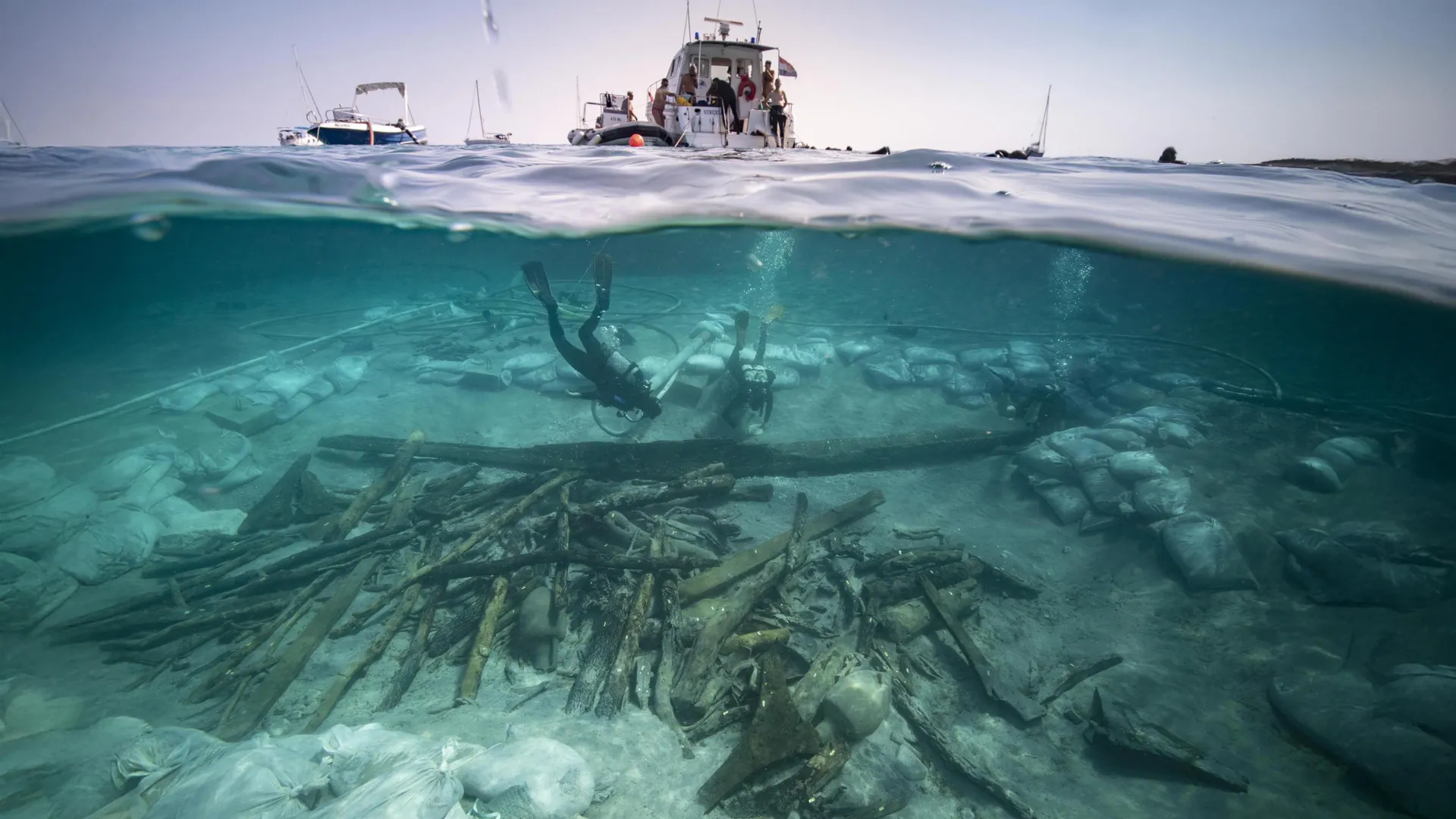
Researchers from French and Croatian institutions have published findings on the protective coatings of a Roman Republic vessel that sank approximately 2,200 years ago in the Adriatic region. The study, appearing in Frontiers in Materials, represents the first comprehensive analysis combining molecular and pollen examination to identify waterproofing materials and environmental conditions during the ship’s construction and repairs.
The Ilovik-Paržine 1 wreck, discovered in 2016, was protected by two types of coatings. The primary material was pine tar, also called pitch, while a secondary coating combined pine tar with beeswax in a mixture known as zopissa to Greek shipbuilders. This formulation increased flexibility and made application easier when heated. Researchers conducted structural, molecular, and pollen analyses on 10 coating samples using techniques including mass spectrometry to identify biological origins of the natural materials.
The sticky nature of pitch proved valuable for scientific investigation, as it trapped and preserved pollen from vegetation near where the material was produced or applied. Analysis of pollen types revealed environments ranging from Mediterranean and Adriatic coastal forests to riverbank vegetation and mountain terrain characteristic of northeastern coastal regions. The presence of specific plant taxa including holly oak, pine, alder, and ash helped researchers reconstruct ancient landscapes and trade routes.
The examination identified four to five separate coating applications on the vessel, with different batches clustered in distinct sections. Earlier research suggested the ship was built near Brundisium in southeastern Italy, and the new pollen evidence indicates some coatings may have been applied in that area while others were likely added along the northeastern Adriatic coast. This pattern suggests the vessel underwent multiple repairs using materials sourced from different Mediterranean locations during its operational life, demonstrating ancient seafaring practices and regional shipbuilding traditions.
Article Attribution | Read More at Article Source
Article summary produced by Claude AI