

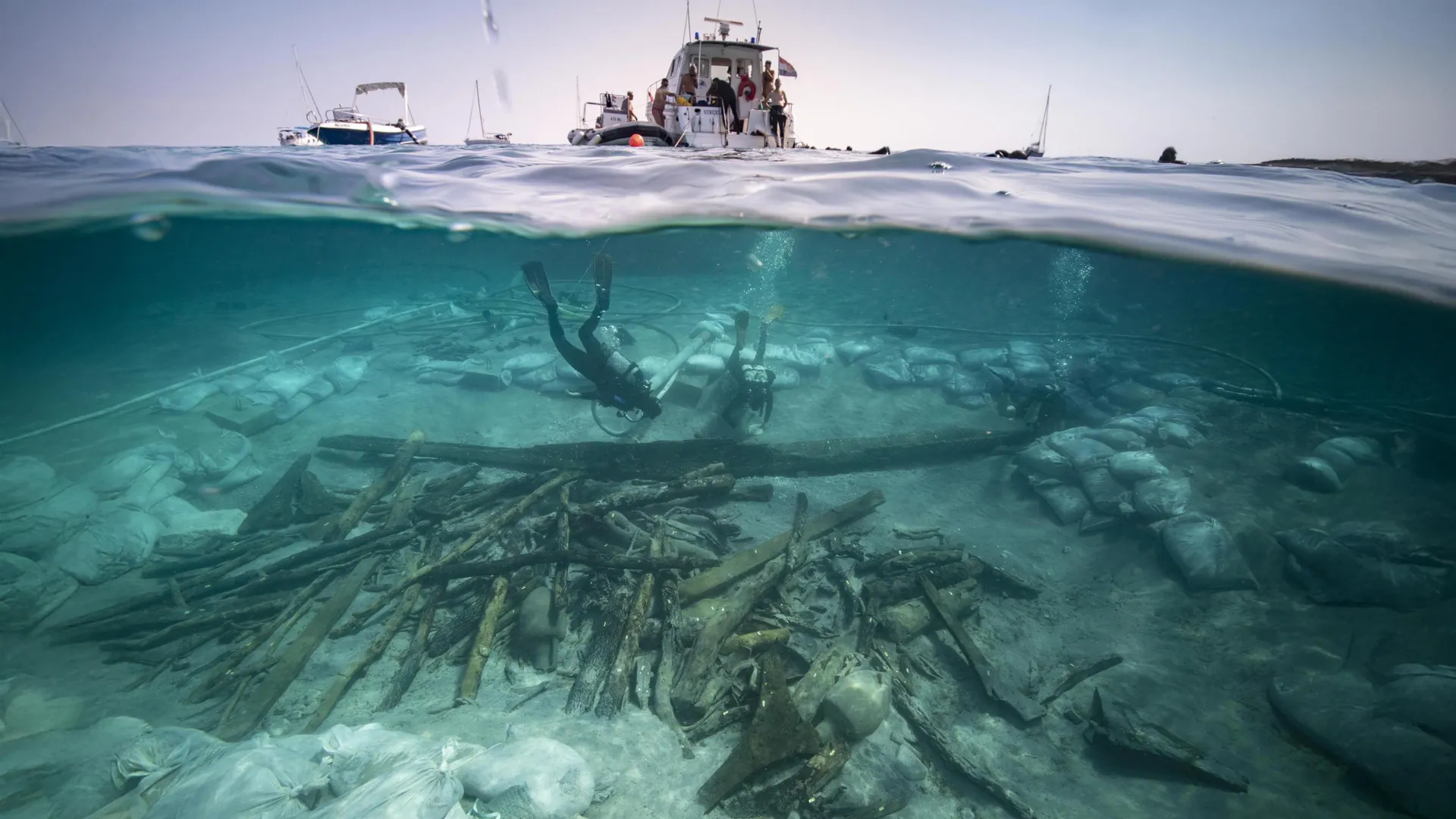
A collaborative study published in Frontiers in Materials examined protective coatings on the Roman Republic shipwreck Ilovik-Paržine 1, which sank approximately 2,200 years ago in waters off present-day Croatia. The research, conducted by teams from the Croatian Conservation Institute and Aix-Marseille University in France, represents the first comprehensive analysis combining molecular and pollen techniques to identify the vessel’s coatings and understand the environmental context of their production and application.
The investigation of ten coating samples revealed two primary waterproofing formulations used on the hull. All samples contained heated coniferous resin or pitch derived from pine trees. One sample exhibited a distinct composition combining beeswax with tar, a mixture known to ancient Greek shipbuilders as zopissa, which improved adhesive flexibility and ease of application when heated. Through molecular fingerprinting and mass spectrometry analysis, researchers identified the biological origins of these natural materials and documented their structural composition.
Pollen trapped within the naturally sticky pitch provided crucial evidence about where materials were sourced and applied. Analysis of pollen types and their relative abundance indicated origins across diverse Mediterranean and Adriatic environments, including coastal forests dominated by holly oak and pine, as well as riverbank vegetation such as alder and ash. The presence of fir and beech pollen suggested connections to mountainous terrain characteristic of the north-eastern Adriatic coast near Istria and Dalmatia.
The coating analysis identified evidence of four to five separate repair cycles performed on the vessel over its operational lifetime. Different sections of the hull exhibited distinct coating batches, with the stern and central areas sharing similar materials while the bow displayed three separate layers. Earlier research on the ship’s ballast indicated construction at Brundisium, now Brindisi in south-eastern Italy, with pollen evidence suggesting some coatings were applied in that region and others added along the north-eastern Adriatic coast near the site where the wreck was discovered.
Article Attribution | Read More at Article Source
Article summary produced by Claude AI