

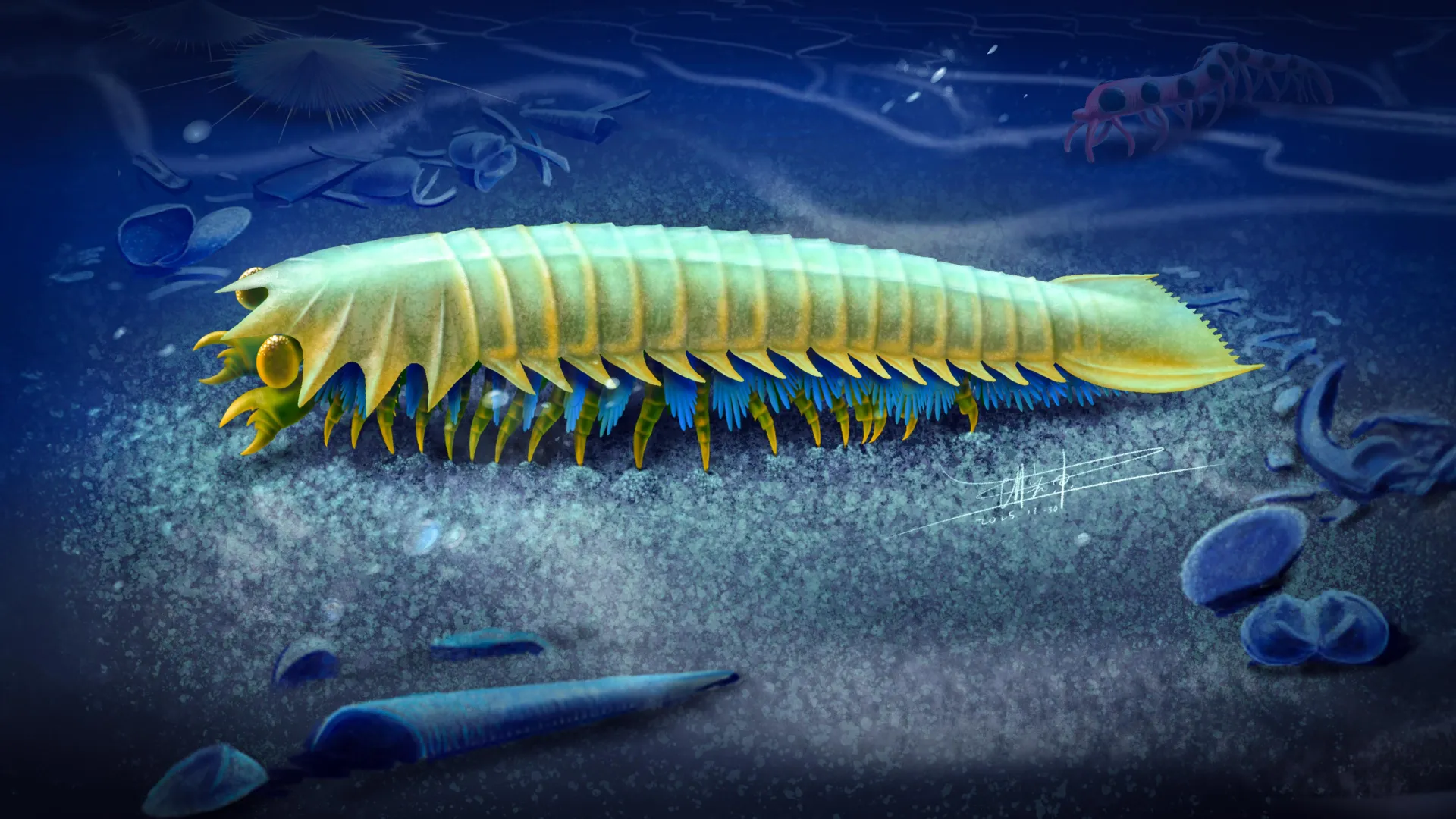
Researchers from Yunnan University and the University of Leicester have documented the earliest known precursors to spider fangs in a marine creature called Urokodia that lived during the early Cambrian Period, approximately 518 million years ago. The discovery was made through analysis of fossils at the Chengjiang site in Yunnan Province in southern China and was published in Nature.
Urokodia measured between 2-3 centimeters in length and possessed several distinctive features, including large eyes mounted on stalks, a segmented body structure, and jointed limbs positioned beneath its frame. While the creature bears little obvious visual similarity to modern spiders and scorpions, it belonged to the broader evolutionary lineage that gave rise to chelicerates, a diverse group of invertebrates that now includes over 100,000 described species. Using X-ray technology to examine the fossilized remains, scientists identified two pincer-like appendages located just behind the creature’s eyes, which represent an early form of chelicerae—the specialized structures that evolved into the pincers and fangs found in contemporary chelicerates.
The fossil preservation also revealed additional anatomical details, including features on the creature’s legs that likely functioned as book gills for underwater respiration, similar to structures still present in modern aquatic chelicerates such as horseshoe crabs. The research team noted that the soft anatomy of the ancient organism had been preserved in a mummified state for hundreds of millions of years within the rock matrix.
Chelicerates have established themselves as one of the most successful animal groups, inhabiting both marine and terrestrial environments worldwide. Those species that transitioned to land developed into formidable predators, with fossil evidence indicating that their ancestors had been hunting for hundreds of millions of years. The Chengjiang fossil site itself preserves evidence of more than 200 distinct animal species that occupied ancient oceans over 500 million years ago, offering substantial information about early animal evolution during a pivotal period in Earth’s biological history.
Article Attribution | Read More at Article Source
Article summary produced by Claude AI