

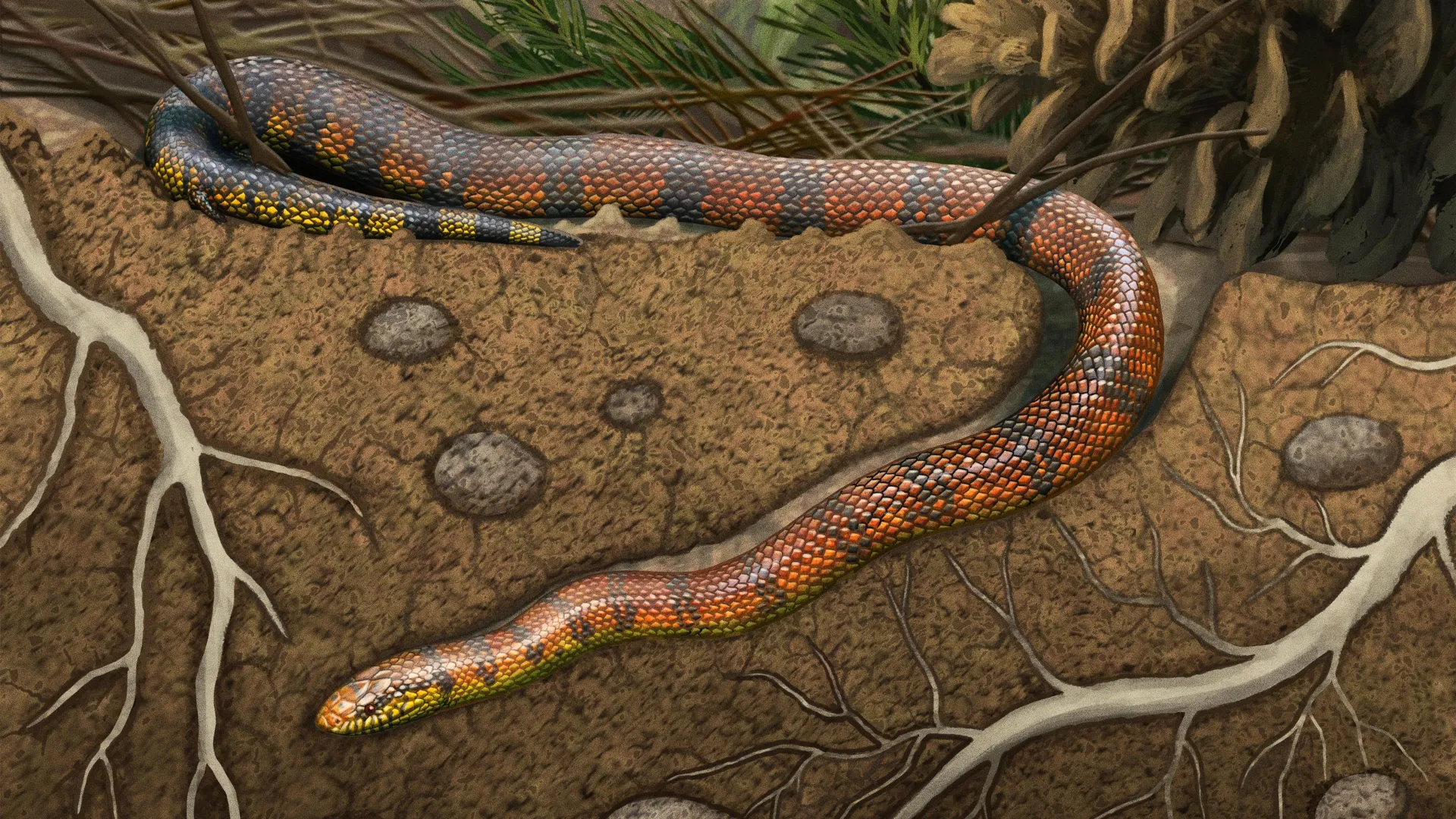
Scientists have gained new insight into how snakes evolved their distinctive elongated and limbless body plan through analysis of an exceptionally preserved fossil specimen. The research, published in Nature, examined Tametara mirim, a Late Cretaceous snake species discovered in southeastern Brazil dating to around 80 million years ago. Researchers led by Tiago Simões at Princeton University used advanced imaging technology to reconstruct the specimen’s brain structure and other features that shed light on the species’ sensory abilities and lifestyle.
The study compared Tametara with Dinilysia patagonica, another fossil snake from Argentina, revealing that these early snake species possessed markedly different brain structures. Analysis indicated that Tametara was adapted for a burrowing lifestyle, while Dinilysia showed characteristics suggesting a terrestrial existence. These findings suggest that early snakes were not confined to a single ecological pathway during their evolution, contrary to long-standing scientific debate.
For decades, scientists have been divided between two main theories explaining snake origins. One camp proposed that snakes became limbless while adapting to underground environments, while others argued the transition occurred in aquatic settings. The new research demonstrates that the actual evolutionary history was considerably more complex. Evidence from fossil-bearing marine sediments combined with comparative analysis of brain structure indicates that various early snake lineages repeatedly shifted between burrowing, terrestrial and marine habitats.
The findings reveal that by the Late Cretaceous period, early snakes had already achieved significant ecological and morphological diversity. Different lineages developed specialized sensory systems and body adaptations suited to their specific environments rather than converging on a single evolutionary solution. Researchers emphasize that brain morphology provides crucial information about ancestral lifestyles and evolutionary pressures that skeletal features alone cannot convey. The study was conducted by an international research team including scientists from the University of Helsinki and University of São Paulo.
Article Attribution | Read More at Article Source
Article summary produced by Claude AI