

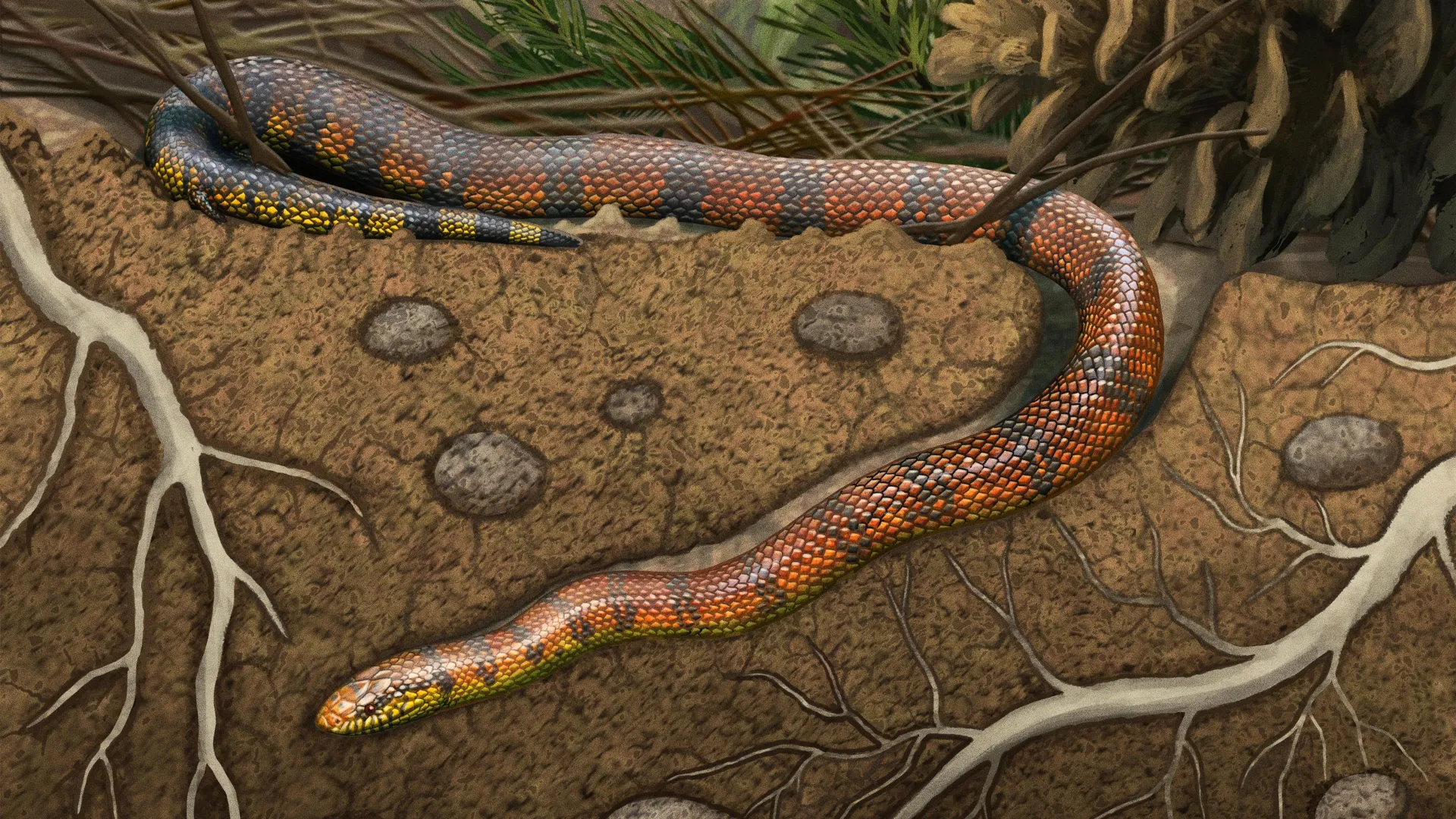
Researchers studying fossil snakes have long grappled with understanding how snakes evolved their characteristically elongated, limbless bodies from lizard ancestors. With early snake fossils remaining scarce, scientists previously focused on two primary theories: snakes either adapted to underground life or developed their body plan in aquatic environments. A new research publication suggests the reality was considerably more nuanced. An international team led by Tiago Simões of Princeton University examined a newly discovered fossil species from southeastern Brazil dating to approximately 80 million years ago. Named Tametara mirim, this specimen represents one of the most complete ancient snake skeletons ever found in the paleontological record. Using advanced imaging technology including computed tomography and three-dimensional rendering, scientists created detailed digital reconstructions of the fossil’s internal structures, particularly the brain and skull features.
Comparative analysis of Tametara with Dinilysia patagonica, another fossil snake previously discovered in Argentina, revealed striking differences in brain architecture between the two species. These neurological distinctions indicated that each species had evolved for different ecological niches. The structural evidence suggested that Tametara was adapted for burrowing behaviors, while Dinilysia was suited to ground-dwelling existence. Additional evidence from marine sediments further supported the conclusion that early snakes repeatedly shifted between underground, terrestrial, and aquatic environments.
According to the research team, these findings demonstrate that early snake evolution was far more dynamic than previously understood. Rather than progressing toward a single standardized body form or sensory system, different snake lineages independently explored various habitats and developed specialized adaptations suited to their respective ecological zones. The research indicates that early snakes did not follow a unified evolutionary trajectory but instead employed diverse sensory and ecological strategies during their evolutionary development.
Article Attribution | Read More at Article Source
Article summary produced by Claude AI