

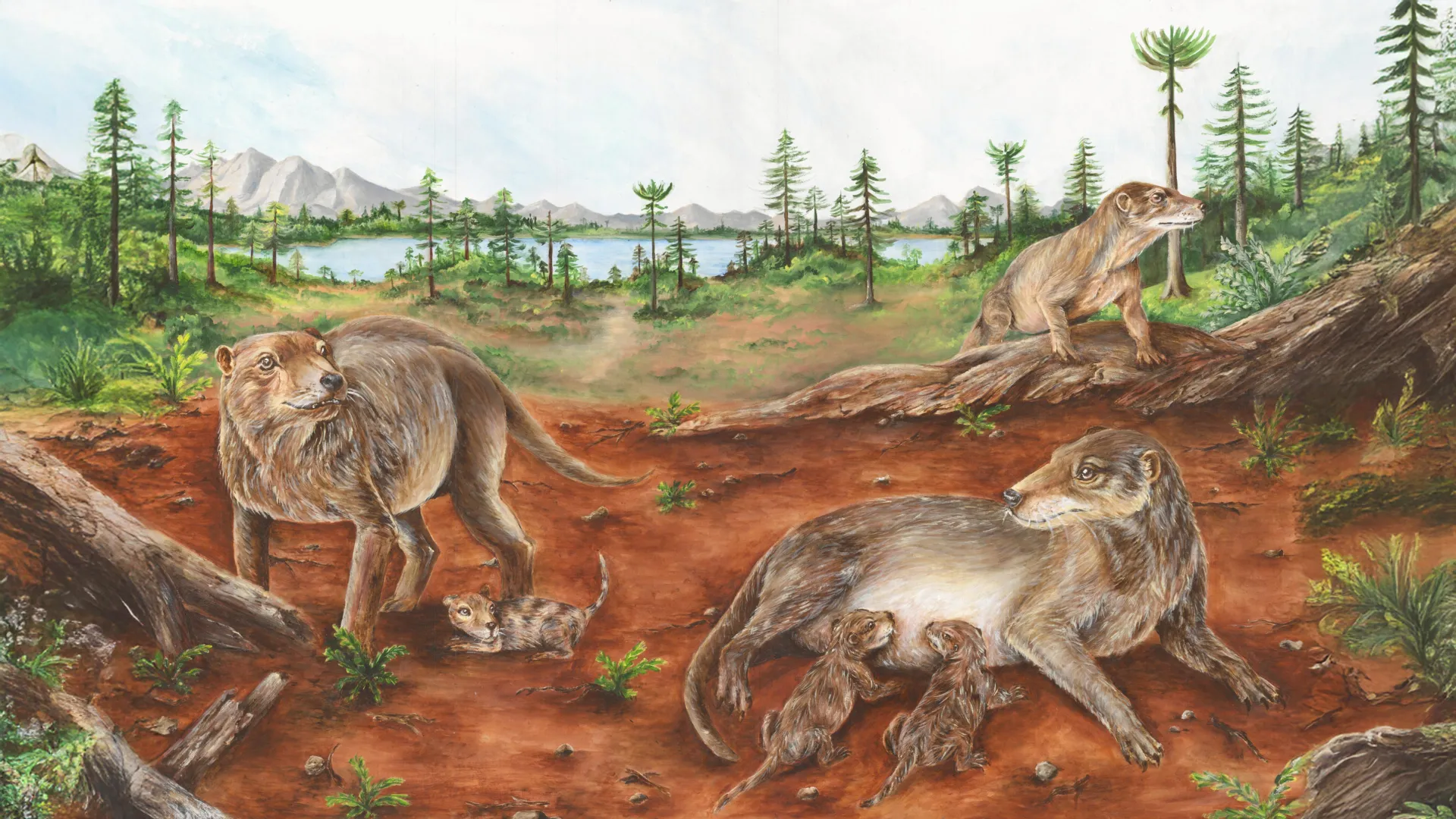
Researchers have identified the earliest known evidence of live birth in a mammalian ancestor based on analysis of a 236-million-year-old cynodont fossil. The study, published in Frontiers in Mammal Science, examined Chiniquodon theotonicus, a species that inhabited what is now northwestern Argentina during the Triassic period.
The investigation began when scientists observed an unusual growth mark in the microscopic structure of the fossil’s bone. Upon closer examination, researchers identified this feature as a neonatal line, a distinctive growth ring that forms in response to the rapid acceleration in growth that occurs shortly after birth. This discovery was significant because embryonic tissues and neonatal lines had never been previously documented in cynodonts.
To determine whether the animal was viviparous, the research team estimated the organism’s body mass at birth and at death, then compared these measurements against data from thousands of living mammals, reptiles, and birds. Calculations indicated the newborn weighed approximately 1.7 kilograms while the adult specimen reached roughly 12 kilograms, yielding a neonate-adult body mass ratio of about 14 percent. This ratio is substantially larger than those observed in egg-laying reptiles and birds of similar adult size, but closely matches the ratios seen in modern placental mammals.
The findings suggest that viviparity emerged in the mammalian lineage considerably earlier than previously thought, potentially by 90 to 95 million years. Researchers noted that the Triassic environment, characterized by intense resource competition, predatory pressure, aridity, and seasonal variation, would have favored the protective advantages of live birth over egg-laying. While acknowledging that additional evidence is needed to determine whether C. theotonicus represents an isolated case or a broader pattern among cynodonts, lead researcher Dr. Leandro Gaetano suggested that some cynodonts may have resembled modern mammals more closely than previously recognized.
Article Attribution | Read More at Article Source
Article summary produced by Claude AI