

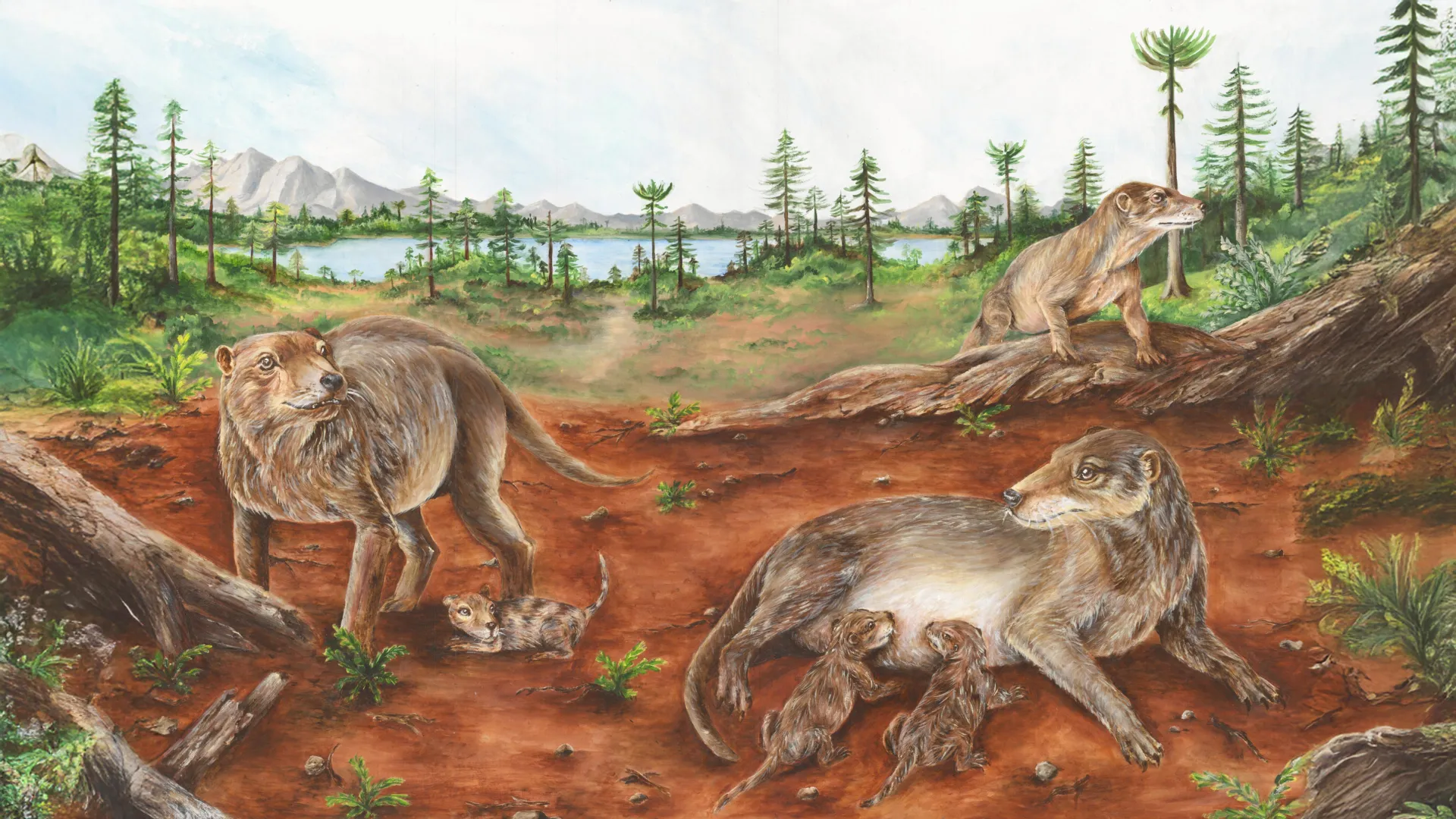
Researchers have identified what may be the earliest evidence of live birth in mammalian evolutionary history, according to a study examining a cynodont specimen from the Triassic period. The fossil of Chiniquodon theotonicus, discovered in northwestern Argentina, displays a neonatal line—a growth ring in bone structure that typically forms during the accelerated growth phase following birth.
The research team analyzed microscopic features of the fossilized remains to estimate the animal’s body mass at birth and at maturity. Calculations indicate the individual weighed approximately 1.7 kilograms as a newborn and around 12 kilograms at death, making the newborn roughly 14 percent of its adult body mass. This ratio is substantially larger than those observed in modern reptiles and birds of comparable adult size, but aligns closely with the proportions seen in living placental mammals.
When compared with data from thousands of living vertebrate species, the C. theotonicus specimen demonstrated reproductive characteristics distinct from egg-laying animals and more consistent with live-bearing mammals. The findings suggest that viviparity—the biological strategy of giving birth to live offspring—may have emerged in the mammalian lineage at least 95 to 90 million years earlier than previously documented.
The researchers note that cynodonts occupied ecological niches during a period characterized by intense competition, predation pressure, and environmental variability. Live birth would have provided embryonic protection advantages compared to egg-laying reproduction under such demanding conditions. While the study establishes evidence for at least one viviparous cynodont, researchers acknowledge that additional fossil evidence would be needed to determine whether this reproductive strategy was widespread among cynodonts or represented an isolated evolutionary development.
Article Attribution | Read More at Article Source
Article summary produced by Claude AI