

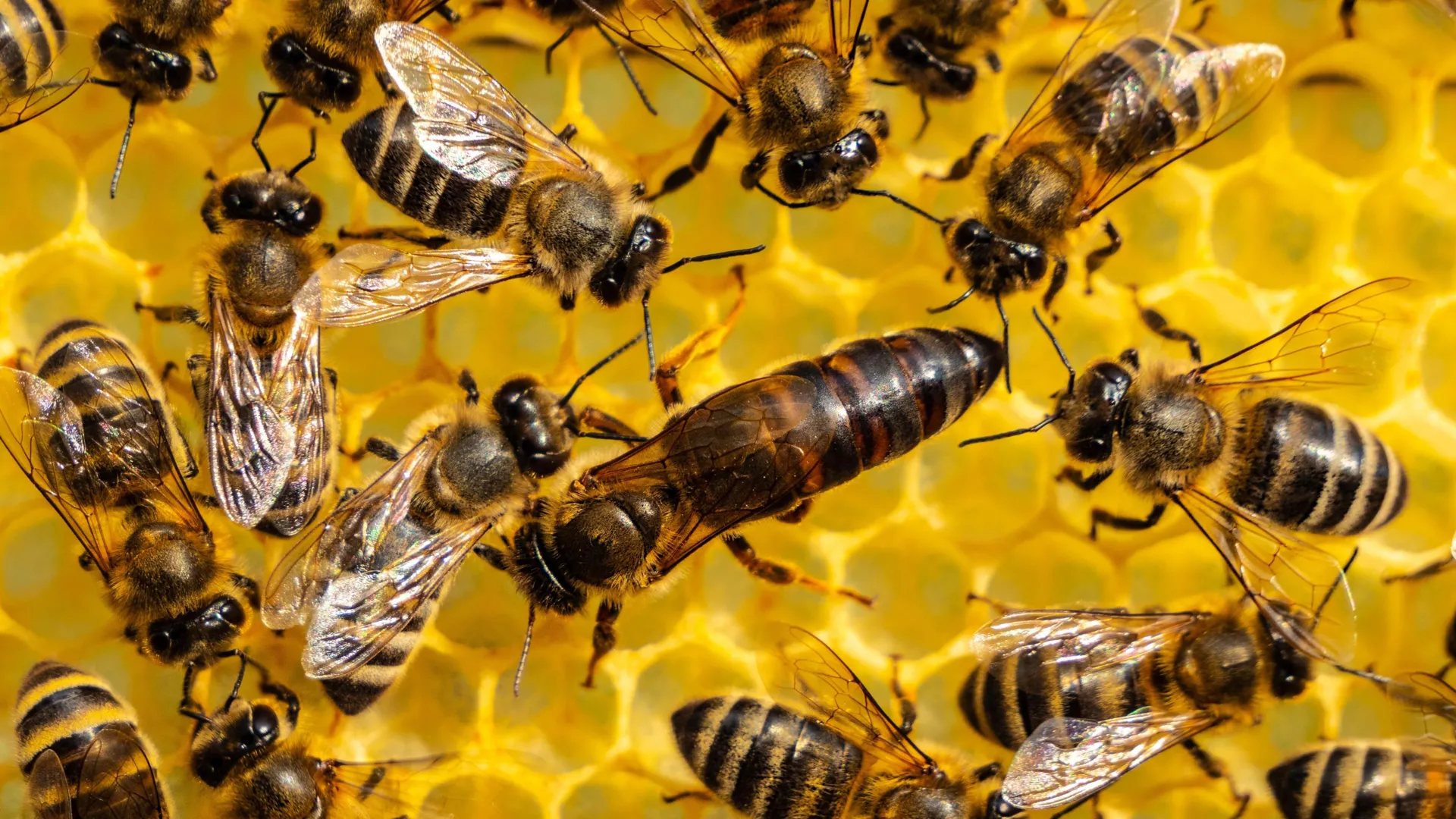
Researchers at Arizona State University have published findings that question a long-standing evolutionary biology hypothesis about the origins of eusociality in insects. The study, appearing in Current Biology, examined data from nearly 69,000 insect species to test whether haplodiploidy—a genetic system where females develop from fertilized eggs and males from unfertilized ones—drives the evolution of complex social colonies.
Eusociality represents one of nature’s most sophisticated forms of social organization, characterized by overlapping generations, cooperative child-rearing, and division of reproductive labor among colony members. While all ants are eusocial, as are honey bees and certain wasps, the trait appears only rarely in other insect groups such as termites, thrips, aphids and beetles. For over 60 years, scientists theorized that haplodiploidy created conditions favoring eusociality because females become more closely related to sisters than to their own offspring, potentially making cooperation more advantageous.
Lead researcher Sachin Suresh and senior author Timothy Linksvayer assembled genetic and behavioral information across tens of thousands of species and mapped these characteristics onto major insect family trees using phylogenetic comparative methods. Initially, the analysis appeared to support the traditional hypothesis, showing eusociality emerging more frequently among haplodiploid insects. However, deeper examination revealed that nearly the entire statistical signal originated from a single evolutionary branch: the aculeate Hymenoptera, which includes stinging wasps, bees and ants.
When researchers accounted for the unique evolutionary history of this group, they found no meaningful association between haplodiploidy and eusociality across insects more broadly. Haplodiploid insects outside the aculeate Hymenoptera developed eusociality at rates similar to diploid insects, suggesting the genetic system alone does not explain the phenomenon.
The findings redirect scientific focus toward other factors that may facilitate the repeated evolution of complex insect societies, including specialized traits such as stingers, distinct nesting behaviors, and other biological characteristics specific to certain lineages. The research underscores how comprehensive comparative datasets can refine long-established theories in evolutionary biology.
Article Attribution | Read More at Article Source
Article summary produced by Claude AI