

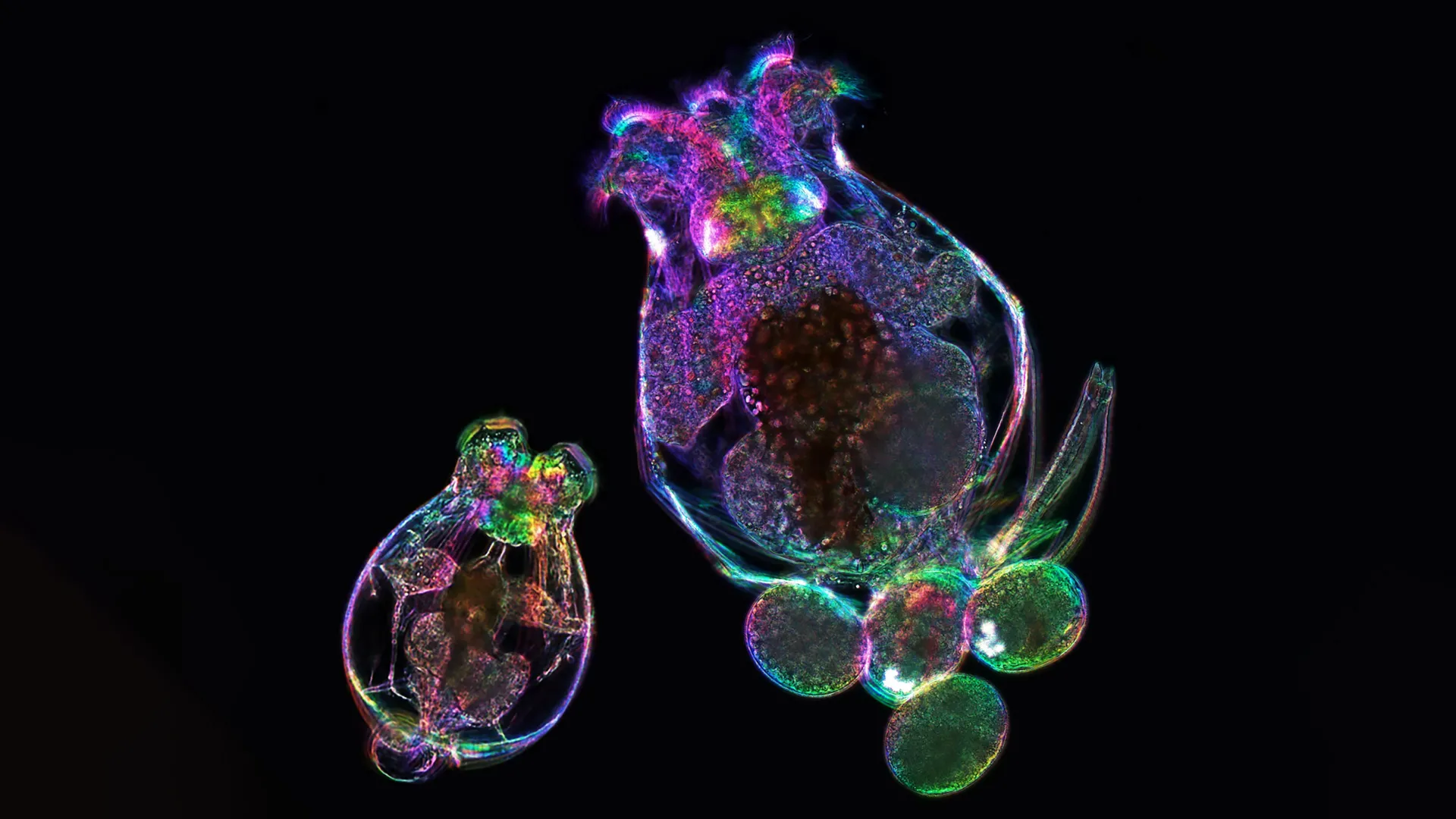
Maternal age effects—changes in offspring physical traits and behavior based on parental age—occur widely across animal species, but the biological mechanisms remain incompletely understood. Researchers estimate that nearly all forms of life demonstrate some level of maternal age effect, with most representing negative consequences associated with advanced maternal age.
Scientists at the Marine Biological Laboratory are using rotifers, small aquatic organisms that reproduce rapidly, as a model system to investigate these effects. Recent studies suggest that maternal age effects may be controlled by epigenetic processes that alter how genes are expressed rather than through DNA mutations. When researchers examined two different genetic variants from the same rotifer species, effects linked to maternal age did not accumulate progressively across generations. Instead, these effects reversed within a single generation, contradicting previous theories that attributed them to gradual cellular damage or DNA mutations.
The findings point toward histone modifications as a potential mechanism. These modifications can regulate whether genes are activated or deactivated without changing underlying DNA sequences. Researchers are also investigating whether mitochondrial DNA, typically inherited maternally, could transmit information about maternal age to offspring. Additionally, genetic variation may influence how strongly offspring experience negative effects, with some genetic variants potentially protective against or even beneficial under advanced maternal age.
A significant evolutionary question concerns why maternal age effects persist across species despite reducing offspring survival, reproduction, and fitness. One explanation involves weakened natural selection at advanced ages. In organisms like rotifers that concentrate reproduction early in life, selective pressure diminishes once females have produced most offspring, reducing evolutionary incentive for traits benefiting older mothers.
Future research may illuminate how biological information transfers across multiple generations, potentially informing human health outcomes and precision medicine approaches. The research indicates that individual biology extends beyond inherited DNA, suggesting that conditions experienced by previous generations could influence descendants’ health and phenotypes.
Article Attribution | Read More at Article Source
Article summary produced by Claude AI