

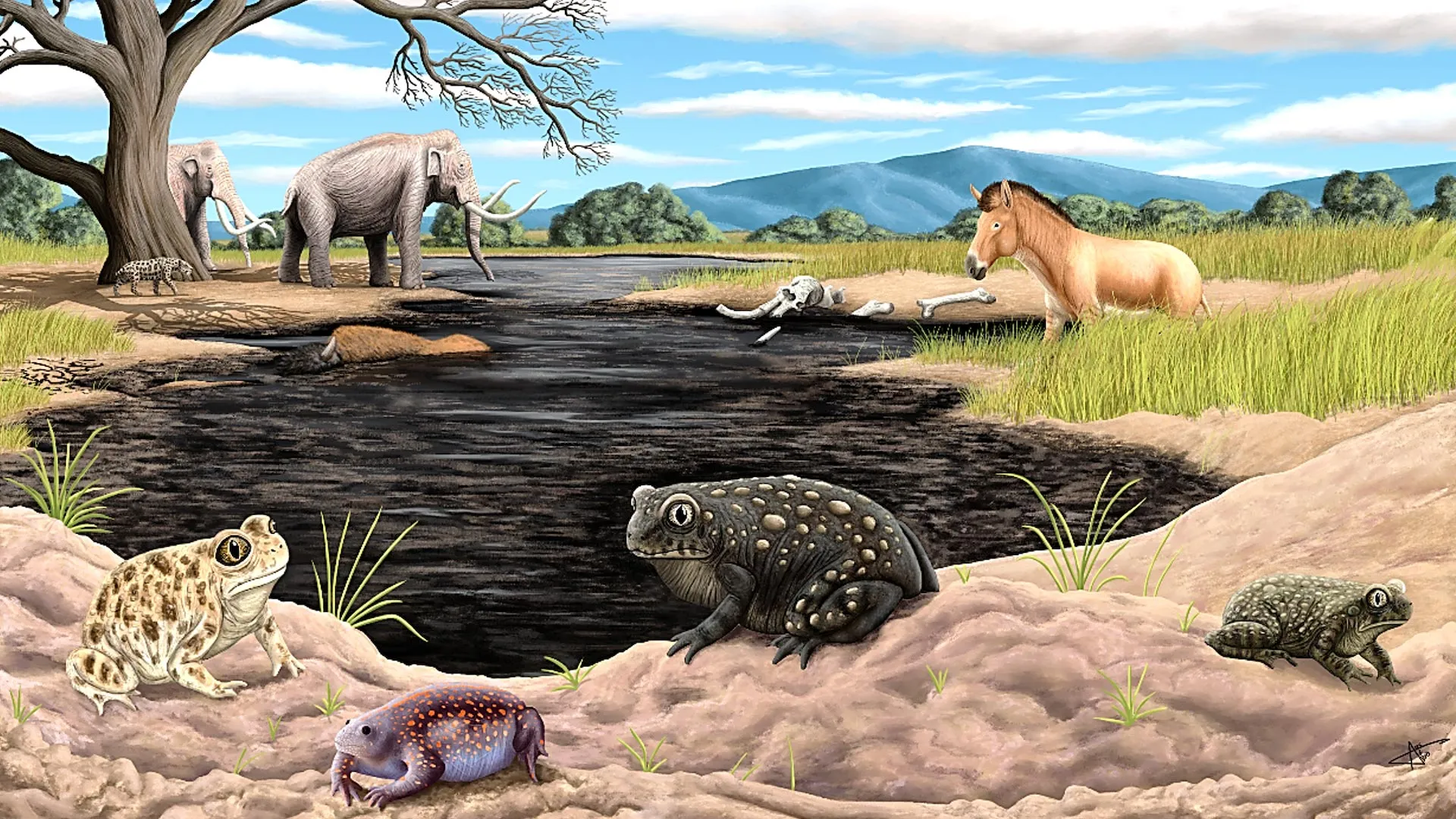
Scientists working at La Brea Tar Pits have identified a new extinct amphibian species that inhabited the Los Angeles area during the Pleistocene epoch. The spadefoot toad, designated Spea labreae, represents a significant discovery as it marks the first previously unknown extinct amphibian species found at the renowned fossil site. The find is particularly noteworthy given that only one other extinct Pleistocene amphibian has been discovered in North America, making such discoveries exceptionally uncommon.
Dr. Alberto Cruz, a researcher who was originally studying the relatively understudied reptile and amphibian collections at La Brea Tar Pits, made the discovery while working as a Postdoctoral Fellow. Rather than conducting a targeted search for new species, Cruz noticed distinctive bone features in specimens that differed from known spadefoot toads. After careful comparison with modern spadefoot toad specimens and extensive review, he became convinced the fossils represented an entirely new species. The fossils themselves had been collected during the 1950s but had not undergone detailed scientific examination in the intervening decades, illustrating how museum collections can harbor undiscovered information.
Amphibians serve as particularly valuable indicators of ancient climate and environmental conditions due to their limited mobility and sensitivity to environmental changes. Unlike the large Ice Age mammals that typically dominate public attention at La Brea Tar Pits, these small creatures provide more detailed information about localized environmental shifts. The delicate skeletal structure of frogs, toads, and salamanders makes fossilization difficult, making the discovery of S. labreae especially remarkable and underscoring how asphalt deposits like those at La Brea Tar Pits are crucial for preserving such fragile remains.
The research also uncovered the first known record of the Mexican burrowing toad in the southwestern United States, a species now found only in southern Mexico, roughly 2,500 kilometers away. This geographic shift, combined with the extinction of S. labreae, contributes to understanding the complex environmental transformations that occurred as the last Ice Age concluded. The findings were published in the Journal of Vertebrate Paleontology and continue efforts by the Samuel Oschin Global Center for Ice Age Research, which undertakes an ongoing transformation of the museum’s research capabilities and collections examination processes.
Article Attribution | Read More at Article Source
Article summary produced by Claude AI