

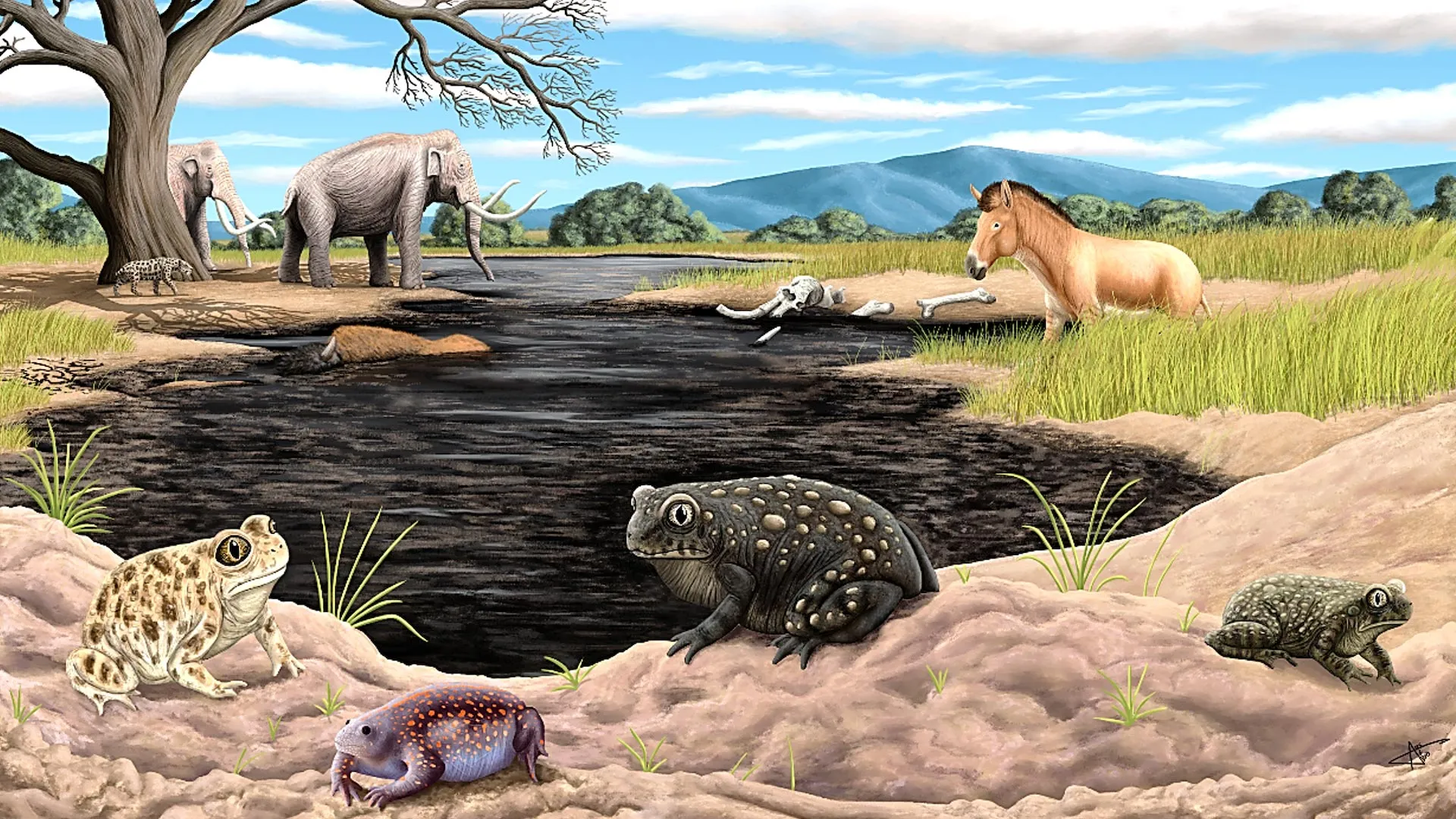
Scientists working at La Brea Tar Pits have announced the discovery of a previously unknown amphibian species from the Pleistocene epoch. The newly identified spadefoot toad, designated Spea labreae, marks the first extinct amphibian species found at the famous Los Angeles fossil site. The discovery represents a particularly notable finding, as only one other extinct Pleistocene amphibian has been documented from North America. The research appears in the Journal of Vertebrate Paleontology.
The identification emerged unexpectedly during research conducted by Dr. Alberto Cruz, a paleontologist who initially set out to study the relatively understudied reptile and amphibian collections at the site. While examining specimens gathered in the 1950s, Cruz observed distinctive features in certain bones that differed from known spadefoot toad species. After extensive comparison with modern specimens and careful analysis, he determined the fossils represented an entirely distinct species rather than examples of disease or injury in known species.
Small amphibians hold particular scientific value for reconstructing ancient environments because they typically remain localized and exhibit high sensitivity to environmental changes. These characteristics make them reliable indicators of past climate conditions and vegetation patterns. However, their delicate skeletal structures make fossilization uncommon, rendering discoveries of preserved amphibian remains exceptional outside of asphaltic sites like La Brea Tar Pits.
The research also revealed a second significant finding: the first documented occurrence of the Mexican burrowing toad in the southwestern United States. Modern populations of this species now inhabit regions approximately 2,500 kilometers away in southern Mexico, indicating substantial geographic range shifts since the Ice Age. These discoveries collectively demonstrate how amphibian distributions changed dramatically as the final ice age concluded, while also suggesting that additional extinct species may remain undetected in existing museum collections awaiting detailed examination.
Article Attribution | Read More at Article Source
Article summary produced by Claude AI