

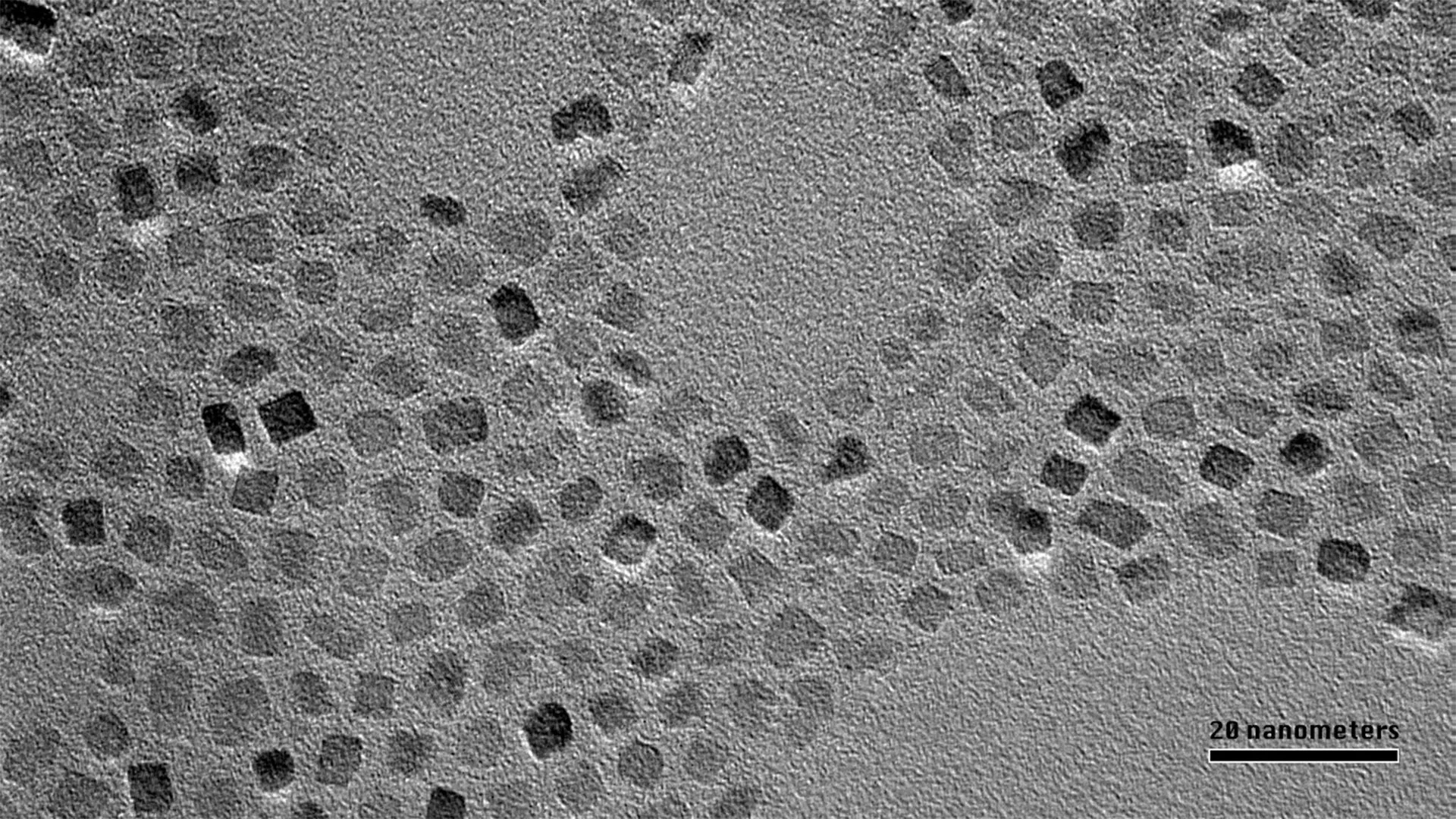
Researchers at the University of Chicago and Argonne National Laboratory have developed a new synthesis method for producing nanocrystals from metal nitrides, a class of materials that had proven resistant to traditional nanocrystal production techniques. The findings, published in Nature, represent a significant advancement in materials science by enabling the creation of nearly a dozen previously inaccessible nanocrystal materials.
Metal nitrides are compounds formed when metals combine with nitrogen and are already widely employed in technology and manufacturing. Gallium nitride, for instance, is prevalent in modern lighting applications ranging from LED bulbs to laptop displays. Converting these materials into nanocrystals could substantially broaden their applications, allowing them to be incorporated into polymers, processed using inkjet printing techniques, or embedded in flexible devices and textiles rather than remaining limited to rigid film configurations.
The fundamental challenge in creating metal nitride nanocrystals stems from their strong chemical bonds. During crystal formation, ions must have sufficient mobility to rearrange before settling into stable positions. However, the robust bonds in metal nitrides severely restrict this rearrangement capability, making nanocrystal formation extremely difficult. The research team overcame this obstacle through two key innovations: leveraging molten salts as the liquid medium to stabilize developing nanocrystals, and identifying optimal temperature and ammonia pressure conditions that allow metal-nitrogen bonds to break and reform more readily.
The methodology proved successful across multiple materials beyond gallium nitride, including titanium nitride used in medical implants, niobium nitride employed as an industrial superconductor, and molybdenum nitride utilized as a catalyst. These materials offer both technological value and relative affordability, making their conversion into nanocrystals potentially transformative for expanding their application range across numerous technologies and industries.
Article Attribution | Read More at Article Source
Article summary produced by Claude AI