

August will feature several significant celestial events for observers in various parts of the world. A total solar eclipse will occur on August 12, with its path of totality sweeping across northern Russia, Greenland, Iceland, and northern Spain, with a small section of Portugal also experiencing totality. Observers in portions of the United States, extending from Alaska to North Carolina, will witness a partial solar eclipse instead, though the amount of coverage will vary depending on location.
Proper eye protection is critical for safe observation of the solar eclipse. Viewers must use certified eclipse glasses or approved solar viewing devices, as ordinary sunglasses do not provide sufficient protection. Similarly, binoculars, telescopes, and cameras should never be pointed at the Sun unless equipped with specially designed solar filters attached to the front of the instrument.
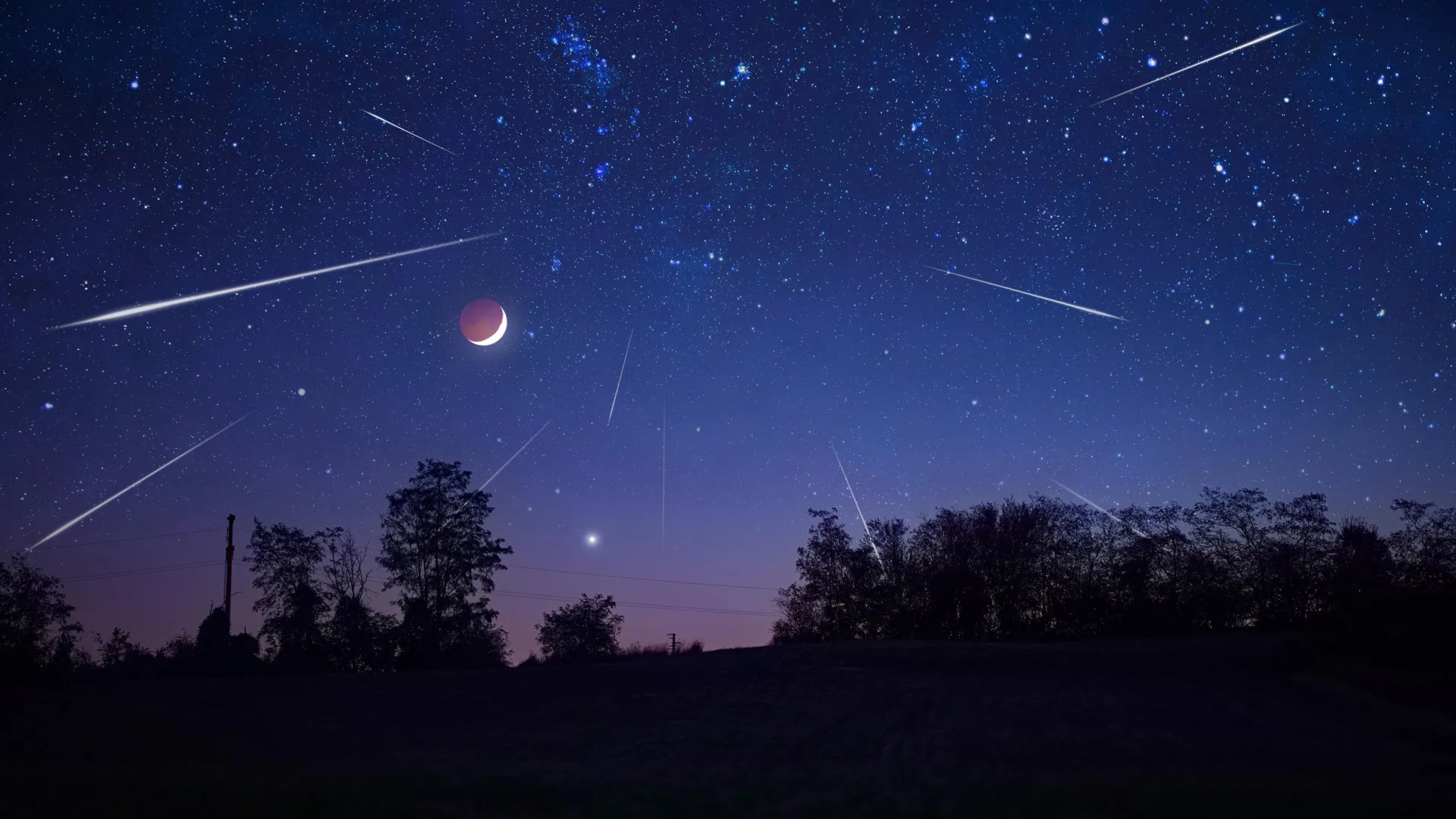
The Perseid meteor shower will reach its peak later on August 12 and continue into the early morning of August 13. The arrival of the New Moon on the same day will eliminate moonlight interference, creating exceptionally favorable dark conditions for observing meteors. The shower results from Earth passing through debris left by Comet Swift-Tuttle, with particles entering the atmosphere at high speeds and creating bright streaks. Observers should look toward the northeast where the constellation Perseus will rise, though meteors may appear across various areas of the sky.
Between August 14 and 16, Venus will reach its greatest eastern elongation, marking its widest separation from the Sun in the evening sky. The planet will be readily visible low in the western sky shortly after sunset, appearing brighter than nearby stars. Through a telescope, Venus will display a phase similar to the Moon’s appearance.
A partial lunar eclipse will occur during the night of August 27, extending into August 28 in some time zones. Approximately 93 percent of the Moon’s diameter will pass through Earth’s shadow, though complete coverage will not occur. The shadowed portion may appear significantly dimmed and could display a reddish or copper coloration. This eclipse will be visible from much of North and South America as well as portions of Europe and Africa, and unlike solar eclipses, it can be safely observed without special eye protection.
Article Attribution | Read More at Article Source
Article summary produced by Claude AI