

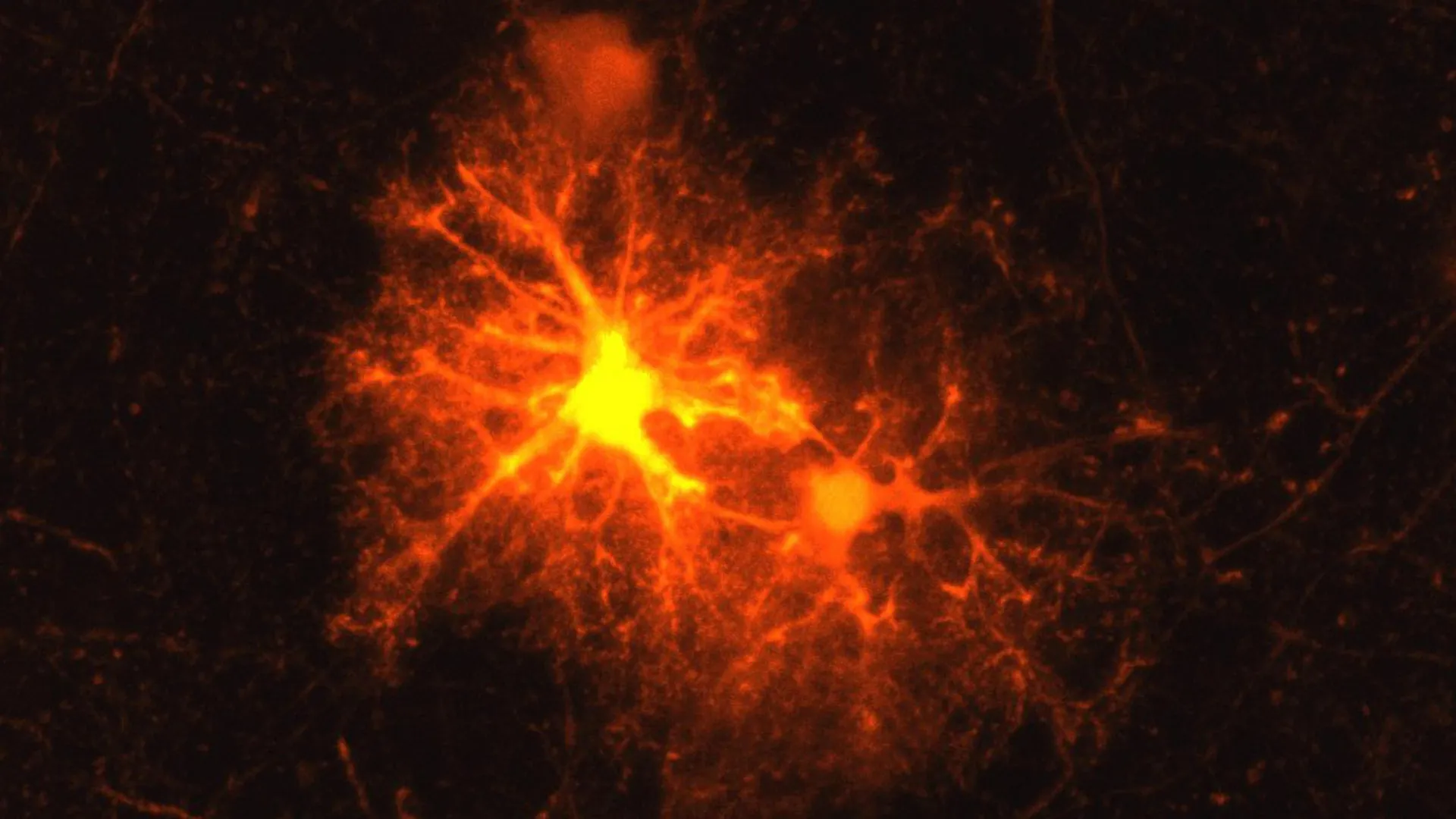
Scientists at the Max Planck Institute of Psychiatry have identified oligodendrocyte progenitor cells (OPCs) as key players in the brain’s repair process following injury. When laboratory mice experienced brain damage, these precursor cells became active around the damaged area. Through systematic testing, researcher Clemens Ries determined that OPCs are responsible for multiplying and maturing into oligodendrocytes, cells that produce myelin—the insulating coating surrounding nerve fibers that enables efficient communication between neurons.
A significant discovery emerged from this research: approximately one-third of OPCs activated corticotropin-releasing hormone (CRH), a hormone central to the body’s stress response. This finding was unexpected, as scientists had not previously known that OPCs could produce neuropeptides like CRH. The hormone production occurs rapidly within hours of injury but ceases after roughly three days, suggesting an important function during early healing stages. The research team’s findings were published in Cell Reports.
Further investigation revealed that CRH helps regulate the timing of OPC maturation through interaction with CRH receptor 1. When this receptor was absent in mice, OPCs multiplied more rapidly after injury, yet this acceleration did not improve repair outcomes. Instead, fewer mature oligodendrocytes developed, indicating that proper timing of cell maturation is essential for effective myelin restoration. The CRH system therefore appears to control how quickly precursor cells develop rather than simply accelerating the repair process.
Beyond injury response, the researchers discovered that CRH receptor 1 influences myelin development during normal brain maturation. Mice lacking this receptor showed altered myelination patterns that persisted into adulthood, with thicker myelin sheaths observed around thin axons. This suggests the CRH system regulates myelin formation throughout development, not just during repair.
The findings carry potential implications for mental health. Since stress-related experiences during early childhood development are recognized risk factors for psychiatric disorders, and given that the CRH system operates during brain development, researchers speculate that dysfunction in OPC CRH signaling could contribute to stress-associated conditions such as depression. Future research exploring this connection may reveal new therapeutic approaches for mental health disorders.
Article Attribution | Read More at Article Source
Article summary produced by Claude AI