

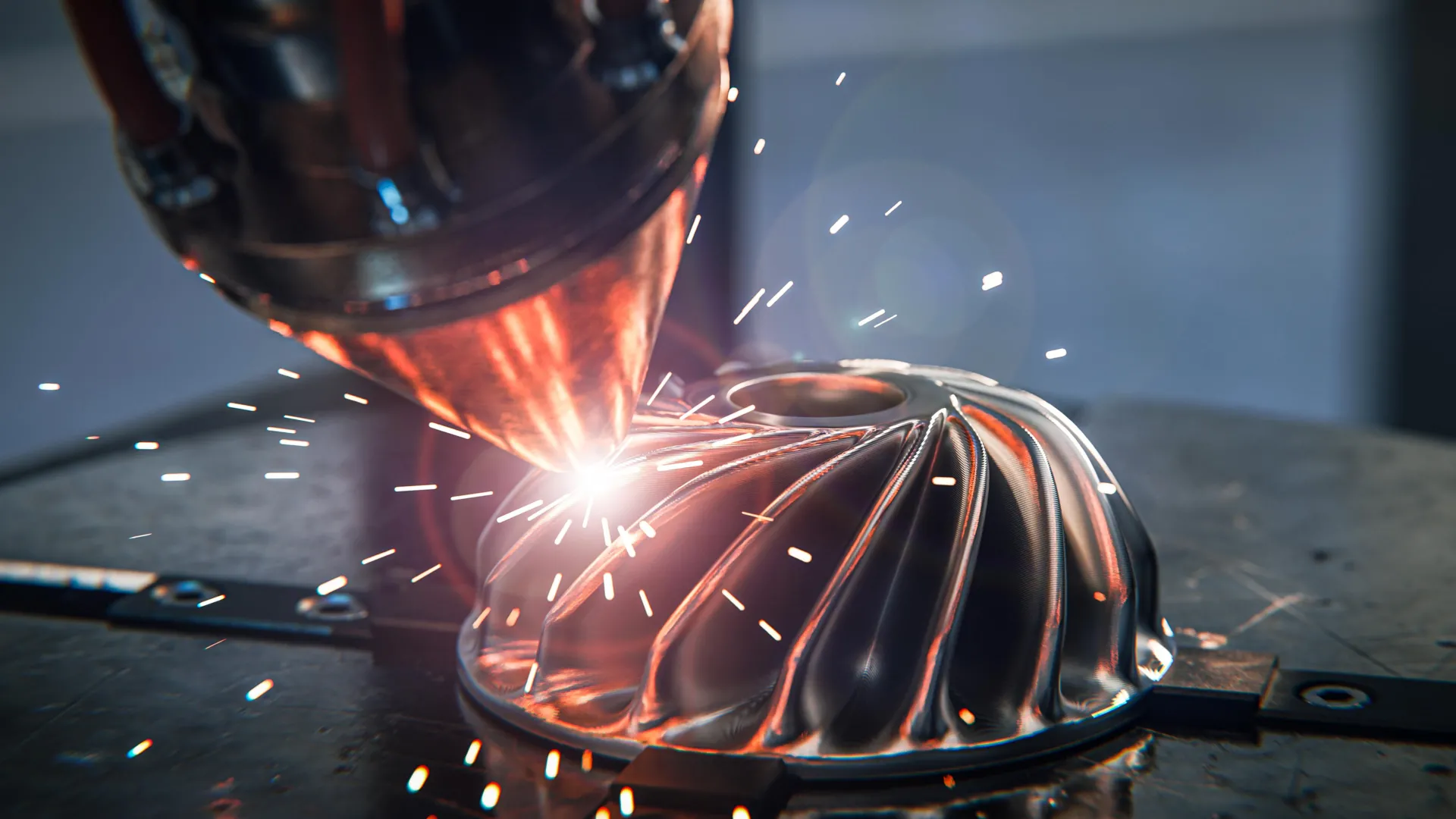
Researchers at Washington State University have developed an artificial intelligence method to identify optimal parameters for 3D-printing GRCop-42, a high-performance metal alloy used in aerospace applications. The approach successfully navigated more than 100 million possible printing configurations without requiring manual testing of each one, representing a significant advancement in additive manufacturing efficiency.
GRCop-42 is a copper, chromium, and niobium alloy developed by NASA for extreme-temperature environments where both heat resistance and thermal conductivity are critical. The material is used in aerospace systems, including liquid rocket engine combustion chambers. However, the alloy has proven difficult and expensive to 3D-print because traditional processes require substantial laser power and energy, limiting its production to specialized high-power equipment. Previous attempts to print the material using lower-wattage commercial machines had failed. Testing configurations individually proved impractical due to the high costs associated with material consumption, specialized equipment requirements, and extensive analysis time, with individual print attempts costing hundreds of dollars.
The research team, led by Jana Doppa of the School of Electrical Engineering and Computer Science, developed an AI model trained on data from 37 previously failed printing configurations. The system estimated the likelihood of success for untested parameter combinations and recommended small groups of new configurations to test, balancing exploration of promising settings with investigation of less certain areas that could generate new information. Through collaboration with materials engineering specialists, the team conducted just 40 experiments over three months and identified six successful configurations at different laser power levels, successfully printing GRCop-42 using 500 watts of laser power for the first time.
The successful reduction in required laser power could expand access to the alloy by enabling production on commercial equipment unavailable to universities, smaller laboratories, and companies lacking specialized high-power systems. Lower power requirements would also reduce energy consumption and equipment wear. The researchers indicate the AI-guided methodology could be adapted for other metal alloys and additive manufacturing systems, as well as for broader scientific applications where successful results are rare, experimental possibilities are vast, and testing costs are prohibitively high. The work received the Innovative Deployed Application Award at the Artificial Intelligence Conference and was published in the Proceedings of the AAAI Conference on Artificial Intelligence.
Article Attribution | Read More at Article Source
Article summary produced by Claude AI