

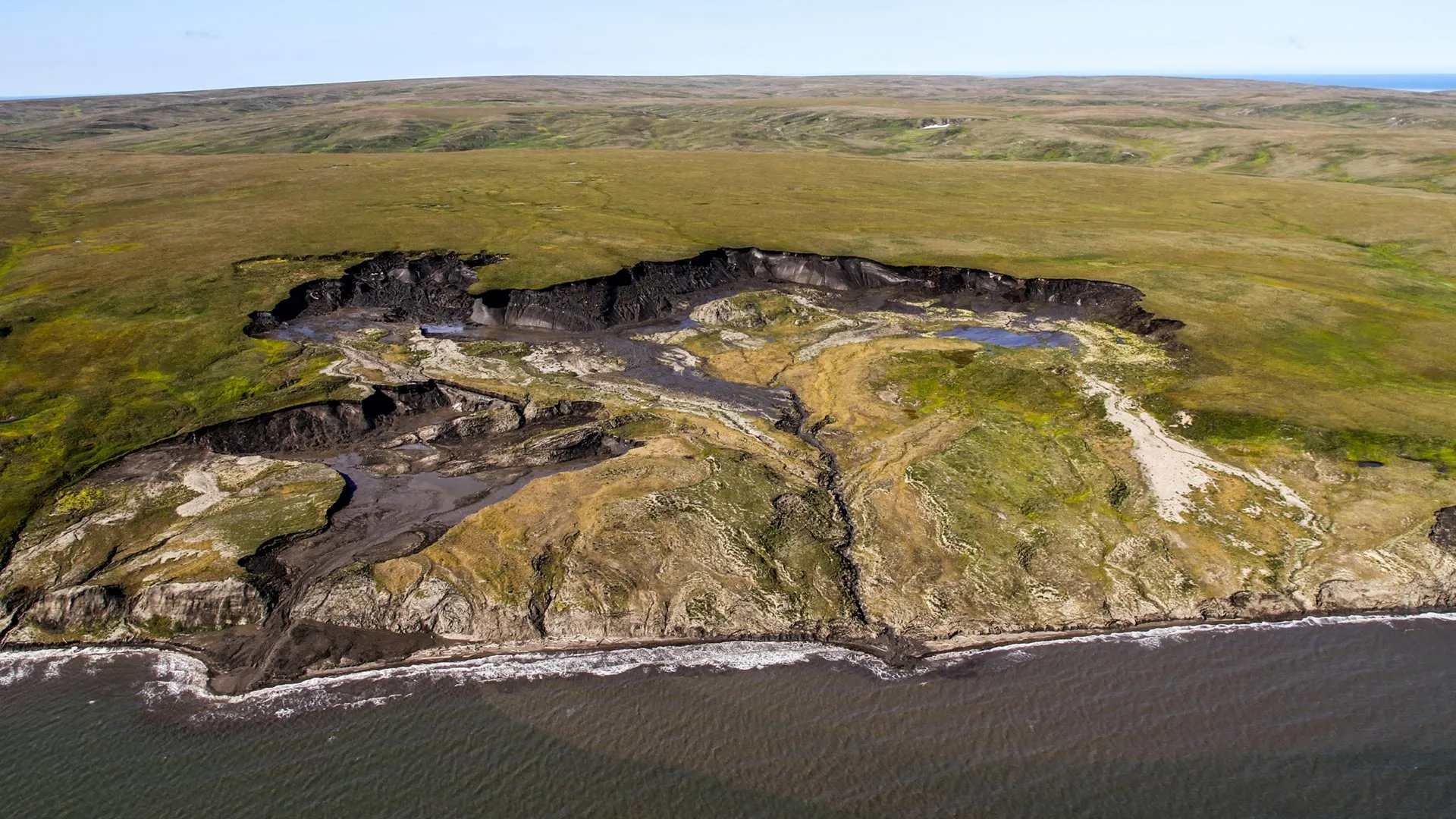
Scientists from German research institutions have conducted a detailed analysis of carbon cycling along the permafrost coast near Herschel Island in Canada, examining what happens when frozen Arctic soils thaw and release organic carbon into the ocean.
The Arctic’s permanently frozen ground contains approximately 1,300 gigatonnes of organic carbon, primarily from ancient plant matter. As global temperatures rise and the Arctic warms faster than other regions, this frozen ground is thawing and coastal erosion is intensifying. These processes are releasing stored carbon into the Arctic Ocean, with current estimates suggesting roughly 0.02 gigatonnes enter the sea annually. Projections indicate this flow could increase significantly by 2100.
By analyzing sediment cores collected from multiple locations off Herschel Island, the research team found that most carbon transported from land into the ocean becomes trapped in seafloor sediments rather than being converted to greenhouse gases. Their measurements of pore water chemistry and isotopic composition revealed that microorganisms decompose only about 10 percent of the organic carbon that reaches the seabed, with the remainder remaining buried.
The study revealed an unexpected finding: the microorganisms inhabiting ocean sediments are selective feeders that preferentially consume fresh organic material from marine sources, such as recent algal remains, over older carbon from permafrost deposits. This preference suggests that ancient permafrost carbon may contribute less to atmospheric greenhouse gas emissions than previously anticipated.
The researchers emphasized that additional investigation is needed, as some organic carbon may decompose before reaching the seabed. They plan to conduct further research through an international Arctic campaign scheduled for 2027 that will examine how environmental changes are affecting Arctic ecosystems and incorporate these findings into improved climate models.
Article Attribution | Read More at Article Source
Article summary produced by Claude AI