

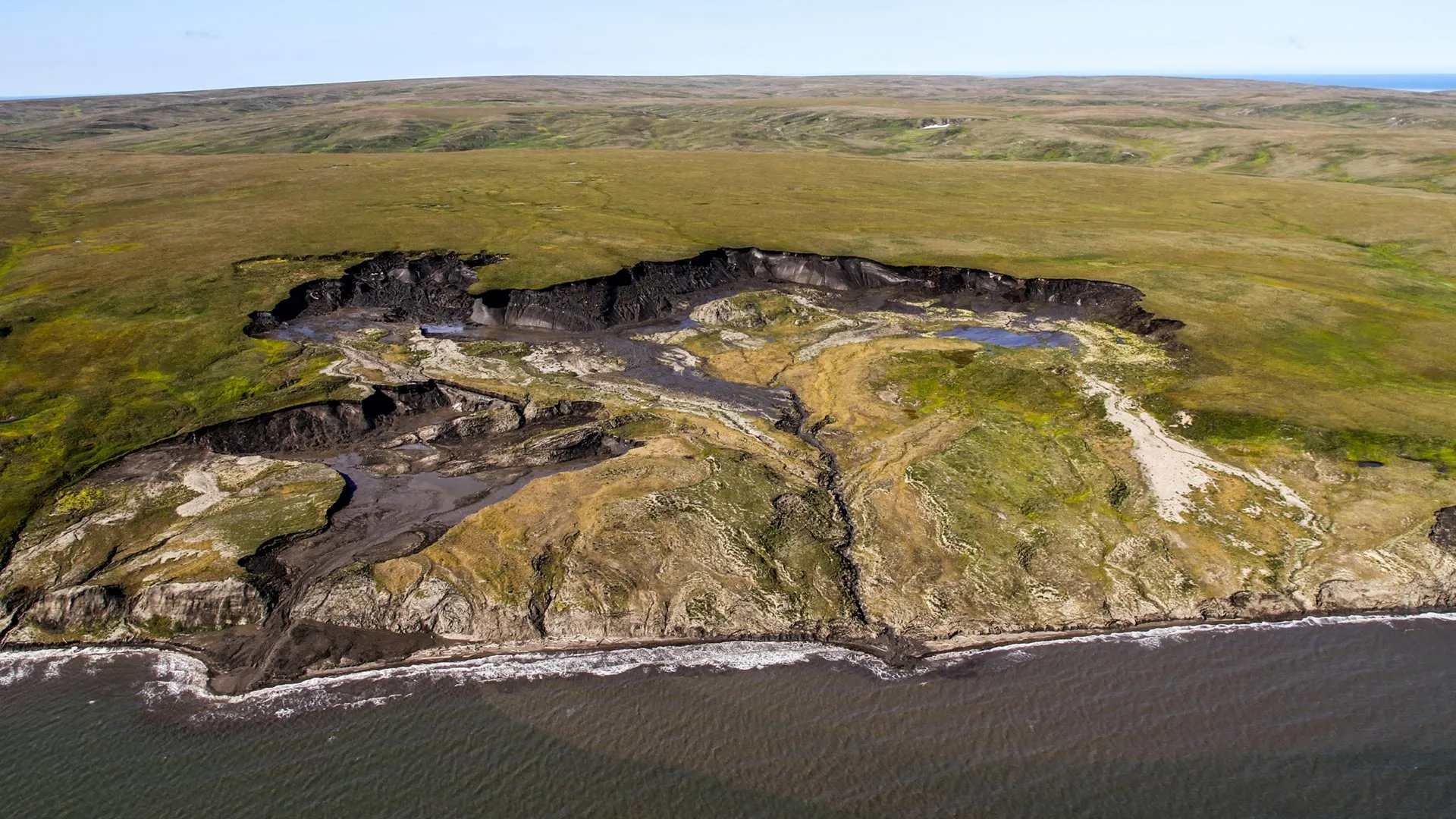
Researchers from German institutions investigated how organic carbon from thawing Arctic permafrost affects the climate when it enters the ocean. The Arctic’s frozen ground contains approximately 1,300 gigatonnes of organic carbon, with an additional 400 gigatonnes stored in ocean sediments and river deltas. As global temperatures rise, the Arctic region is warming faster than other areas, causing permafrost to thaw and coastlines to erode. Current estimates suggest up to 0.02 gigatonnes of carbon enters the Arctic Ocean annually through these processes, with projections indicating this volume could increase by 70 to 150 percent by 2100.
To determine the fate of this carbon, the team collected sediment cores from locations off Herschel Island in Canada, examining layers of material deposited over approximately 50 years. The analysis revealed that relatively small quantities of coastal organic carbon become involved in the ocean’s active carbon cycle. According to the findings, microorganisms convert approximately ten percent of sediment-based organic carbon into gases that enter the atmosphere, while the majority remains buried in seafloor sediments. The researchers used isotopic analysis of pore water between sediment particles to track microbial activity and identify the sources of consumed organic material.
A notable discovery involved the selective feeding patterns of marine microorganisms. The bacteria inhabiting seafloor sediments preferentially consume fresh organic carbon from recent marine sources, such as algal remains, over older carbon derived from permafrost deposits. This preference suggests that thawing permafrost carbon may contribute less to atmospheric greenhouse gas emissions than previously anticipated. However, researchers cautioned that additional investigation is necessary, as some organic carbon from permafrost may decompose before reaching the seabed.
Beyond climate implications, the movement of coastal carbon affects Arctic marine ecosystems. Sediment from erosion reduces water transparency and can limit sunlight availability for algae and other photosynthetic organisms that form the base of regional food webs. Planned coordinated research efforts scheduled for 2027 will examine these ecological connections further, utilizing research vessels and aircraft to monitor how environmental changes reshape Arctic systems and improve climate model predictions.
Article Attribution | Read More at Article Source
Article summary produced by Claude AI