

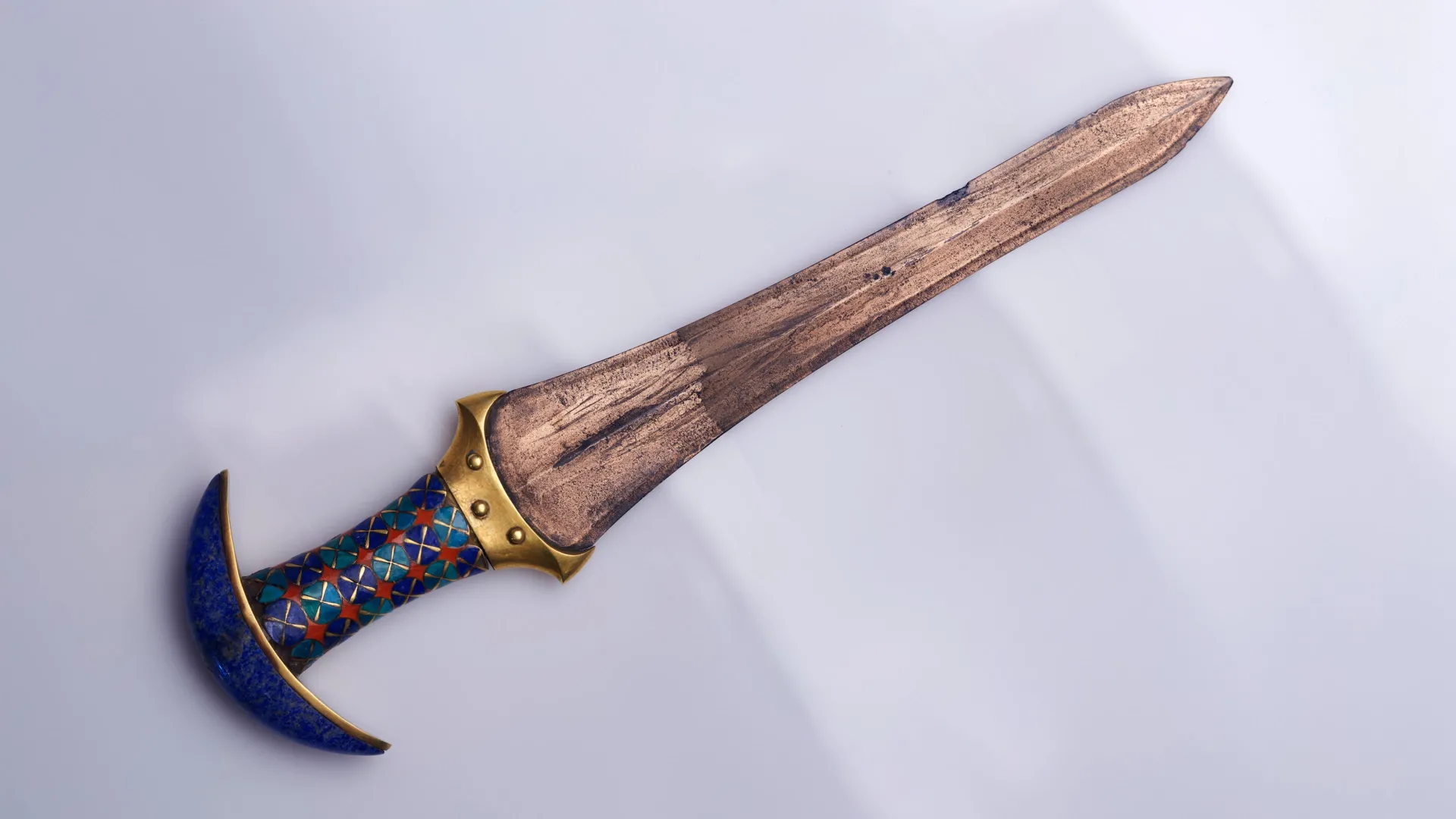
Researchers examining six royal mummies from Egypt’s Middle Kingdom have determined that several princesses were actively trained in the use of weapons, according to findings published in Frontiers in Environmental Archaeology. The investigation, led by Dr. Zeinab Hashesh, focused on remains originally discovered during the 1890s at Dahshur, an Egyptian burial complex. The mummies had largely disappeared from scholarly study before being rediscovered in 2020 during a curation project at the Egyptian Museum.
Four of the six individuals examined were sisters and daughters of Pharaoh Amenemhat II, interred in matching underground chambers. Their tombs contained weapons including bows, arrows, daggers, and maces—objects more typically associated with male burials. Princess Ita’s coffin held an ornate dagger, while the other individuals in the study, Princess Noub-Hotep and King Hor, were also found with similar royal weapons. The two additional individuals included in the analysis were identified as Princess Sathathormeryt and an unnamed woman.
Examination of the skeletal remains provided evidence of extensive weapon training. The princesses displayed unusually robust muscle attachments in their upper limbs, consistent with repetitive high-intensity activities such as drawing bowstrings or wielding daggers and maces. Princess Ita, who lived between ages 28 and 34, showed strong upper-body development suggesting regular use of such weapons. Princess Itaweret, aged 20 to 34, displayed skeletal indicators of skilled archery practice. Princess Khenmet, in her late 30s or 40s, had very robust ligament attachments despite some bone thinning. Similar evidence of archery practice appeared in the remains of Princess Noub-Hotep and King Hor.
The individuals also bore evidence of significant physical trauma consistent with active lifestyles. Princess Itaweret had sustained broken ribs and foot fractures, likely from falls or impacts. The successful healing of these injuries indicates the royals had access to advanced medical care for their era. Several of the sisters shared rare spinal abnormalities, suggesting close familial relationships within the broader royal family.
Researchers note that further analysis remains possible, including stable isotope studies that could provide additional dietary information. The loss of the princesses’ skulls during the early 1900s limits certain types of investigation, but available skeletal material continues to yield insights into royal life and the physical demands placed on women of high status.
Article Attribution | Read More at Article Source
Article summary produced by Claude AI