

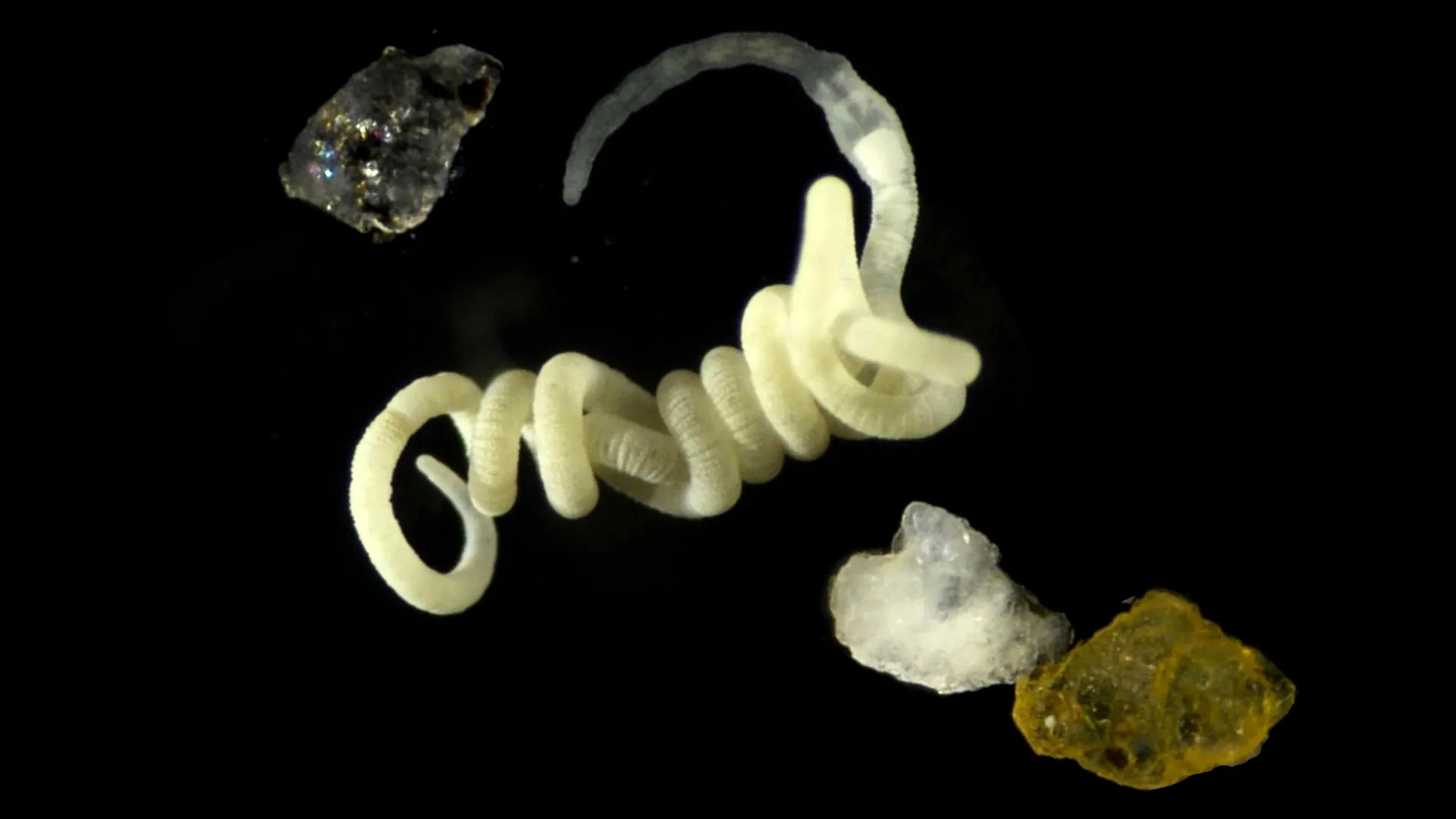
A study from the Max Planck Institute for Marine Microbiology has identified enzymes in diverse animal species that can degrade polyhydroxyalkanoates, compounds naturally produced by bacteria and archaea as energy reserves. The discovery emerged from research on Olavius algarvensis, a marine worm lacking a mouth and gut that relies on symbiotic bacteria living beneath its skin as its primary food source. Scientists found that this unusual worm produces an enzyme capable of breaking down PHA molecules stored within its bacterial partners, allowing the animal to access an otherwise inaccessible carbon reserve.
The findings extend far beyond a single species. When researchers examined genomes across the animal kingdom, they identified related enzymes in more than 66 species spanning nine distinct phyla. Laboratory testing confirmed that enzymes from distantly related organisms—including sponges, earthworms, and springtails—can all degrade microbial PHAs. This widespread distribution across different animal groups suggests the capability developed early in evolutionary history and remained conserved across diverse lineages.
PHAs naturally occur throughout the environment in soils, sediments, and aquatic ecosystems. Microorganisms produce these materials when carbon supplies exceed their immediate metabolic needs, storing the excess for future use. PHAs have become increasingly important in industrial applications, where bacteria are cultivated in fermentation tanks to produce biodegradable plastics for food packaging, medical devices, agricultural products, and hygiene materials. The compounds represent particularly attractive alternatives to conventional plastics because they decompose through biological processes.
The new research introduces a previously unrecognized pathway through which microbial carbon reserves enter animal food webs. Scientists acknowledge that the extent to which this process operates in natural ecosystems remains unknown, as does its contribution to global carbon cycling. Nonetheless, the work reveals that animals have potentially been consuming nature’s original bioplastics for hundreds of millions of years through mechanisms that science had not yet uncovered. The discovery demonstrates how studying unusual organisms can illuminate biological processes operating at scales spanning vast periods of time.
Article Attribution | Read More at Article Source
Article summary produced by Claude AI