

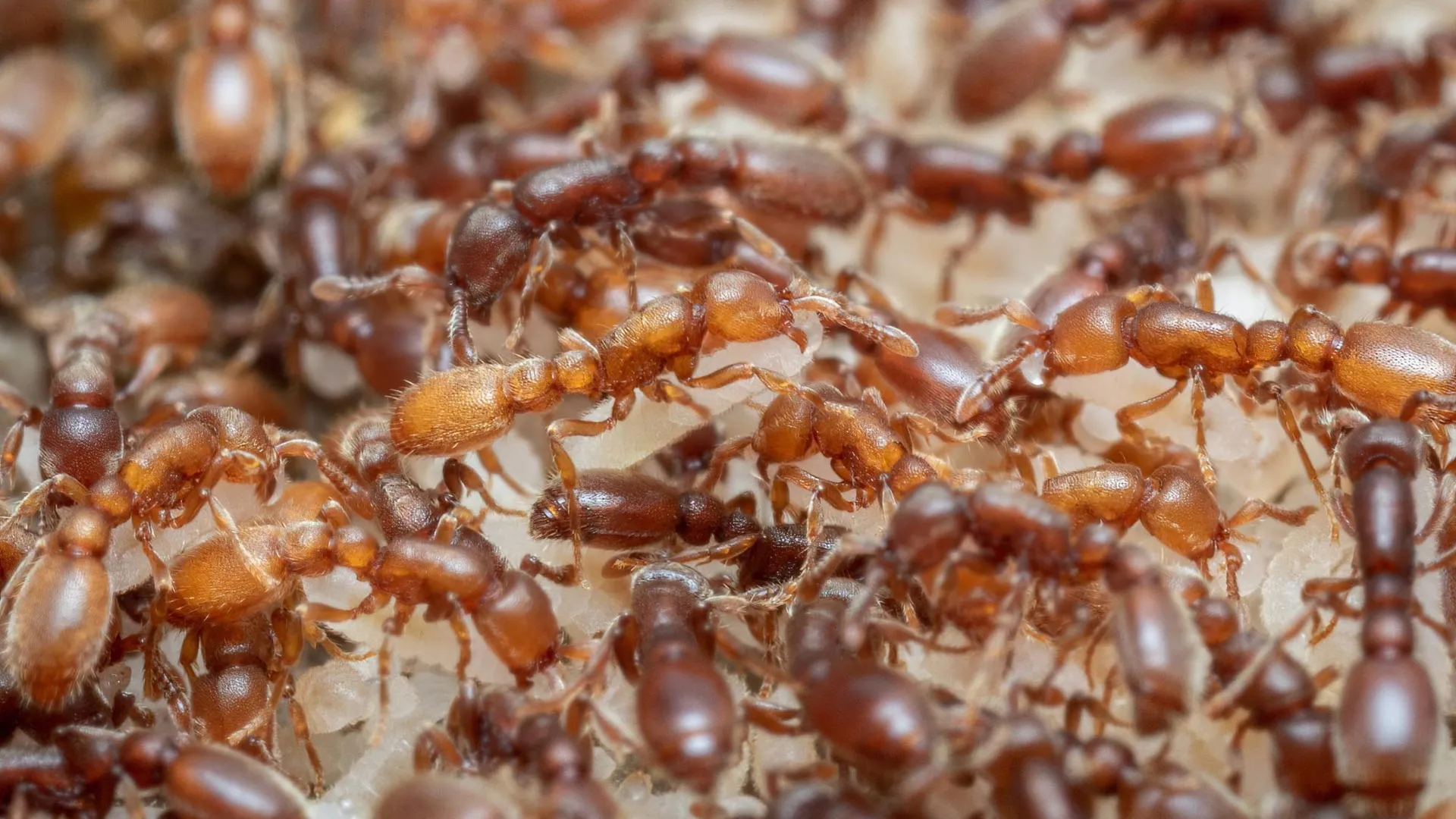
Researchers studying clonal raider ants have identified how parental care may have evolved from nonparental ancestors by repurposing existing brain systems. The findings, published in Nature, suggest that evolution adapted neural pathways originally responsible for regulating hunger and feeding to serve new functions in social caregiving. This discovery offers insights into how complex behaviors emerge through biological innovation.
Ants provided an ideal model for this research because they undergo predictable behavioral transitions and possess simpler brains than mammals. Young ants typically remain in nests caring for larvae, while older ants forage for food outside. The researchers created an automated system to monitor hundreds of caregiving interactions between individual ants and larvae, then identified and tested various chemical messengers in the ant brain to determine their effects on behavior.
The study identified two key signaling molecules with opposing effects. Neuropeptide F encouraged caregiving behavior in ants, while Allatostatin A promoted foraging. Young ants naturally exhibited higher levels of the caregiving molecule and lower levels of the foraging molecule in relevant brain regions, a pattern that reversed with age. When researchers artificially altered the activity of either molecule, ants changed their behavioral priorities accordingly, demonstrating direct causal relationships rather than mere associations.
The research revealed that these same molecules respond to hunger conditions, suggesting that caregiving behavior builds directly on feeding-related neural circuits. Starved ants showed chemical profiles resembling caregivers, while fed ants displayed patterns associated with foraging. The findings align with earlier mammalian research suggesting neuropeptide involvement in parental behavior, indicating a shared evolutionary strategy across diverse animal lineages.
Future research will map the specific neural circuits controlled by these molecules and compare caregiving pathways across ants and mammals to identify common biological principles underlying parental behavior evolution. The research also raises potential applications for understanding how brain chemistry drives age-related behavioral changes during normal healthy aging.
Article Attribution | Read More at Article Source
Article summary produced by Claude AI