

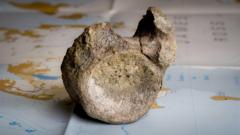
A fossil specimen that remained unidentified for 40 years has been recognized as the first dinosaur bone ever discovered in Antarctica. The tail vertebra was originally collected from James Ross Island in 1985 by a geological team that documented the find in a field notebook but was uncertain of its classification at the time. The specimen was subsequently placed in storage within the geology collection at the British Antarctic Survey in Cambridge, where it remained largely overlooked among thousands of other samples from Antarctic expeditions.
The identification occurred when Dr. Mark Evans, a collections manager at the institution, observed the fossil while reviewing materials in storage and recognized distinctive characteristics suggesting a dinosaur origin rather than a marine reptile, which the original collectors had apparently suspected. Evans consulted with Prof. Paul Barrett from the Natural History Museum, who confirmed the specimen was a tail bone from a Titanosaur—a group of dinosaurs known for containing the largest land animals to have ever existed. The vertebra exhibited distinctive anatomical features including hollow sections and rounded protrusions that form ball-and-socket joints characteristic of Titanosaurs.
Based on the size of the recovered vertebra, paleontologists estimate the Antarctic dinosaur measured approximately 23 feet in length, suggesting it may have been either a juvenile specimen or a naturally smaller member of its species. The fossil dates to approximately 82 million years ago during the Late Cretaceous Period, when Antarctica maintained a substantially different climate featuring lush forest ecosystems that would have supported herbivorous megafauna. The discovery contributes to limited paleontological understanding of Antarctica’s prehistoric ecosystems, as the continent remains challenging for fossil research due to extensive ice coverage obscuring rock formations below the surface.
The findings have been documented in a peer-reviewed publication in the journal Acta Palaeontologica Polonica and highlight the scientific value of examining institutional collections. The identification underscores how ancient Antarctica, now considered uninhabitable, once hosted diverse fauna and complex ecological communities during the Cretaceous Period.
Article Attribution | Read More at Article Source
Article summary produced by Claude AI