

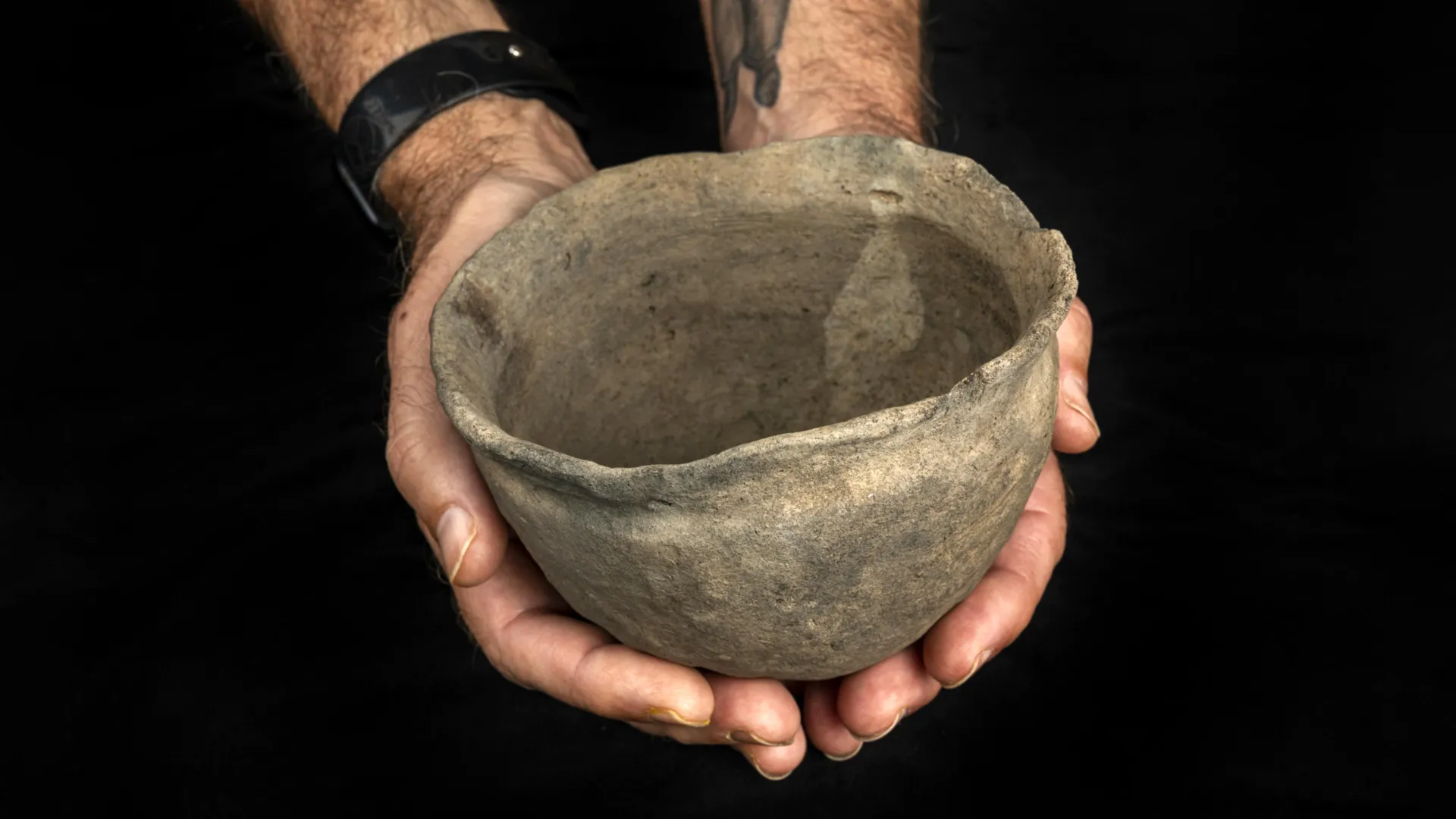
Archaeologists at the University of Florida have recovered a complete clay vessel dating back approximately 400 years from Mission San Francisco de Potano, a historical site in northwest Gainesville. The pot, which is small enough to fit in a palm, features a simple rim and smooth gray surface with no decoration. The discovery marks a significant find for the research team, as intact pottery vessels from terrestrial archaeological sites are uncommon due to damage from soil pressure, farming, construction, and other disturbances over centuries.
The vessel was uncovered earlier this year by students enrolled in a field course taught by Gifford Waters and Charles Cobb at the Florida Museum of Natural History. During spring semester sessions, students practice excavation techniques at the former mission site, which is now a wooded area marked by designated excavation squares. The Potano were part of the Timucua people of North Florida who relocated to the area in 1585 after Spanish forces displaced them. Spain established the mission in 1606 as one of more than 100 Catholic missions founded during the following century, and the settlement was abandoned in 1706.
The intact pot was discovered within a Spanish-made structure whose original purpose remains undetermined. Researchers believe the vessel was likely created during the roughly century-long period of mission occupation. Notably, the pot lacks burned food residue or charcoal deposits typically found in cooking vessels, though faint scorch marks suggest it may have been used for warming food near a fire or was marked during the original firing process.
Since 2006, excavations at the site have yielded more than 7,000 artifacts, predominantly fragments of Indigenous pottery reflecting the village’s substantial Indigenous population. Additional discoveries include glass beads, stone tools, nails, and animal bones from meals containing turtle, fish, and turkey. Waters notes that artifact location and distribution patterns prove as valuable as the objects themselves, revealing details about cooking areas and waste disposal practices. The site has also produced evidence of broader trade networks and cultural exchange, including pottery fragments suggesting connections to distant communities or arrival of residents bringing different pottery traditions to the settlement.
Article Attribution | Read More at Article Source
Article summary produced by Claude AI