

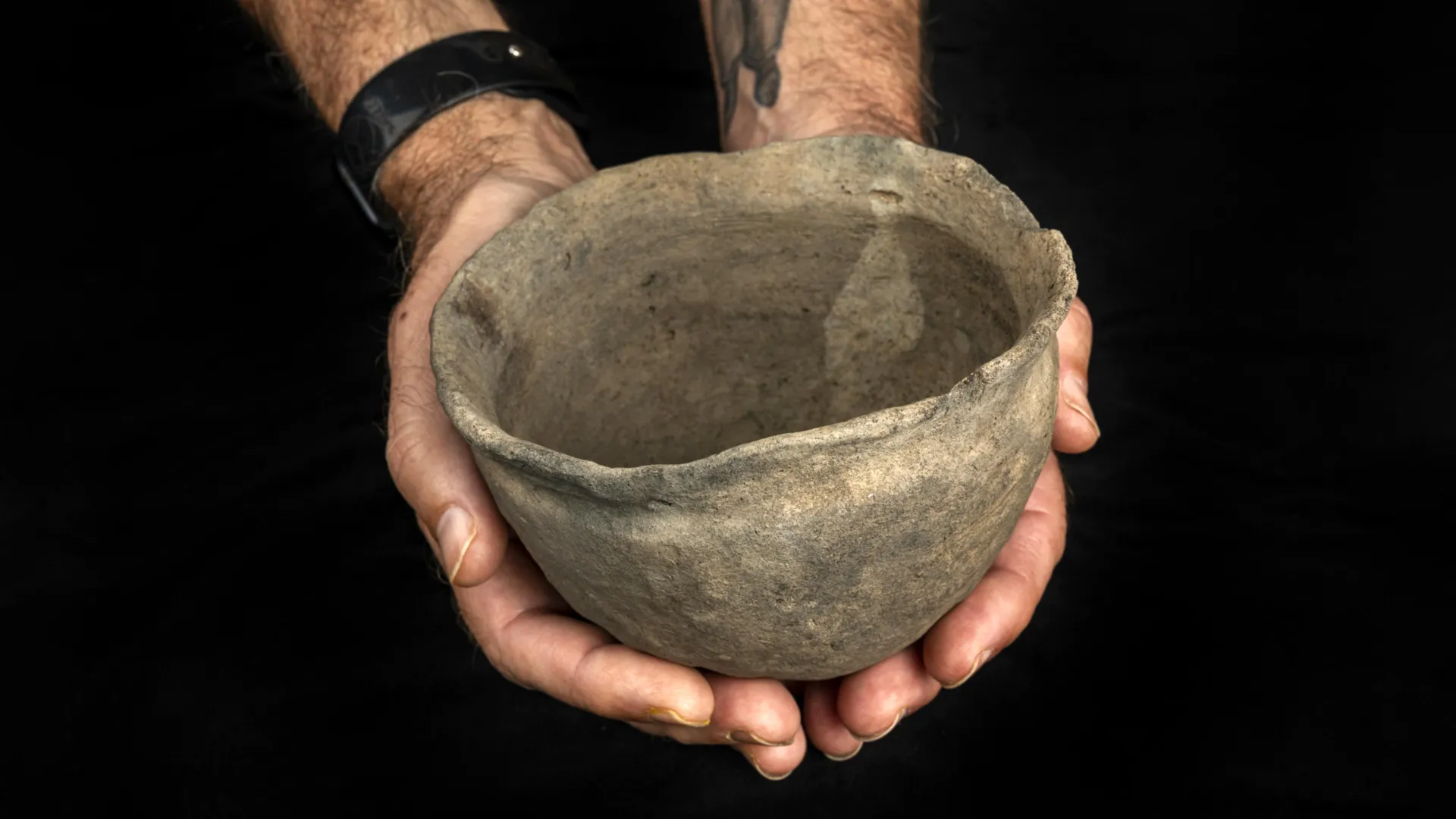
Archaeologists working at Mission San Francisco de Potano in northwest Gainesville recovered a fully intact clay vessel created approximately 400 years ago by members of the Potano-Timucua tribe. The small gray ceramic pot, which could fit in a hand, was discovered by university students during fieldwork earlier this year at the excavation site. According to Gifford Waters, collections manager for historical archaeology at the Florida Museum of Natural History, such complete terrestrial pottery finds are exceptionally rare, as intact objects typically break under soil pressure and ground disturbances over centuries.
The discovery was made during a field course taught by Waters and Charles Cobb, curator of historical archaeology at the museum. Students at the site practice archaeological techniques while investigating the remains of the 17th-century mission, which was established in 1606 when Spain sent a friar to the Potano village. The mission operated until its abandonment in 1706. The Potano were part of the Timucua people of North Florida and had relocated to the area in 1585 after being displaced by Spanish forces from their earlier location between present-day Payne’s Prairie and Orange Lake.
The vessel was found within a Spanish-constructed structure whose original purpose remains undetermined. Nearby discoveries of military artifacts, including a gun’s rear sight and musket side plate, suggest the structure may have served as a barracks, as a small military garrison was stationed at the mission following increased British attacks in the early 1700s. The pot’s smooth surface and lack of burned food residue indicate it was likely not used for direct cooking, though faint scorch marks suggest it may have been used to warm food near a fire.
The site has yielded more than 7,000 artifacts since 2006, with the majority being fragments of Native American pottery. Other discoveries include glass beads, stone tools, nails, and animal bones from meals. Shortly after the intact pot’s discovery, students found fragments from a larger vessel with a rougher texture that appears to differ from local pottery traditions, suggesting it arrived through trade or was brought by residents from other Florida communities. These contrasting artifacts reflect the village’s connections to a broader network of movement and exchange during the mission period.
Article Attribution | Read More at Article Source
Article summary produced by Claude AI