

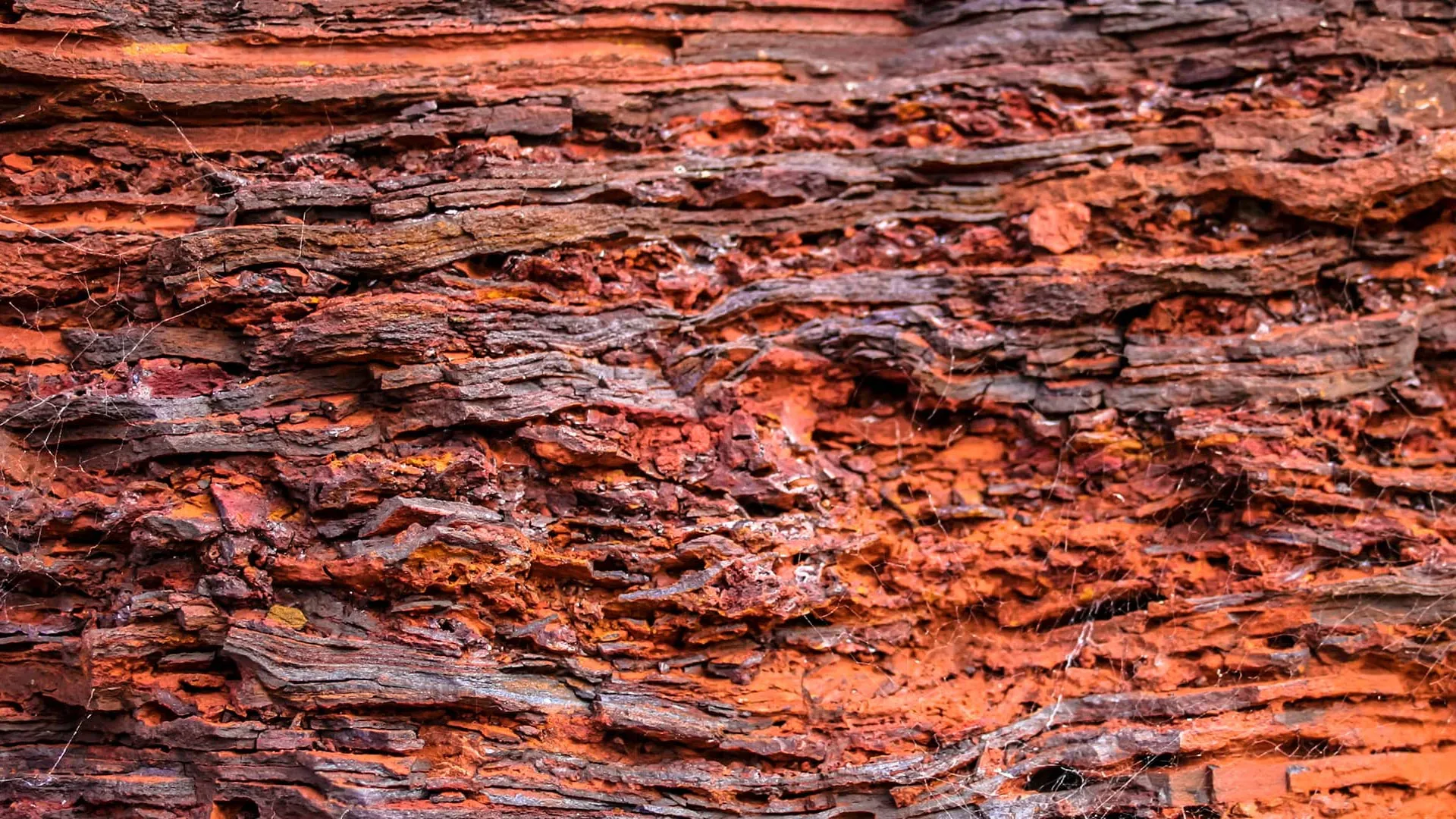
Scientists at Edith Cowan University have discovered that magnetite, a mineral abundant in Western Australia’s iron ore deposits, can release hydrogen gas when it interacts with hot water under conditions similar to those found deep below the Earth’s surface. The research team determined that by injecting solutions into banded iron formations, the natural hydrogen generation process could be stimulated, suggesting that deliberately enhanced underground hydrogen production may become feasible.
The researchers conducted laboratory experiments placing magnetite samples in water at high temperatures and pressure for an extended period to simulate the deep underground environment where this process naturally occurs. These controlled conditions helped scientists understand the mechanisms of hydrogen formation within rock and identify factors necessary for sustained production over time. The findings are particularly relevant given that Western Australia contains some of the world’s largest banded iron formations.
According to the research team, the potential implications for energy independence and export capabilities are substantial. The region could potentially access naturally generated hydrogen as a domestic energy source and, if developed commercially, establish a hydrogen export industry. An associate professor involved in the research noted that Australia may possess sufficient hydrogen reserves to benefit the nation for generations and potentially position it as a major exporter of clean energy globally.
The study also revealed that hydrogen production capacity depends on more than just the quantity of magnetite present in a formation. The structural characteristics of the rock, particularly its permeability and the presence of fractures and pores that allow water to reach fresh mineral surfaces, are critical factors. This means that natural pathways through rock formations could play a decisive role in determining whether hydrogen generation could become an economically viable energy resource.
The research has been published in the International Journal of Hydrogen Energy and represents progress in translating laboratory findings into real-world geological applications for hydrogen exploration and development.
Article Attribution | Read More at Article Source
Article summary produced by Claude AI