

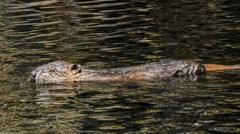
A researcher from the University of Exeter has highlighted the role beavers play in mitigating drought conditions through the creation of wetland ecosystems. Dr Alan Puttock, affiliated with the university’s Centre for Resilience in Environment, Water and Waste, explained that dams and ponds constructed by the mammals retain water, slow its movement across the landscape, and offer sanctuary for wildlife struggling amid dry conditions. His observations come as more than half of England experiences drought conditions due to elevated temperatures and reduced rainfall.
Historically abundant in Britain, beavers were driven to extinction roughly 400 years ago. Reintroduction efforts have resumed in recent years, beginning with releases in the River Otter in Devon in 2015, followed by additional releases of four pairs to Par and Fowey rivers in Cornwall earlier this year. These semi-aquatic mammals are often referred to as “ecosystem engineers” because of their significant environmental impacts.
According to Puttock, beavers fundamentally alter landscapes by constructing dams that generate intricate wetland systems. These wetlands provide the animals with protection from predators and enhanced mobility while simultaneously delivering measurable advantages to humans and broader ecological systems. Research indicates that individual beaver wetland ponds can hold approximately 1,000 cubic metres of water and reduce peak water flows by 30 percent through retention in permeable dams. This water-holding capacity builds landscape resilience against both flooding and drought periods.
Puttock acknowledged that beaver wetlands alone cannot resolve all drought challenges but noted that their cumulative effect, combined with other nature-based solutions and deliberate wetland creation initiatives, reduces overall vulnerability to dry periods. He further noted that wetland creation offers unexpected secondary benefits, including fire resilience. Drawing on international research suggesting water prevents fire spread, Puttock emphasized that beaver wetlands create landscapes capable of withstanding both drought extremes and the wildfire risks they can generate.
Article Attribution | Read More at Article Source
Article summary produced by Claude AI